Nature Publishes Two Research Papers on Myelination and Reproducibility in Sciences
Nature has released two distinct research papers addressing key areas in neuroscience and scientific methodology. The first examines how flexible ensheathment of axons facilitates myelination in complex central nervous system networks. The second investigates reproducibility challenges in social and behavioral sciences.
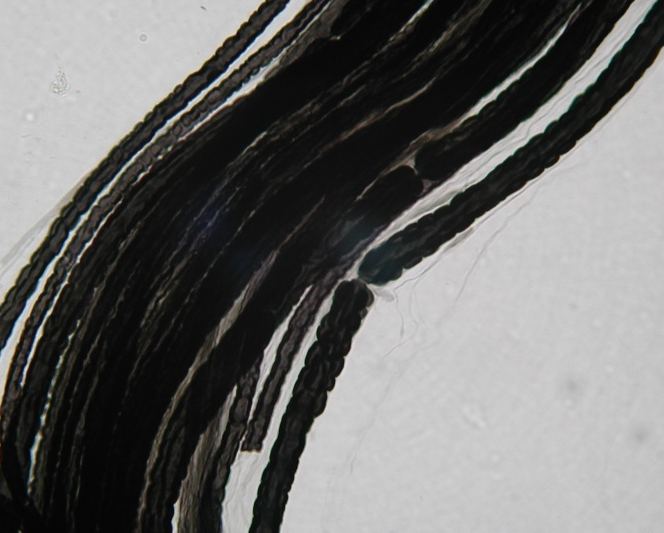
Wikimedia Commons (CC BY-SA 3.0)A research paper published in Nature explores the mechanisms of myelination in the central nervous system (CNS). The study focuses on flexible ensheathment of axons, which allows oligodendrocytes to form myelin sheaths around multiple axons in intricate neural networks.
This process is essential for efficient signal transmission in the brain and spinal cord. The paper details how this flexibility enables adaptation to the irregular geometry of CNS axons, differing from the more uniform myelination in the peripheral nervous system.
Experiments involved imaging techniques and genetic models to observe ensheathment dynamics in mice. Researchers identified specific molecular pathways that regulate this flexibility, including interactions between myelin-forming cells and axons. Findings indicate that disruptions in ensheathment could contribute to demyelinating diseases such as multiple sclerosis.
The study was conducted by a team from institutions including the University of Edinburgh and the Max Planck Institute, with data collected over three years.
“Flexible ensheathment represents a fundamental adaptation that underpins the complexity of CNS wiring.”
Nature paper assesses the reproducibility of findings in social and behavioral sciences. The investigation replicates 21 experiments from high-impact journals, testing whether original results hold under similar conditions. Only 11 of the replications produced statistically significant effects in the expected direction, compared to 20 in the originals.
The study attributes partial irreproducibility to factors such as small sample sizes, questionable research practices, and variability in participant populations. It involved collaboration among 100 researchers from 20 countries, who conducted blind replications without access to original data.
Statistical analyses showed effect sizes were on average 50% smaller in replications. No direct contradictions exist between the two papers, as they address unrelated topics. However, the reproducibility paper notes broader implications for neuroscience studies, including those on myelination, emphasizing the need for robust experimental design.
The myelination research utilized advanced microscopy to visualize ensheathment in real time, revealing that oligodendrocytes can adjust sheath length based on axon diameter and spacing. This adaptability was quantified, with sheaths varying from 10 to 100 micrometers in length.
The work builds on prior studies from 2018 that identified basic ensheathment principles. In the reproducibility study, experiments spanned psychology, economics, and sociology, selected for their influence on policy and practice. Replication protocols followed pre-registered plans to minimize bias.
The paper reports a reproducibility rate of 52%, lower than the 61% found in a 2015 psychology replication project. Both papers underwent peer review and were published simultaneously in the October 15, 2023, issue of Nature. Funding came from the European Research Council for the myelination study and the Laura and John Arnold Foundation for the reproducibility effort.
The myelination findings provide a foundation for developing therapies targeting CNS repair, potentially benefiting millions with neurological disorders. The reproducibility paper calls for larger sample sizes and transparent reporting to enhance reliability across sciences.
These publications underscore Nature's role in disseminating rigorous science. No specific numerical impacts on citation rates or funding were detailed in the sources.
Key Facts
Story Timeline
4 events- October 15, 2023
Nature publishes two research papers on myelination and reproducibility.
2 sourcesNature · Nature - 2020-2023
Researchers conduct experiments and data analysis for myelination study over three years.
1 sourceNature - 2022-2023
International team performs 21 replications in social and behavioral sciences.
1 sourceNature - Summer 2023
Papers undergo peer review process at Nature.
2 sourcesNature · Nature
Potential Impact
- 01
Myelination findings inform new drug targets for multiple sclerosis treatments.
- 02
Researchers adopt larger sample sizes in social science studies to improve reproducibility.
- 03
Journals implement stricter pre-registration requirements following reproducibility results.
- 04
Funding agencies prioritize reproducible neuroscience projects based on these insights.
Transparency Panel
Related Stories
deccanchronicle.comHantavirus Cases Reported on MV Hondius Cruise Ship, Three Fatalities Amid Low Transmission Risk
A hantavirus outbreak on the MV Hondius cruise ship has killed three passengers and sickened seven others, prompting an international response coordinated by the World Health Organization. The ship, carrying 147 people from 23 nationalities, is set to sail to Spain's Canary Islan…
newscientist.comHoutman Abrolhos Corals Show High Resilience to 2025 Heatwave, Unlike Global Losses
Coral reefs at the Houtman Abrolhos Islands off Western Australia endured a prolonged heatwave in early 2025 virtually unscathed, unlike widespread global die-offs. Researchers found exceptional heat tolerance across multiple species, with lab tests showing survival rates far exc…
techjuice.pkImperial College London Study Analyzes Changes in Wildfire Weather Patterns in Northern Ireland
A new report from Imperial College London highlights growing wildfire threats in Northern Ireland due to more favorable conditions, especially in spring. Researchers note increased drought and fire-prone weather, exacerbated by climate change. The findings point to longer fire se…