Navy Expands Use of Advanced Sonobuoys for Submarine Detection
The U.S. Navy is deploying next-generation sonobuoys to counter quieter adversary submarines. Sparton is producing the devices under an open-systems design that speeds upgrades and increases output.
 Breaking Defense
U.S. Navy is increasing its use of advanced sonobuoys to locate quieter submarines operated by China and Russia. The shift comes as adversary vessels have become harder to detect over the past two decades.
CEO of Sparton and senior vice president of Maritime Systems at Elbit America, said the Navy deploys sonobuoys when it believes a submarine is nearby. S. undersea advantage. The change has prompted renewed focus on maritime dominance, particularly in the Indo-Pacific region. Bohan said the services now recognize that future conflicts may be decided on, above, or below the water.
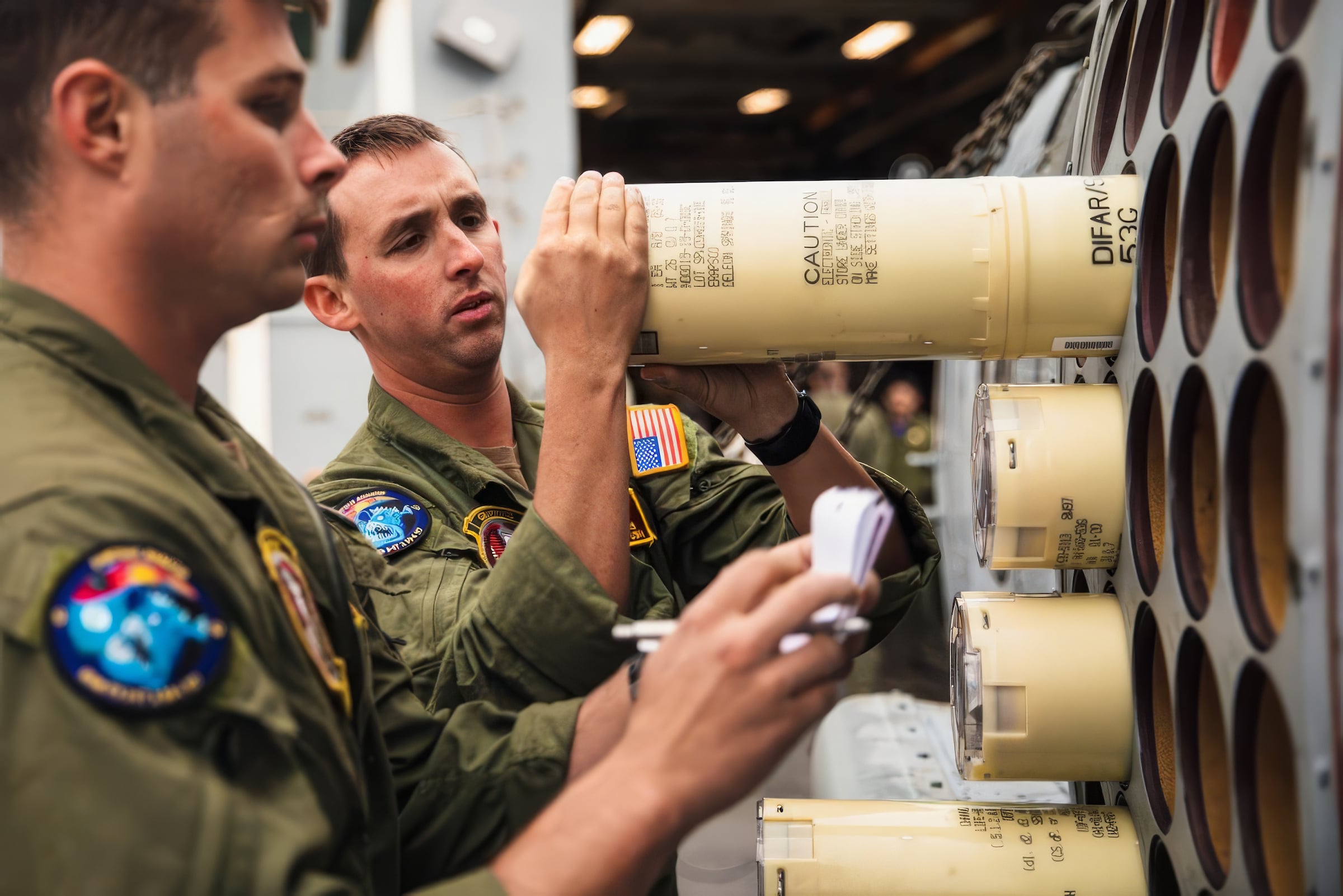
Sparton manufactures both active sonobuoys that transmit sound and passive models that listen for signals. The devices are roughly four feet tall and six inches wide and contain power sources, Piezotech ceramic sensors, and other electronics. Each buoy is built to survive an impact of about 100Gs when dropped from aircraft.
A parachute slows descent and a float brings the unit back to the surface so it can transmit data to nearby assets.
Sparton developed an open modular architecture called Open Buoy.
The design qualifies common top and bottom sections once, allowing new payloads to be added in months rather than years. Bohan said the approach lets the Navy integrate sensors for electronic warfare, intelligence, surveillance, reconnaissance, and environmental monitoring without redesigning entire buoys.
The company uses automation and machine learning to increase output while maintaining quality. Tasks that once took more than a minute are now completed for 42 units in three minutes. Sparton has delivered more than 6 million sonobuoys worldwide. The firm is also expanding into maritime payload delivery systems and unmanned undersea capabilities aligned with Navy roadmaps.
Key Facts
Potential Impact
- 01
The Navy can field new sensor capabilities in months instead of years.
- 02
Production costs per unit are expected to decrease through automation.
- 03
Sparton may expand into additional maritime sensor and unmanned systems.
Transparency Panel
Related Stories
 straitstimes.com
Journalists in Gaza to Receive 2026 Golden Pen of Freedom Award
Three international news agencies will accept the award on behalf of their local staff still reporting from the territory. The World Association of News Publishers cited the journalists' continued coverage under extreme conditions.
 upi.com
Supreme Court Revives Havana Docks Lawsuit Over Confiscated Cuban Property
The U.S. Supreme Court sent a Helms-Burton Act case back to lower courts for further argument. The suit seeks damages from cruise lines that used docks seized by Cuba in 1959.
 France 24
Pakistan Population Growth Outpaces Infrastructure as Male Contraception Stays Taboo
Pakistan's population exceeds 258 million and could reach 300 million by 2030. Contraception remains largely taboo in a society shaped by traditional values. The country continues to lag behind neighbors India and Bangladesh in key social sectors.