Unbiased AI-powered news
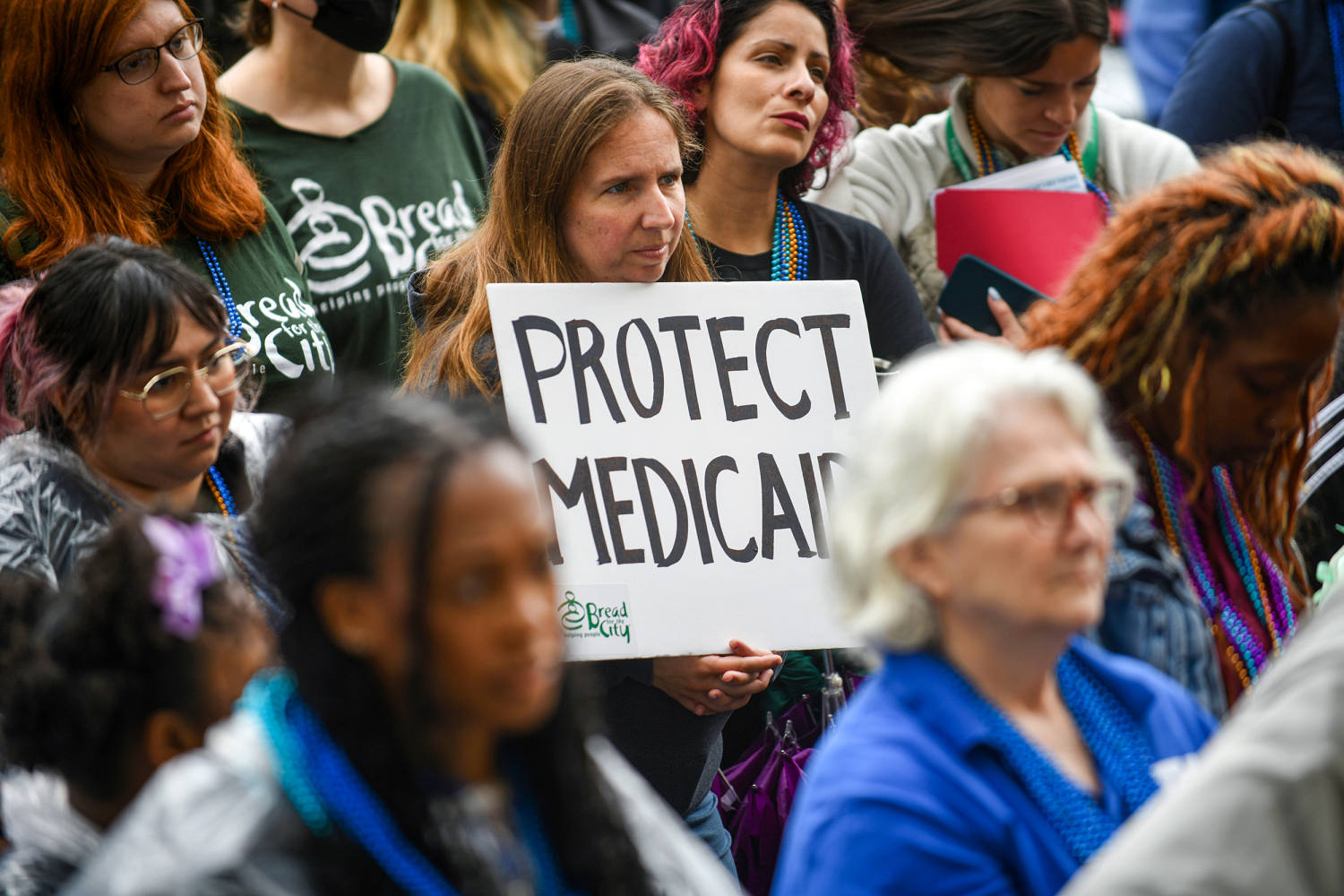
Nebraska became the first U.S. state to roll out Medicaid work requirements on Friday, affecting an estimated 72,000 residents. The policy, mandated under President Donald Trump's bill, requires able-bodied adults to prove 80 hours of work or exemptions monthly. Around 25,000 enrollees could lose coverage, advocates warn, amid concerns over bureaucratic hurdles.
Nbc NewsNebraska on Friday implemented Medicaid work requirements, becoming the first state to do so eight months ahead of the federal deadline of January 1, 2027. The policy, mandated in President Donald Trump’s bill, applies to able-bodied adults ages 19 to 64.
An estimated 72,000 Nebraskans are subject to the requirements, with around 25,000 residents who qualified for Medicaid under the Affordable Care Act’s expansion expected to lose coverage, according to the Urban Institute.
New Medicaid enrollees in Nebraska must submit proof of work hours or exemption beginning Friday. People already on Medicaid have until at least the end of July to provide such proof. Those who do not submit information within a month of notification may be denied or lose coverage, according to the Nebraska health department.
To maintain eligibility, individuals must show they work, volunteer, or perform community service at least 80 hours a month, or are enrolled in school or an apprenticeship at least half the time. Beginning next year, Nebraska will review Medicaid eligibility every six months, up from once a year. The Trump administration is not expected to release official guidance on the requirements until June.
Pregnant women, parents of young children, and people with disabilities are exempt from the requirements. People diagnosed with certain medical conditions also qualify for exemptions. In late April, Nebraska released a nearly 300-page list of diagnoses qualifying as medically frail for exemption, spanning thousands of medical codes.
Nebraska’s website states health officials will review medical claims data about 90 days before the end of an enrollee’s eligibility period to automatically exempt those with qualifying conditions. People without automatic exemption must file their own form declaring a listed condition. “It’s not super straightforward.
If you’re an enrollee, you’re trying to parse together all these 295 pages of code to figure out if you have a condition that would qualify for an exemption,” Allie Gardner, senior policy analyst at the Center on Budget and Policy Priorities, said. “It is not easy being sick, and it’s especially hard to navigate bureaucracies and document exemptions like chronic illness,” Dr.
Adam Gaffney, critical care physician and assistant professor at Harvard Medical School, said.
“Even short lapses in coverage can translate into dangerous, even deadly interruptions in medical care. An estimated 60% to 72% of people enrolled in Nebraska’s Medicaid expansion meet the work requirements or qualify for an exemption, according to Jeff Powell, spokesperson for the state health department. 1% in February.
“A vast majority of Nebraskans are working, or would be an exemption, but it is the red tape. That’s what causes the problems,” Sarah Maresh, healthcare access program director for Nebraska Appleseed, said on the call. “Eighteen months to implement such a massive undertaking of all these new eligibility and requirements is bad enough, but it’s even worse that for no reason at all, Nebraska has decided to start this process eight months early,” Anthony Wright, executive director of Families USA, said on a call Wednesday.
In December, Nebraska Gov. Jim Pillen and Centers for Medicare and Medicaid Services administrator Dr. Mehmet Oz announced the state’s intent to implement the requirements in May. Nebraska began notifying Medicaid enrollees in December, followed by texts and emails.
The state conducted an outreach campaign on TV, radio, and online. Starting May 1, many people covered by Medicaid in Nebraska have to prove they are working. The requirements are a mandate most states will have to implement under President Trump’s budget law beginning in January.
In related Federal Reserve developments, Jerome H. Powell will remain a governor after his term as chair ends. President Trump said he doesn't care if Jerome Powell remains as a Federal Reserve Governor.
The Federal Reserve left interest rates unchanged for its third straight meeting on Wednesday. Powell’s term as governor expires in January 2028.
Powell vowed to stay on until a criminal probe is resolved. A Justice Department decision on Friday referred a criminal probe into renovations at Fed headquarters to the central bank's inspector general. Attorney Jeanine Pirro announced in a social media post the referral of the criminal probe to the inspector general.
D.C. President Donald Trump has threatened to fire Powell if he doesn't leave after his term as chair expires.
Powell will hold a news conference after the FOMC meeting on Wednesday. “If the investigation had never taken place we think he would have left the Fed completely on May 15. But, we think the DoJ move may well have come too late – and the threat of restarting the probe is too inconclusive – for Powell to leave on May 15,” Krishna Guha, head of global policy and central bank strategy at Evercore ISI, said in a note.
” “A statement by Jay saying he'll be leaving at the end of his term as chair, will actually cause the market to go up, the rates market to be more positive, meaning lower yields, higher prices,” David Zervos, chief market strategist at Jefferies, said during a CNBC interview. Kevin Warsh had a confirmation hearing this week. Sen.
Thom Tillis vowed to hold up a committee vote on Kevin Warsh until the criminal investigation was completed. Kevin Warsh has indicated a preference for lower rates and a rethink of other Fed operations. Mary C. Daly, president and CEO of the Federal Reserve Bank of San Francisco, will participate in a panel discussion at the 2026 Hoover Institution Monetary Policy Conference.
She will be joined by Federal Reserve Vice Chair for Supervision Michelle Bowman, Federal Reserve Governor Christopher Waller, and Austan Goolsbee, president and CEO of the Federal Reserve Bank of Chicago. The panel will be moderated by Paola Sapienza, J-P Conte Family senior fellow at the Hoover Institution.
These outlets didn't split into competing frames — coverage was uniform.
cnbc.comThe report details persistent inflation pressures from tariffs, energy costs and AI investment. It also covers moderate GDP growth and a stable labor market as of mid-2026.
news.sky.comThe consumer price index rose 3.5 percent from a year earlier in June after a sharp monthly drop in energy prices. Core inflation eased to 2.6 percent over the same period.
insightsonindia.comThe benchmark fell sharply on Monday as rising oil prices from Gulf tensions and a selloff in semiconductor stocks weighed on the market.