science
Neuroscientist Outlines Skills to Maintain Brain Health in AI Era
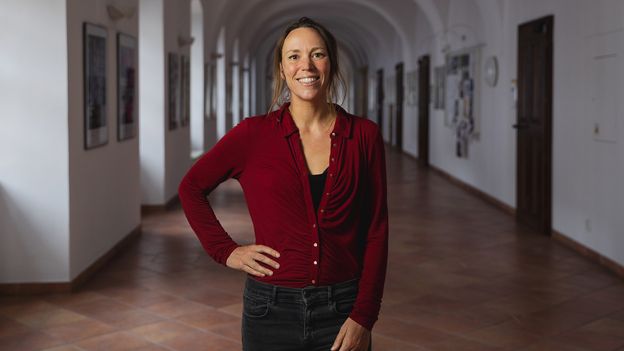
Hannah Critchlow, a neuroscientist at the University of Cambridge, has written a book on mental skills that may help people adapt to rapid technological change. The book examines emotional intelligence, creativity, physical activity, and cellular energy production.
May 22, 6:00 AM·1m read1 source
 bbc.com
Audio version
Tap play to generate a narrated version.
Critchlow began work on the book three years ago. She said the project was prompted by rapid developments in artificial intelligence and the need to understand how neuroscience knowledge could be applied to human cognition.
Critchlow states that emotional intelligence and empathy scores predict life satisfaction and academic success. She cites psychologist Jamil Zaki of Stanford University, who recommends practicing self-compassion by asking why an emotion is occurring and what can be done to address it.
A study by Hilke Plassmann and colleagues at Insead examined 100 volunteers who took prebiotics and probiotics for seven weeks. Participants developed a more diverse gut microbiome and showed increased willingness to share money for equality compared with a placebo group.
Critchlow notes that 20 percent of the day is spent mind-wandering, a state linked to new ideas. She states that walking in nature increases alpha waves associated with calm and creative thinking. Physical activity promotes the growth of new nerve cells and circuits, according to Critchlow. She says this process supports mental flexibility and the incorporation of new information.
Critchlow describes bioenergetics as the study of mitochondria, the structures that generate energy in cells. She states that exercise increases the number of mitochondria, which may support the brain's energy demands during complex thinking.