Nigerian Researcher Develops Low-Cost Rotavirus Test for Bedside Use
Virologist Margaret Oluwatoyin Japhet at Obafemi Awolowo University has created a rapid diagnostic kit that detects rotavirus in children's stool samples without laboratory equipment. The test uses cotton swabs and antibody-coated nanobeads, producing a color change within minutes and can be stored in a basic cooler.
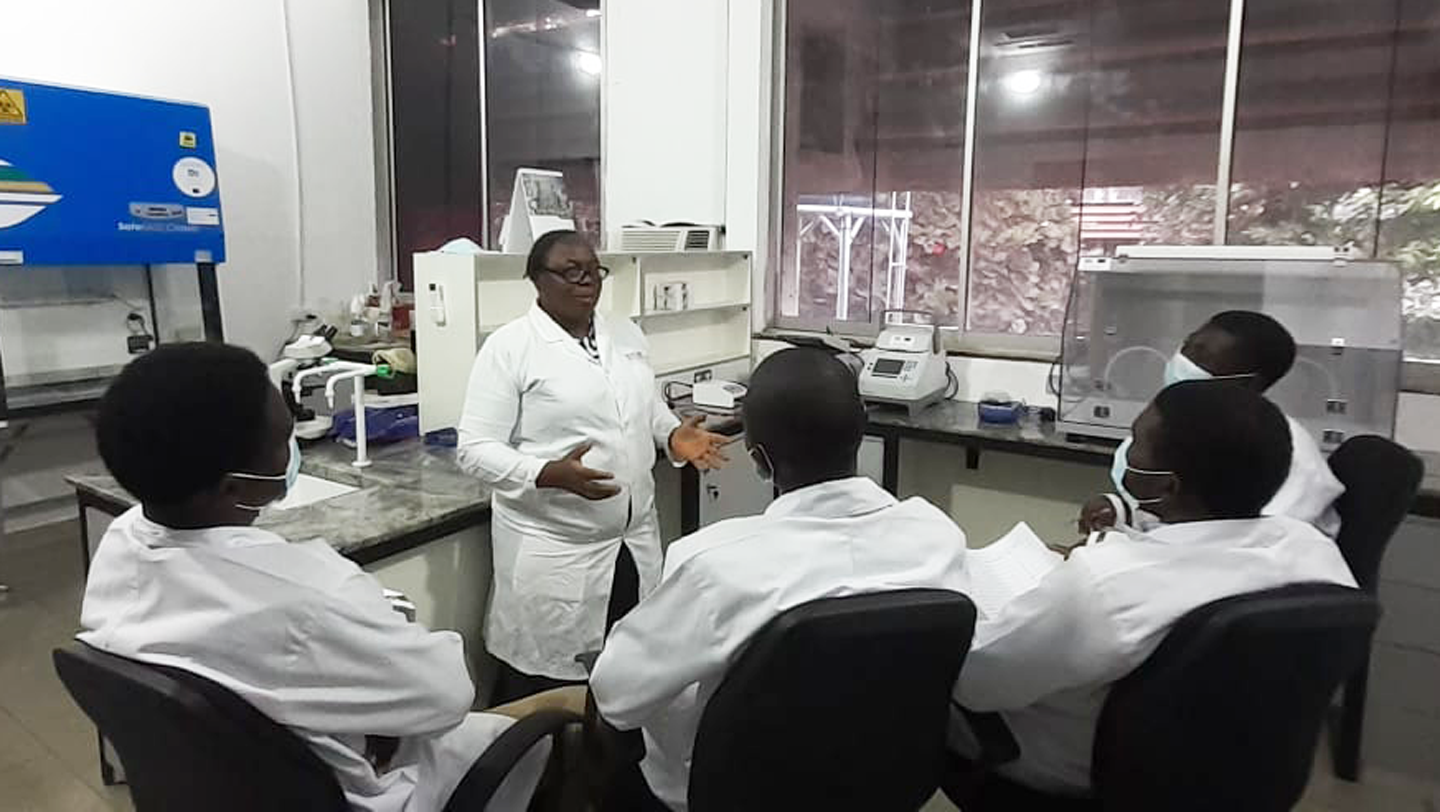
Science NewsNigerian virologist Margaret Oluwatoyin Japhet has developed a rapid diagnostic kit to identify rotavirus, a leading cause of severe diarrhea in young children. The test is designed for use at a child's bedside in hospitals across Nigeria and sub-Saharan Africa, where clinicians often treat diarrhea cases without confirming the cause.
In most cases, medical staff treat symptoms to prevent dehydration but lack diagnostic confirmation. "Most of the time, we just treat," Japhet said. " Rotavirus is the most common cause of severe diarrheal disease in infants and young children worldwide, according to the World Health Organization.
In 2016, it caused an estimated 128,500 deaths globally in children under five, with more than 100,000 of those deaths in sub-Saharan Africa. In Nigeria, rotavirus accounts for nearly half of all diarrhea-related hospitalizations in children under five and contributes to an estimated 48,000 deaths annually.
Every child is expected to experience one to three rotavirus infections in their lifetime, Japhet said.
Current laboratory methods for rotavirus detection require electricity, refrigeration, trained staff and stable supply chains that are often unavailable in Nigerian hospitals. Japhet noted that diagnostic tools developed in higher-resource countries frequently assume access to freezers and consistent power.
Her kit uses cotton swabs and nanobeads coated with antibodies. A user dips the swab into a stool sample, then into a solution with the nanobeads. If rotavirus is present, the swab turns blue. The test can be stored at about 4 degrees Celsius in a cooler and does not require specialized training.

"It is easy and almost mess-free," Japhet said. "You do not need trained personnel. You can just tell somebody, even a high school student, 'This is how it works. '" The kit has completed proof-of-concept and pilot testing in clinical settings. Results were published in the journal Methods and Protocols in 2025.
Japhet and her colleagues compared the nanobead-based test with ELISA and PCR using stool samples from children. The new kit demonstrated 88 percent sensitivity against ELISA, which showed 60 percent sensitivity in the same samples. The test has also been validated in three Nigerian hospitals using samples from children with diarrhea.
"We collected samples from children with diarrhea in three different hospitals and checked our kit against [other] methods," Japhet said. " Chukwubike Chinedu, a rotavirus specialist at the University of Nigeria Teaching Hospital, said the kit is faster and easier to use than ELISA.
It can provide results at the bedside without laboratory infrastructure, though it cannot detect all rotavirus types and may not fully replace other tests.
Japhet said that once a steady supply of antibodies is secured, the kit could be produced at low cost for local clinics and district hospitals. Wider deployment will require consistent manufacturing, funding and partnerships. Vaccination remains central to rotavirus prevention.
Nigeria introduced the rotavirus vaccine into its national immunization program in 2022, following evidence that included Japhet's earlier research. By 2023, 38 out of 47 countries in the World Health Organization African region had introduced the vaccine, though many children do not complete the full dosing schedule.
Testing complements vaccination by enabling outbreak detection, strain tracking and assessment of vaccine performance. "Without testing, health systems lack the data needed to understand how rotavirus is behaving," Japhet said.
Key Facts
Story Timeline
4 events- 2025
Japhet's team published peer-reviewed results on the nanobead test in Methods and Protocols.
1 sourceScience News - 2023
38 of 47 African countries had introduced rotavirus vaccine by end of year.
1 sourceScience News - 2022
Nigeria added rotavirus vaccine to national immunization program.
1 sourceScience News - 2016
Rotavirus caused an estimated 128,500 under-five deaths globally.
1 sourceScience News
Potential Impact
- 01
Clinics in Nigeria may adopt bedside testing to confirm rotavirus cases without sending samples to laboratories.
- 02
The test may support evaluation of rotavirus vaccine effectiveness in Nigeria's immunization program.
- 03
Health authorities could gain better data on rotavirus outbreaks and circulating strains in low-resource areas.
- 04
Manufacturers would need to establish steady antibody supply before the kit reaches district hospitals.
Transparency Panel
Related Stories
ForbesAmazon Rolls Out Short-Form Video Feed Called Clips to Prime Video App
The streaming service is rolling out a TikTok-style vertical feed of personalized clips from its shows and movies, starting with select U.S. users. The feature, tested earlier with NBA highlights, aims to improve discovery and includes direct options to watch, rent, buy or add ti…
BenzingaIMF Reports AI Increasing Cyberattacks on Financial Systems
The International Monetary Fund said advanced AI models can dramatically reduce the time and cost to identify and exploit vulnerabilities, outpacing traditional defenses. Barclays CEO called a new AI tool a serious issue for banks. Emerging-market users are increasingly treating…
foxnews.comElon Musk Leases World's Largest Supercomputer to Anthropic
Elon Musk has leased the world's largest supercomputer, known as Colossus 1, to Anthropic. The move comes three months after Musk publicly described Anthropic as "evil," "misanthropic," and opposed to Western civilization on X. The lease is intended to generate revenue for SpaceX…