world
NOAA Maps Show U.S. Cities Facing Flooding Risk from 3-Meter Sea Level Rise
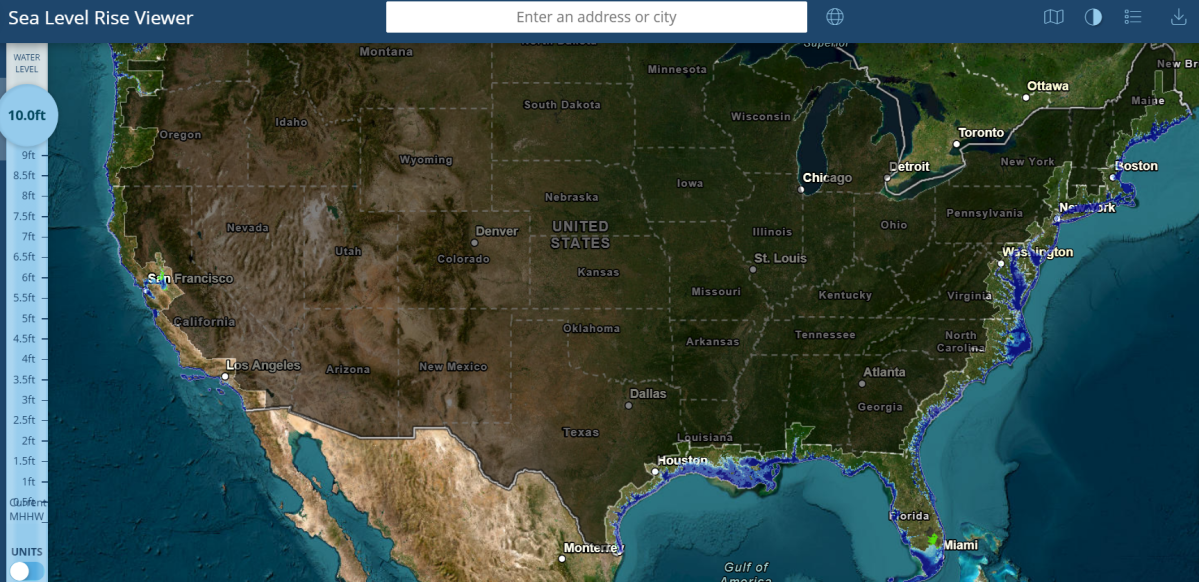
National Oceanic and Atmospheric Administration maps project flooding in multiple U.S. coastal cities if sea levels rise three meters. The projections are linked to potential long-term changes involving the Thwaites Glacier in Antarctica.
May 20, 7:24 AM·1m read1 source
 Newsweek
Audio version
Tap play to generate a narrated version.
U.S. coastline. The maps identify cities and infrastructure at risk along the Atlantic, Gulf, and Pacific coasts. Florida cities including Jacksonville, Fort Lauderdale, Tampa, St. Petersburg and Panama City are shown facing severe flooding. Large stretches of low-lying coastal communities in the state could become uninhabitable under the projections.
Cities and communities along the Texas coastline near Galveston Bay, Freeport and Surfside Beach could see extensive inundation. Low-lying parts of Louisiana around New Orleans would remain especially vulnerable. Other coastal cities at risk include Charleston, South Carolina; Savannah, Georgia; Norfolk and Virginia Beach, Virginia; Wilmington, North Carolina; Baltimore, Maryland; and parts of New Jersey, Delaware and Mississippi.
New York City would face widespread flooding risks across parts of Brooklyn, Queens, Staten Island and Lower Manhattan. Newark Liberty International Airport and nearby transport links could also be affected. MetLife Stadium in New Jersey lies within an area vulnerable to flooding under the projections.
California, areas around the San Francisco Bay, Oakland, San Mateo and parts of Southern California near San Diego and Oxnard would face major impacts. Notable parts of the landscape and wildlife reserves including Big Lagoon, the Brush Creek/Lagoon Lake Wetlands and Coastal Dunes Natural Preserve, the Ventura County Game Reserve and the California Coastal National Monument could also be affected.
The Thwaites Glacier in West Antarctica is the widest glacier on the planet, stretching around 120 kilometers. Its basin measures around 192,000 square kilometers, larger than the state of Florida. The glacier has lost more than one trillion tons of ice since 2000.
Its floating tongue has continued to fracture and separate from the ice shelf in recent years, according to NASA images. Seawater temperatures a few degrees above freezing have been recorded in the region, contributing to melting of the floating ice.