North Atlantic cold patch linked to weakening ocean current
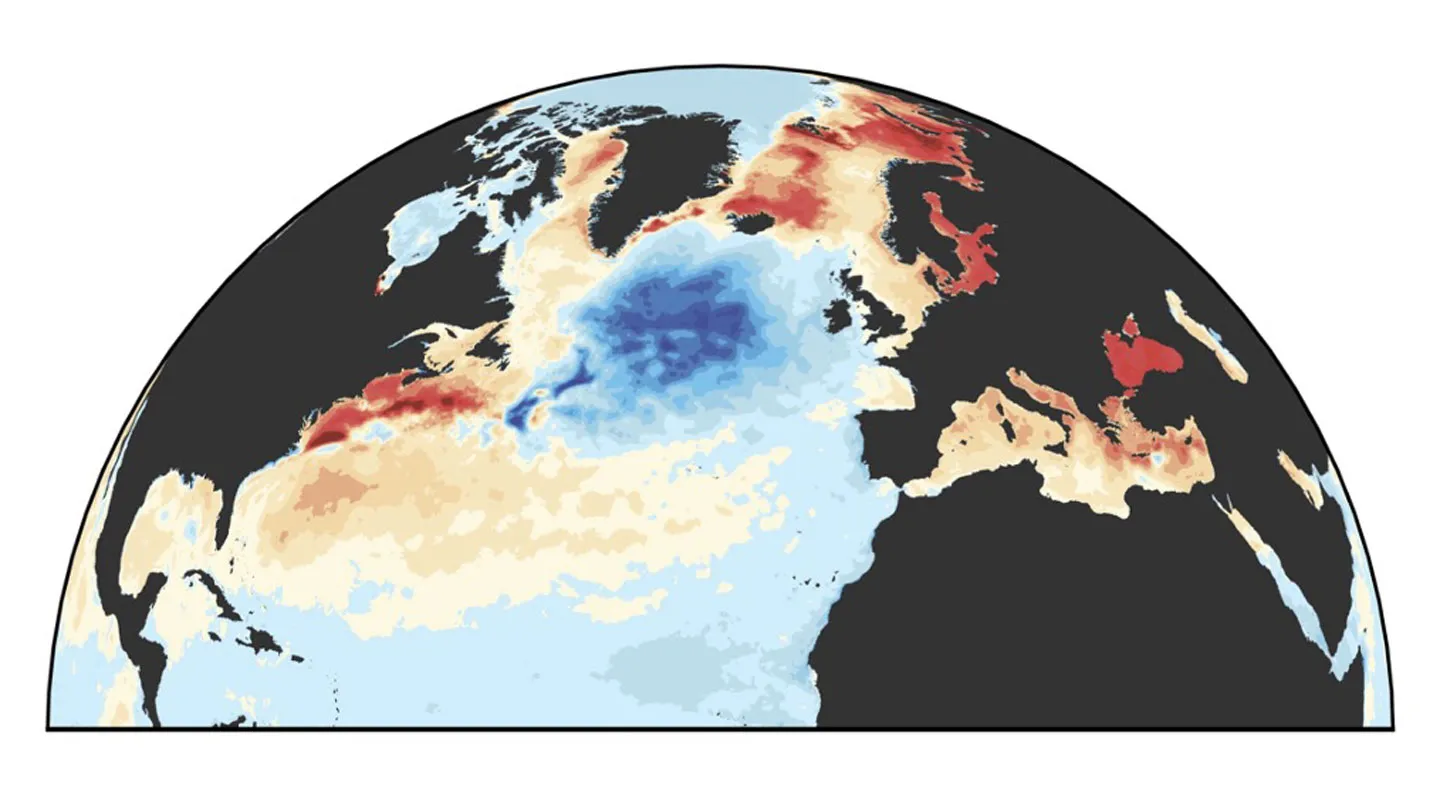
A patch of cooler water in the North Atlantic has been tied to reduced heat transport by a major ocean current. Researchers analyzed temperature and heat flux records dating back to 1870.
 Science News
A region of the North Atlantic has cooled by about 1 degree Celsius since the 19th century even as global ocean temperatures have risen. Researchers attribute the cooling to a decline in heat carried northward by the Atlantic Meridional Overturning Circulation.
The current normally transports heat from the tropics toward Europe and influences temperature and precipitation patterns across parts of Europe and North Africa. An alternative explanation had been that the surface waters were losing more heat to the atmosphere.
Data analysis Physical oceanographers examined temperature records extending to 1870 and satellite data beginning around 1993. They found no increase in heat loss from the ocean surface to the atmosphere over recent decades. Instead, the amount of heat escaping to the atmosphere has decreased over the last half-century, with the largest decline since 1993.
The greatest reduction in heat content occurred in the upper 1,000 meters of the water column.
Implications The pattern indicates that the supply of heat from the current has diminished. Researchers conclude this provides additional evidence that the circulation is slowing. A full shutdown of the current could increase temperature extremes in Europe and affect agricultural production.
Temperature records and heat flux measurements used in the study are publicly available through oceanographic databases.