Substrate
world

Northrop Grumman Asks FTC to Vacate 2018 Solid Rocket Motor Consent Order

Northrop Grumman on April 2 asked the Federal Trade Commission to drop restrictions imposed when it acquired Orbital ATK. Lockheed Martin is preparing to oppose the move publicly, arguing it would limit affordable access to solid rocket motors. The FTC decision could affect Pentagon efforts to increase missile production.

Breaking Defense
1 source·May 6, 5:56 PM(23 days ago)·2m read
|
Northrop Grumman Asks FTC to Vacate 2018 Solid Rocket Motor Consent OrderBreaking Defense
Audio version
Tap play to generate a narrated version.
Developing·Limited corroboration so far. This page will refresh as more sources emerge.

Northrop Grumman petitioned the Federal Trade Commission on April 2 to drop a 2018 consent order imposed when the company acquired Orbital ATK. The order requires Northrop Grumman to supply solid rocket motors to its competitors on a non-discriminatory basis and to firewall its solid rocket motor business away from its other operations.

Breaking Defense reported that the FTC put the measures in place because Northrop Grumman was a prime contractor and Orbital ATK was one of only two American makers of solid rocket motors.

Lockheed Martin is lining up to publicly oppose Northrop Grumman’s petition to the FTC. A Lockheed spokesperson stated that removal of the order would “limit affordable access to SRMs,” potentially jeopardizing readiness and weakening the industrial base. Northrop Grumman is not a major manufacturer in the American missile space, which is dominated by Raytheon and Lockheed.

Northrop Grumman stated: “We stand behind the strength of our petition. The company’s push comes as the Pentagon seeks to ramp up production of missiles and backfill stockpiles, an effort that depends on also ramping up manufacture of solid rocket motors. The FTC’s decision on the petition could affect those Pentagon plans.

If the order is dropped, Northrop Grumman would be able to vertically integrate its solid rocket motor business with any munitions it designs in the future. That integration could allow the company to prioritize SRM supplies for its own programs over competitors.

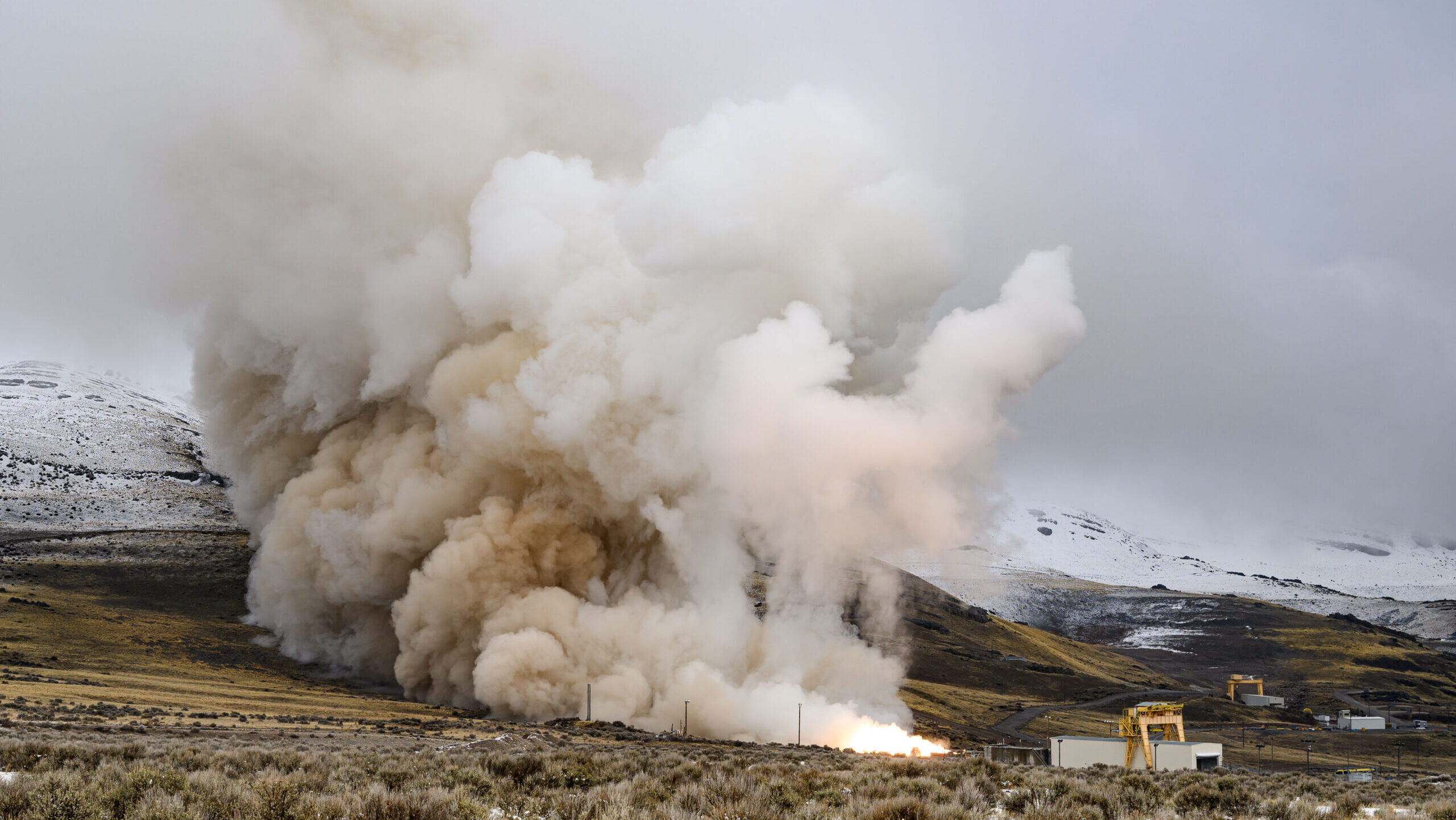
U.S. Air Force and Northrop Grumman conducted a full-scale qualification static fire test of the Sentinel ICBM stage-one solid rocket motor. The test took place on March 6, 2025 at Northrop Grumman’s facility in Promontory, Utah.

U.S. Air Force photo caption confirmed the joint test of the solid rocket motor. The 2018 consent order was crafted at a time when concerns centered on preserving competition in the solid rocket motor market. Northrop Grumman’s petition argues that lifting the restrictions would improve its ability to support critical munitions programs.

Lockheed Martin’s planned opposition sets up a direct clash between two major defense contractors before the FTC.

Key Facts

Northrop Grumman petitioned the FTC on April 2 to drop its 2
The order, imposed after the Orbital ATK acquisition, mandates non-discriminatory supply of solid rocket motors to competitors and separation of the SRM busines
Lockheed Martin plans to oppose the petition
The company argues removal would significantly limit affordable access to SRMs, jeopardizing readiness and weakening the industrial base
Sentinel ICBM motor test occurred on March 6, 2025
The full-scale qualification static fire test of the stage-one solid rocket motor was conducted at Northrop Grumman’s Promontory, Utah facility by the U.S. Air

Story Timeline

3 events
  1. 2018

    FTC imposes consent order on Northrop Grumman following Orbital ATK acquisition requiring non-discriminatory SRM supply and firewalling of businesses

    1 sourceBreaking Defense
  2. 2025-03-06

    U.S. Air Force and Northrop Grumman conduct full-scale qualification static fire test of Sentinel ICBM stage-one solid rocket motor in Promontory, Utah

    2 sourcesU.S. Air Force · Breaking Defense
  3. 2026-04-02

    Northrop Grumman petitions FTC to drop the 2018 consent order

    1 sourceBreaking Defense

Potential Impact

  1. 01

    FTC approval could allow Northrop Grumman to vertically integrate SRM production with its missile programs, potentially shifting supply priorities

  2. 02

    Pentagon missile production ramp-up may face altered competitive dynamics in the solid rocket motor supply chain

  3. 03

    Lockheed Martin and Raytheon, dominant players in the American missile space, could see changes in SRM affordability and availability

Transparency Panel

Sources cross-referenced1
Confidence score75%
Synthesized bySubstrate AI
Word count340 words
PublishedMay 6, 2026, 5:56 PM
Bias signals removed2 across 2 outlets
Signal Breakdown
Loaded 1sensational 1

Related Stories

WHO Chief Visits DRC as Ebola Death Rate Reaches 30-50%The Guardian
world2 hrs ago

WHO Chief Visits DRC as Ebola Death Rate Reaches 30-50%

World Health Organization director-general Tedros Adhanom Ghebreyesus arrived in the Democratic Republic of the Congo to support containment of a new Ebola outbreak. The agency revised the death rate to 30-50% based on confirmed cases and recorded 10 confirmed and 223 suspected d…

SK
The Guardian
2 sources
Greek National Charged in UK With Aiding Iran-Linked Intelligence Servicewesternjournal.com
world2 hrs ago

Greek National Charged in UK With Aiding Iran-Linked Intelligence Service

A 46-year-old Greek man living in Germany was charged under the UK National Security Act with assisting an intelligence service believed to be Iran by targeting a journalist at Iran International.

Reuters
BBC News
2 sources
Bilt Rewards reports $1 billion revenue target for 2026physicianonfire.com
world2 hrs agoDeveloping

Bilt Rewards reports $1 billion revenue target for 2026

Bilt Rewards CEO Ankur Jain said the company's flagship credit card accounts for less than 11 percent of revenue. The firm now processes more than $100 billion in annual housing spend across one in four U.S. apartment buildings.

FO
1 source