Oak Trees Delay Bud Opening After Caterpillar Attacks, Cutting Damage by 55 Percent
Oak trees in northern Bavaria delayed leaf emergence by three days following heavy gypsy moth infestations in 2019, reducing subsequent caterpillar damage by 55 percent. Researchers analyzed satellite data from 2017 to 2021 to track canopy conditions. The study suggests this delay acts as an effective defense mechanism against herbivores.
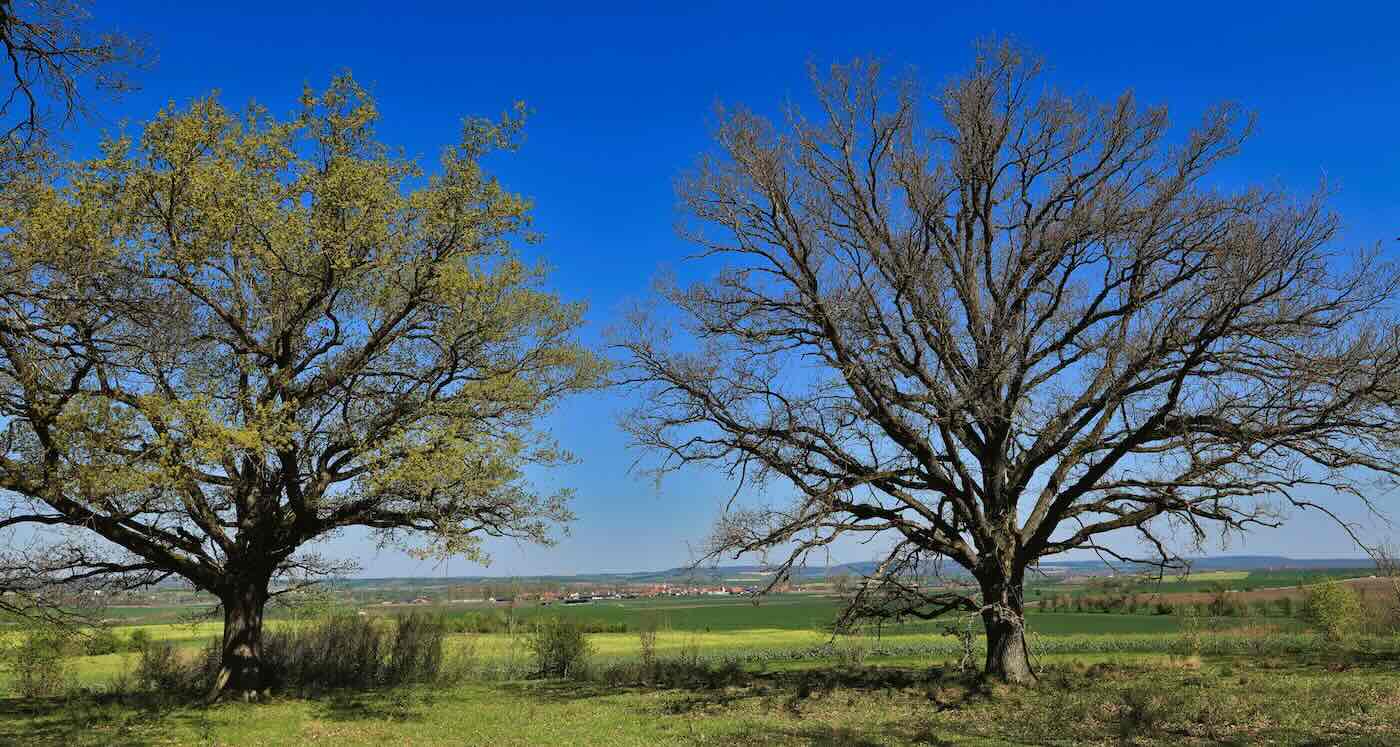 goodnewsnetwork.org
Oak trees heavily infested by gypsy moth caterpillars in 2019 delayed their leaf emergence by three days the following spring, slashing damage from subsequent feeding by 55 percent compared to the previous year. @NewScientist reported that this delay left hatching caterpillars without immediate access to young leaves, leading many to die.
The finding emerged from an analysis of Sentinel-1 radar satellite images covering a 2400-square-kilometre area in northern Bavaria, Germany, between 2017 and 2021.
Soumen Mallick at the University of Würzburg in Germany and his colleagues examined 27,500 pixels from the satellite images, each representing a 10 by 10 metre area roughly the size of a tree crown. The forests in this region are dominated by pedunculate oaks (Quercus robur) and sessile oaks (Quercus petraea).
In 2019, a massive outbreak of gypsy moths (Lymantria dispar) stripped leaves from many trees, with their hairy caterpillars feeding extensively on foliage.
The satellite data revealed how affected trees responded, showing that heavily infested oaks opened buds later than unaffected ones. Caterpillars hatch at the same time each spring, regardless of tree leaf emergence timing, according to Mallick. This mismatch reduced herbivory damage by 55 percent in the following year for those delayed trees.
Oak trees employ other defenses, such as producing tougher leaves or aromatic compounds that attract predators to the caterpillars. 'The delay in bud opening seems to be more efficient than all these other defence mechanisms,' said Mallick. He noted that the delay was observed across dozens of tree populations and was strongest in forests where it most effectively reduced herbivory.
James Cahill at the University of Alberta in Canada described the delay as a correlation, with evidence of causality not yet established. He suggested it could result from decreased plant vigor due to prior leaf loss or physiological constraints like resource depletion. Cahill added that data from more than one outbreak would help clarify the mechanism.
Mallick acknowledged that physiological constraints such as resource depletion could explain the delay but emphasized its adaptive potential given its consistency across populations. 1038/s41559-026-03071-9, highlights how such delays might explain why forests sometimes green later in spring than temperature-based models predict, especially amid warming climates.
Key Facts
Story Timeline
4 events- 2026-05-06
Study on oak tree responses to gypsy moth infestations published in Nature Ecology & Evolution.
1 source@NewScientist - 2020 spring
Heavily infested oak trees delayed leaf emergence by three days, reducing caterpillar damage by 55 percent.
1 source@NewScientist - 2019
Massive outbreak of gypsy moths in northern Bavaria, stripping leaves from oak trees.
1 source@NewScientist - 2017-2021
Analysis of Sentinel-1 satellite images for 2400-square-kilometre area in northern Bavaria.
1 source@NewScientist
Potential Impact
- 01
Improved understanding of forest greening models, accounting for herbivory beyond temperature.
- 02
Further research on causality could refine ecological predictions amid climate warming.
- 03
Potential insights for other deciduous plants facing similar infestations.
Transparency Panel
Related Stories
 deccanchronicle.com
Hantavirus Cases Reported on MV Hondius Cruise Ship, Three Fatalities Amid Low Transmission Risk
A hantavirus outbreak on the MV Hondius cruise ship has killed three passengers and sickened seven others, prompting an international response coordinated by the World Health Organization. The ship, carrying 147 people from 23 nationalities, is set to sail to Spain's Canary Islan…
 techjuice.pk
Imperial College London Study Analyzes Changes in Wildfire Weather Patterns in Northern Ireland
A new report from Imperial College London highlights growing wildfire threats in Northern Ireland due to more favorable conditions, especially in spring. Researchers note increased drought and fire-prone weather, exacerbated by climate change. The findings point to longer fire se…
 The U.S. Food and Drug Administration / Wikimedia (Public domain)
FDA Commissioner Defends Drug Rejection Decisions
The FDA commissioner defended recent drug rejections in a CNBC interview, citing adherence to scientific reviews amid reports of agency turmoil. Criticism includes a high-profile denial of a melanoma treatment from Replimune and pressure from President Trump over vape approvals.…