OBBBA Tax Refunds Total $75-90 Billion; Gas Prices Rise 40% in Iran Conflict
Wall Street analyses indicate that surging gasoline prices due to the U.S.-Israel strike on Iran and the Strait of Hormuz closure have neutralized much of the consumer boost from the One Big Beautiful Bill's tax refunds. Goldman Sachs and Morgan Stanley project diminished household spending growth for 2026. Lower-income households face the heaviest impact from the oil shock.
fastcompany.comIsrael military strike on Iran have largely offset the consumer benefits from historic tax refunds under the One Big Beautiful Bill, according to analyses from Goldman Sachs and Morgan Stanley. The banks' economists calculated that the oil supply disruption has created a headwind to household incomes that cancels out most of the anticipated fiscal stimulus.
This development leaves real consumption growth projections for 2026 well below earlier expectations.
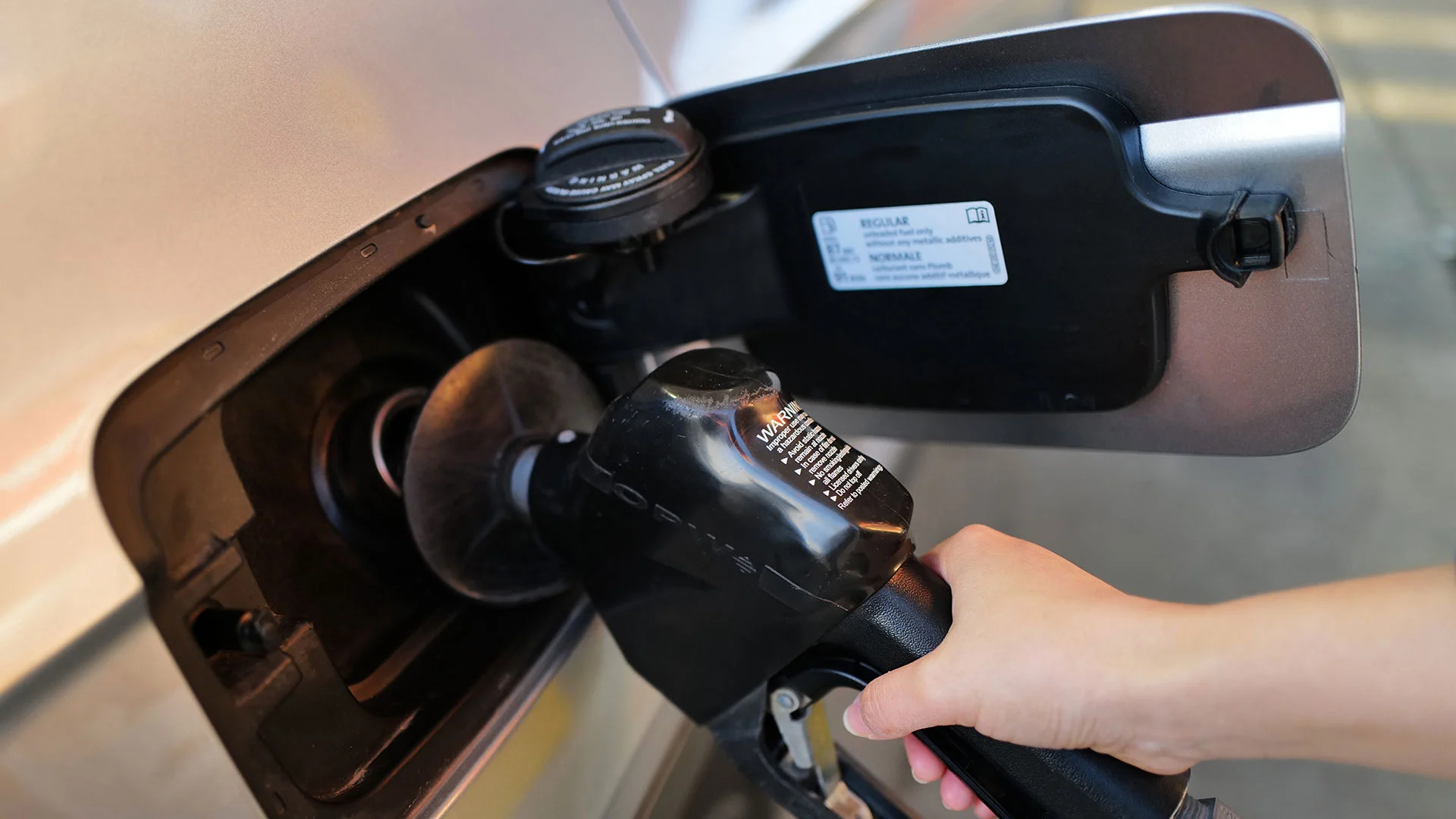
Goldman Sachs estimates that higher gasoline prices represent a roughly $140 billion annualized drag on household incomes. Morgan Stanley determined that a sustained 15% rise in gas prices fully offsets the average increase in tax refunds, with prices having climbed nearly 40% since early March 2026.
“Rising gasoline prices on the heels of the conflict in the Middle East are likely to neutralize most, if not all, of the anticipated fiscal impulse to household spending,” was the verdict from the Morgan Stanley U.S. economics team.
Households in the lowest income quintile spend roughly four times as much on gasoline as a share of after-tax income compared to those at the top, Goldman Sachs found. Combined with cuts to Medicaid and SNAP benefits, Goldman now projects real income growth for the bottom quintile of just 0.7% this year.
Meanwhile, the ceasefire announced April 7 hasn’t fully reopened the Strait of Hormuz, and a U.S. seizure of an Iranian cargo ship last week has kept tensions—and prices—elevated.
On February 28, U.S. and Israeli forces struck Iran. ” American gas prices, which stood at roughly $3.54 a gallon in early March, climbed to $4.11 by mid-April.
Congress passed the One Big Beautiful Bill last year, with provisions retroactive to the 2025 tax year. The legislation—retroactive to the 2025 tax year—included no taxes on tips and overtime, a higher child tax credit, a higher standard deduction, an expanded SALT deduction, and a new senior deduction.
Even the Committee for a Responsible Federal Budget, the nonpartisan think tank that generally opposes deficit-increasing legislation and has gotten into a war of words with Treasury Secretary Scott Bessent on account of its criticism, acknowledged that it would lead to a “sugar high” for the economy, boosting growth in the short term.
In late 2025 and early 2026, Trump and the White House ran an aggressive promotional campaign around the refund season. ” The White House formally declared in January that Trump was delivering “ the largest tax refund season in U.S. history ,” projecting that average refunds would rise by $1,000 or more compared to 2025.
The House Ways and Means Committee amplified that figure, citing a Piper Sandler analysis projecting $91 billion in total refund growth. Early estimates pegged total consumer tax relief at $135 billion to $150 billion, with Bank of America Research projecting refunds alone running 18% higher than 2025.
The refunds are real. Through April 10, federal tax refunds totaled $265 billion—up 16% year-over-year—and the average check clocked in at $3,462, an 11.2% bump. Goldman Sachs estimates total refunds will end the season roughly $50 billion above last year, with additional OBBBA benefits flowing through lower tax payments, for combined relief of $75 billion to $90 billion.
Both banks have revised their outlooks lower. Goldman now forecasts real consumption growth of just 1.2% for 2026 on a Q4/Q4 basis—well below the 1.8% Wall Street consensus—with the second quarter expected to absorb the worst of the oil price hit. Morgan Stanley, which already cut its GDP forecast in March and attributed 0.3 percentage points of that downgrade directly to weaker private consumption, projects personal consumption growth of 1.7%.
For this story, Fortune journalists used generative AI as a research tool. An editor verified the accuracy of the information before publishing. The Fortune 500 Innovation Forum will convene Fortune 500 executives, U.S. policy officials, top founders, and thought leaders to help define what’s next for the American economy, Nov. 16-17 in Detroit.
Key Facts
Story Timeline
6 events- 2026-04-07
Ceasefire announced in the Iran conflict.
1 sourceFortune - 2026-03
Morgan Stanley cut its GDP forecast, attributing part of the downgrade to weaker consumption.
1 sourceFortune - 2026-02-28
U.S. and Israeli forces struck Iran, leading to Strait of Hormuz closure.
1 sourceFortune - 2026-02
President Trump posted on Truth Social about substantially greater tax refunds.
1 sourceFortune - 2026-01
White House declared largest tax refund season in U.S. history.
1 sourceFortune - 2025
Congress passed the One Big Beautiful Bill, retroactive to 2025 tax year.
1 sourceFortune
Potential Impact
- 01
Downward revisions to 2026 consumption and GDP forecasts by major banks.
- 02
Reduced household spending due to gas price headwind offsetting tax relief.
- 03
Slower real income growth for lower-income households, exacerbating inequality.
- 04
Short-term economic boost from OBBBA diminished, affecting overall growth.
- 05
Persistent oil supply tensions if Strait of Hormuz remains partially closed.
Transparency Panel
Related Stories
ibtimes.comSEC Chair Paul Atkins Says Congress Will Pass Crypto Legislation
SEC Chair Paul Atkins stated he is confident Congress will pass crypto market structure legislation. He added that President Trump will sign the bill into law.
asiaone.comIran Says Strait of Hormuz Management Belongs to Iran and Oman
Iran's Foreign Ministry spokesperson stated that control of the Strait of Hormuz must be decided solely by Iran and Oman. The spokesperson also said no agreement has been reached with the United States and that current focus remains on ending the war.
U.S. Treasury Officials Comment on Iran Sanctions Relief Pace
Officials addressed questions about the pace of any sanctions relief tied to Iran. They indicated changes would occur gradually if implemented.