finance
Okta COO Calls for Budgets Treating AI Agents as Digital Workers Alongside Humans
Eric Kelleher told executives at the COO Summit that managers must plan for both human and digital labor. Cognizant research shows AI has already disrupted 93 percent of jobs.
Jun 1, 4:55 PM·2m read1 source
 Fortune
Audio version
Tap play to generate a narrated version.
Developing·Limited corroboration so far. This page will refresh as more sources emerge.
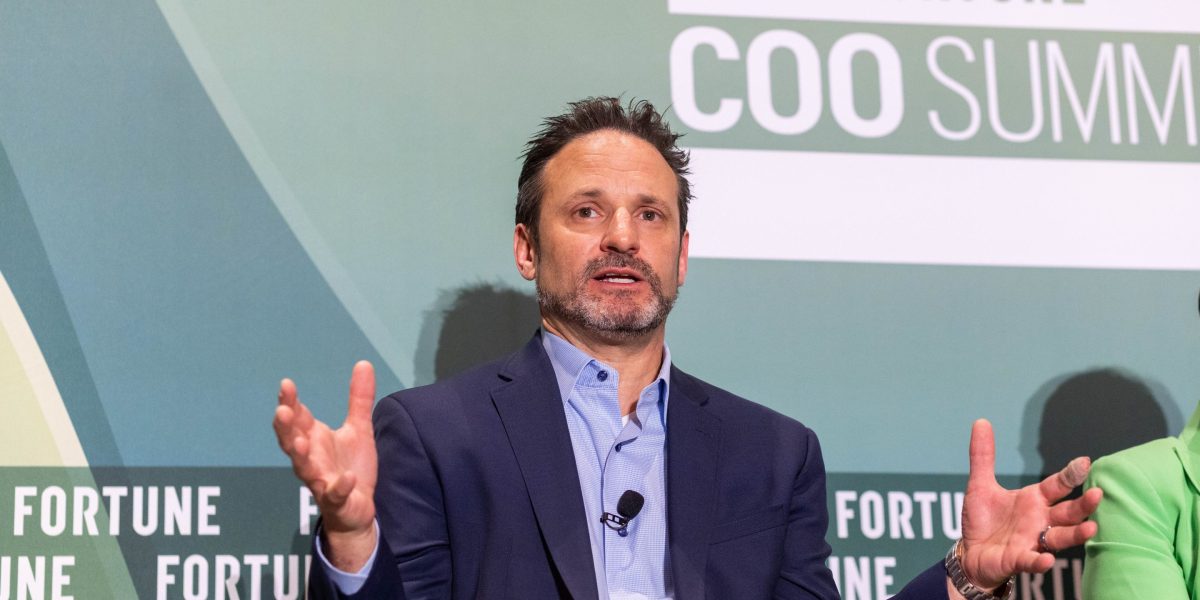
Eric Kelleher, President and COO of Okta, told a room of operations executives this week that companies must shift from workforce planning to work planning that budgets for both human workers and digital workers. Kelleher has named four AI agents—Leo, Sloan, Hank, and Walker—and they appear in business reviews with his human staff.
He booked a flight to Bangalore and spent the entire trip standing up an open-source agent on a separate machine, then assigned the same exercise to every member of his leadership team.
Kelleher said managers have been trained for decades to focus on headcount, org charts, reporting lines, layers, and span of control during budget cycles. He is advocating that managers at Okta design work that includes both human workers and digital workers and that they receive explicit token budgets for digital labor.
“Getting managers to think about work charts including AI agents as colleagues is a much harder problem than getting people to experiment with Claude Code,” Kelleher said.
Cognizant released research at the same event showing the AI transformation is occurring faster than earlier forecasts. In 2023 the firm projected that 90 percent of jobs would be disrupted by AI by 2032; it now reports that 93 percent of jobs are already disrupted, six years ahead of schedule.
” The firm analyzed 80,000 tasks each of the last three years and found that 90 percent still require human involvement in some way.
Jon Blotner, President of Wayfair, said the company reversed a top-down AI mandate and instead gave every employee access to Claude, Gemini, and ChatGPT. Teams then began reinventing their own roles, with some employees automating portions of their work.