Pentagon Announces Withdrawal of 5,000 Troops from Germany Over 6-12 Months
The Pentagon has announced plans to withdraw 5,000 troops from Germany, a move described as foreseeable by German officials. Germany's defense minister emphasized mutual benefits of the U.S. presence in Europe and the need for Europeans to take more security responsibility. The drawdown follows a review of U.S. force posture amid broader tensions with European allies.
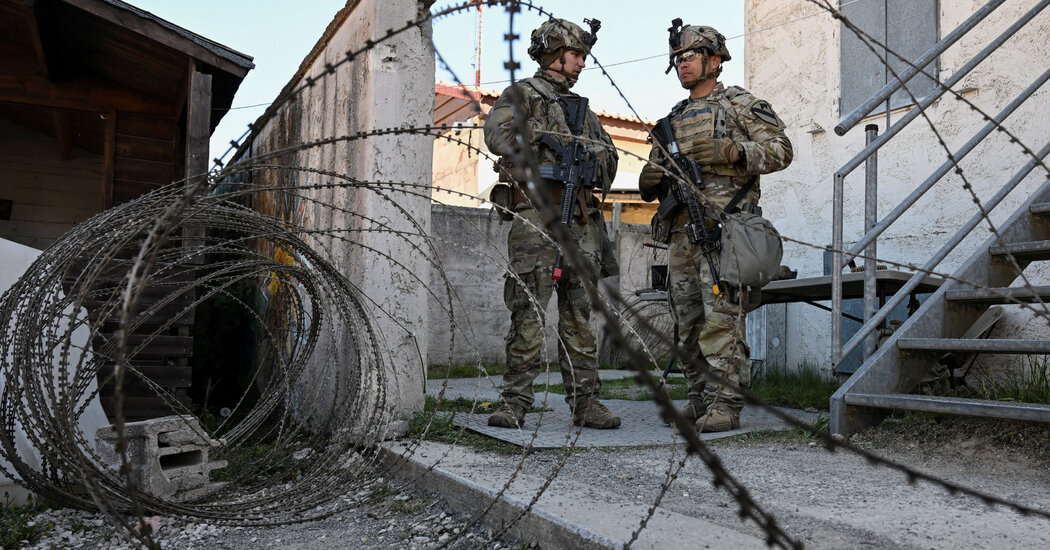
"DoD photo by Master Sgt. Ken Hammond, U.S. Air Force." / Wikimedia (Public domain)The Pentagon announced plans to withdraw approximately 5,000 U.S. troops from Germany over the next six to 12 months. This reduction affects about one-seventh of the 36,000 American service members currently stationed in the country. The decision follows a thorough review of the Department of Defense's force posture in Europe, recognizing theater requirements and conditions on the ground, according to a Pentagon spokesperson.
Germany's defense minister responded to the announcement, stating that the drawdown was expected. The minister highlighted the mutual interests served by the U.S. military presence in Europe, particularly in Germany. Europe is taking steps to assume more responsibility for its security within the NATO alliance, the minister added.
“The presence of American soldiers in Europe, and especially in Germany, is in our interest and in the interest of the U.S." — Boris Pistorius, German defense minister, to dpa (The Washington Times). The defense minister told the German news agency dpa that the move was foreseeable. He stressed recent German efforts to strengthen its armed forces, speed up procurement, and develop infrastructure. These actions align with broader European recognition of the need to contribute more to shared security. A NATO spokesperson stated on X that the alliance is working with the U.S. to understand the details of the force posture decision in Germany. The adjustment highlights the importance of Europe investing more in defense and sharing greater responsibility for collective security. The spokesperson noted progress toward a NATO target of allies investing 5% of their economic output in defense. >"This adjustment underscores the need for Europe to continue to invest more in defense and take on a greater share of the responsibility for our shared security.”
The troop withdrawal occurs amid deteriorating U.S. relations with Germany and other European allies. U.S. officials have expressed frustration over NATO allies' reluctance to participate in military actions against Iran. European leaders have criticized the U.S. approach to the conflict, with one German official stating that the U.S. is facing humiliation from Iranian leadership due to a lack of strategy.
U.S. officials accused the EU of failing to comply with a trade deal and announced plans to raise tariffs on cars and trucks produced in the bloc to 25% next week. This tariff increase would particularly impact Germany as a major automobile exporter.
An EU lawmaker described the tariff hike as unacceptable and accused the U.S. of breaching another trade commitment. The U.S.-led war against Iran began on February 28 with strikes conducted alongside Israel. NATO allies have not joined the campaign, prompting U.S. warnings that Europe must handle its own security, including support for Ukraine, in the future.
Germany hosts key U.S. military facilities, including the headquarters of the U.S. European and Africa commands, Ramstein Air Base, and a medical center in Landstuhl. U.S. nuclear missiles are also stationed in the country. These sites have supported operations, including treatment of casualties from past conflicts in Afghanistan and Iraq.
Overall, the U.S. maintains 80,000 to 100,000 personnel in Europe, varying with operations, exercises, and rotations. This presence increased after Russia's full-scale invasion of Ukraine in February 2022. NATO allies, including Germany, anticipated that these additional troops would be the first withdrawn.
The drawdown represents a sizable but not critical reduction in U.S. forces in Germany. The Pentagon provided limited details on which specific troops or operations would be affected. European allies have prepared for such a shift for over a year. U.S. officials have long discussed reducing the military footprint in Germany.
Allies have braced for withdrawals since recent changes in U.S. leadership, with warnings that Europe would need to manage its security independently.
Key Facts
Story Timeline
5 events- Today
Germany's defense minister responded to the U.S. troop drawdown announcement, emphasizing mutual benefits and European responsibility.
3 sourcesThe Washington Times · The Independent · @MarioNawfal - Yesterday
The Pentagon announced plans to withdraw 5,000 U.S. troops from Germany over the next 6-12 months.
3 sourcesThe Washington Times · The Independent · @MarioNawfal - Last week
German Chancellor Friedrich Merz criticized the U.S. approach to the war in Iran, citing humiliation and lack of strategy.
2 sourcesThe Washington Times · The Independent - Feb 28, 2026
The U.S.-led war against Iran began with strikes alongside Israel.
2 sourcesThe Washington Times · The Independent - Feb 2022
U.S. increased troop deployments in Europe following Russia's invasion of Ukraine.
2 sourcesThe Washington Times · The Independent
Potential Impact
- 01
EU automobile exports to the U.S. will face higher costs due to the 25% tariff.
- 02
Germany will accelerate defense spending and infrastructure development to offset reduced U.S. presence.
- 03
NATO allies will increase contributions toward the 5% GDP defense target.
- 04
U.S.-European trade tensions will escalate with potential retaliatory measures from the EU.
- 05
European security responsibilities will shift more toward local forces for Ukraine support.
- 06
U.S. military facilities in Germany will adjust operations with fewer personnel.
Transparency Panel
Related Stories
thehindu.comExplosion at China Fireworks Factory Kills 26 and Injures 61 in Hunan Province
An explosion at the Huasheng Fireworks Manufacturing and Display Company in Liuyang city, Hunan province, killed at least 26 people and injured 61 on Monday afternoon. Rescue operations have concluded, with authorities detaining company staff and halting all local fireworks produ…
citizen.co.zaMiddle East War Disrupts Global Supply Chains and Aviation Amid Diplomatic Efforts
The ongoing Middle East war has led to falling oil prices, plastic shortages in Asia, and minor flight cancellations in Hong Kong. Diplomatic talks continue, with China urging a ceasefire and the U.S. pausing ship escorts in the Strait of Hormuz. Various nations are addressing ec…
indiatoday.intoday.inTrump Pauses Project Freedom in Strait of Hormuz Amid Progress on Iran Agreement
President Trump announced a temporary pause to Project Freedom, the U.S. effort to escort ships through the Strait of Hormuz, citing mutual agreement with Iran to facilitate finalizing a deal while the blockade remains in place. The decision follows requests from Pakistan and oth…