Peru Holds Tight Presidential Runoff Between Fujimori and Sánchez With 30% Undecided
Voters choose between conservative Keiko Fujimori and nationalist Roberto Sánchez on June 7, 2026, after neither secured 20 percent in April’s first round.
 Abc News
Peruvians head to the polls on June 7, 2026, to elect their ninth head of state in ten years, choosing between conservative Keiko Fujimori and nationalist congressman Roberto Sánchez in a runoff expected to produce tight results. Fujimori and Sánchez advanced after defeating 33 other candidates in the April 2026 first round.
Official results showed Fujimori received 17 percent of the vote and Sánchez 12 percent.
Neither candidate reached 20 percent support, and electoral authorities took more than a month to certify the outcome. A nationwide Ipsos poll conducted more than six weeks after the first round found similar levels of backing for each candidate, with roughly three in ten voters still undecided. Pollsters estimate that about 30 percent of the electorate remains uncommitted ahead of Sunday’s vote.
Voting is mandatory for citizens aged 18 to 70. 2 million expected to cast ballots from abroad, mainly in the United States and Argentina. Sunday’s results may not be known for days.
Fujimori, 51, is the daughter of former president Alberto Fujimori, who governed in the 1990s. She became Peru’s first lady in 1994 after her parents’ separation. During the campaign she pledged to combat crime through technology to track extortions, militarized borders, and greater police and military presence in high-risk areas.
In the only debate before the runoff she defended her father’s government and promised to defeat crime as he defeated the Shining Path. Sánchez, 57, is one of the closest allies of jailed former president Pedro Castillo, whose 16-month term included more than 70 cabinet changes. He has pledged to fight corruption inside the police and to allow the military to support security operations.
During the debate he said he would be open to “all options to generate jobs and progress,” emphasized support for Chinese investment, and stated he will not nationalize assets of companies extracting minerals or gas. A 2025 survey by Peru’s National Institute of Statistics and Informatics found that 84 percent of urban respondents feared becoming crime victims within the next 12 months.
Experts link the rise of organized crime to profits from illegal gold mining in the Andes and Amazon.
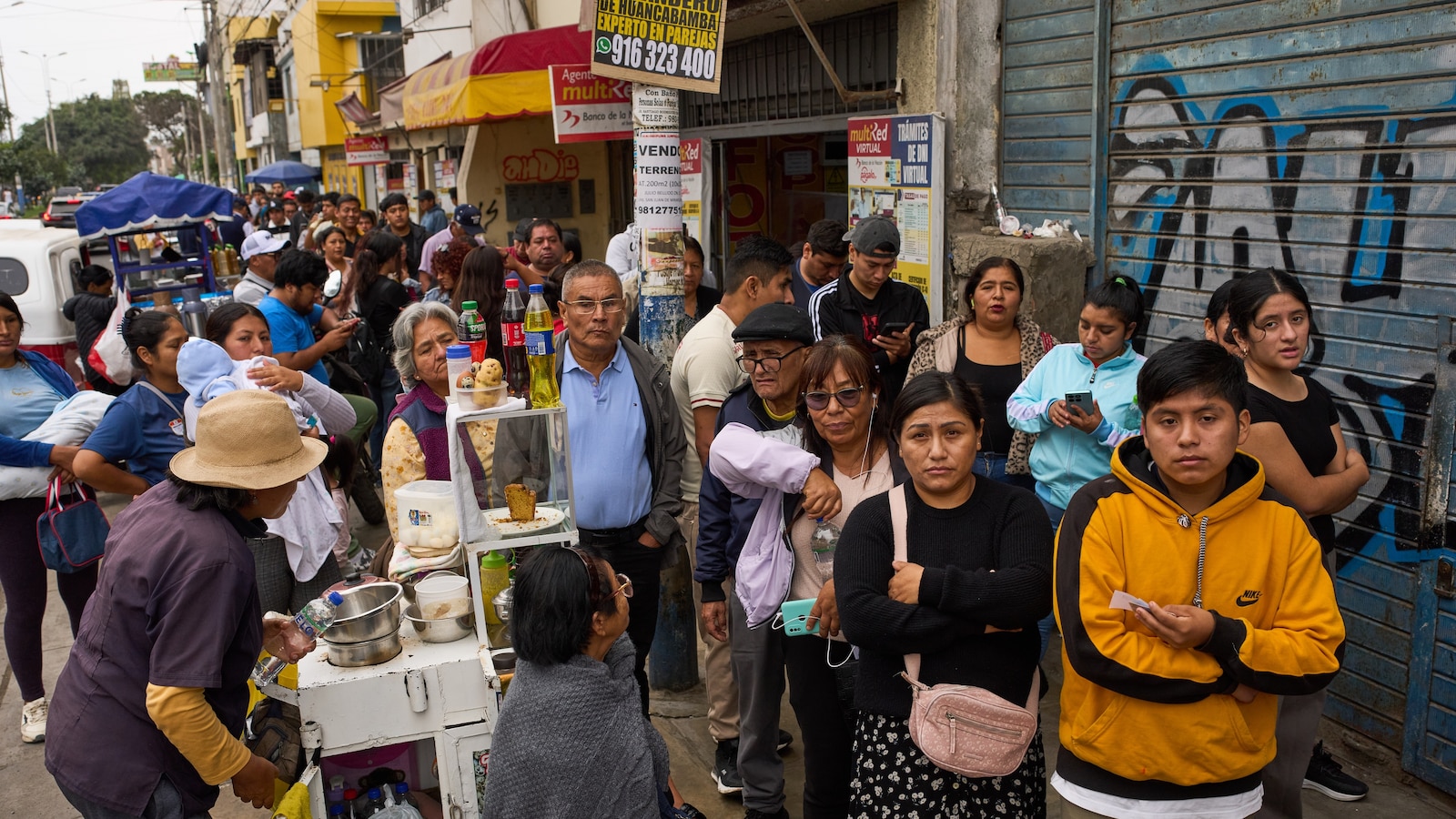
People lined up on June 6, 2026, to collect national identity cards ahead of the vote in Lima.