Substrate
politics

Poll Shows American Views on China, Tariffs and Iran as Trump Visits Beijing

A new poll finds most Americans view China as an economic rival or adversary but favor maintaining trade ties and reducing tariffs to lower consumer costs. The survey also shows divided opinions on the war in Iran, with majorities saying it has harmed U.S. national security, the economy and the country's reputation.

Npr
nypost.com
economictimes.indiatimes.com
pjmedia.com
4 sources·May 12, 9:00 AM(17 days ago)·3m read
Poll Shows American Views on China, Tariffs and Iran as Trump Visits BeijingNpr
Audio version
Tap play to generate a narrated version.

Most Americans see China primarily as an economic threat rather than a military one, according to a poll conducted by the Chicago Council on Global Affairs, NPR and Ipsos. Nearly eight in 10 respondents said China seeks to be the dominant world leader.

By a 56 percent to 29 percent margin, they described the threat from China as more economic than military, with only 13 percent saying China represents no threat to the United States. A majority described China as either a rival or an adversary. Thirty-seven percent called it a rival and 21 percent an adversary.

One in five saw China as a necessary strategic partner, while 2 percent viewed it as an ally. Of 10 countries rated in the survey, only Russia was seen more negatively, with two-thirds of Americans calling it an adversary or rival. Americans expressed strong support for continued trade with China.

Sixty-two percent opposed significantly reducing trade between the two countries, citing potential increases in costs for U.S. consumers. This represents a shift from surveys conducted in 2020 and 2021, when majorities favored reducing trade even if it raised prices.

A majority of 58 percent also opposed increasing tariffs on Chinese imports. Tariffs were viewed negatively by large majorities for their effects on the cost of living, standard of living and job creation. Seventy-six percent said tariffs harm the U.S. cost of living, 70 percent said they harm the standard of living and 61 percent said they harm job creation.

Similar shares said tariffs hurt both the Chinese and American economies. Republicans and Democrats diverged sharply on tariffs. A majority of Republicans said tariffs are good for creating jobs, the U.S. economy and their standard of living. Strong majorities of independents and Democrats disagreed.

Seven in 10 Americans said they support reducing tariffs on China in exchange for increased purchases of U.S. agricultural products. The poll found broad support for restricting certain aspects of the economic relationship. Seven in 10 respondents said U.S. companies should be prohibited from selling sensitive high-tech products to China.
A slim majority of 53 percent opposed limiting the number of Chinese students studying in the United States. Republicans were more likely to favor increasing tariffs, decreasing trade and limiting Chinese students.

Views on the War in Iran A separate survey on Iran released the same day found Americans largely view the war there as harmful to U.S. interests. Eighty-six percent said it has been bad for the U.S. cost of living, 65 percent for national security and 72 percent for the country's reputation abroad.

Majorities also said the war has been bad for China, though more respondents believed it has benefited China's global position than U.S. national security. Political differences were pronounced on the war's effects. Solid majorities of Republicans said the conflict has been good for U.S. national security and Israel's security.

Half of Republicans said it has been good for the United States' reputation and its relationships with allies. Only small shares of Democrats and independents agreed with those assessments. Israel remains a point of division. Sixty percent of Republicans said the war has been good for Israel's security, compared with 20 percent of Democrats and one in three independents.

Fifty-eight percent of Republicans said Israel is playing a positive role in the Middle East, while 83 percent of Democrats and 70 percent of independents said it is playing a negative role.

42 percent of respondents said they follow news about U.S.-China relations at least somewhat closely. Domestic issues drew far more attention, with 70 percent following the economy closely and 65 percent following immigration. Sixty-seven percent said they follow the war in Iran closely, while 43 percent follow events related to the Russia-Ukraine war.

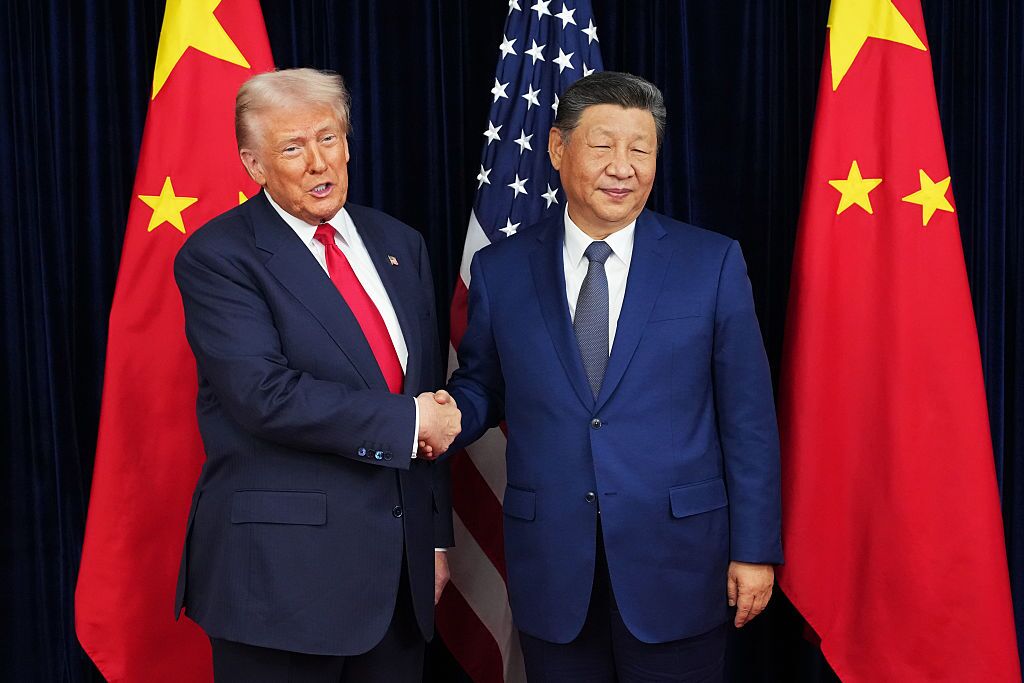
Both were carried out by Ipsos using its online panel. The results were released as President Trump begins his first trip to Beijing of his second term to meet with Chinese President Xi Jinping. China's relationship with Iran is expected to be among the topics discussed.

Key Facts

79%
say China wants to be dominant world leader
56% to 29%
see China threat as economic not military
58%
oppose increasing tariffs on Chinese imports
86%
say Iran war bad for U.S. cost of living
42%
follow U.S.-China news at least somewhat closely

Story Timeline

4 events
  1. May 12, 2026

    NPR releases poll results on American views of China, tariffs and Iran.

    1 sourceNpr
  2. May 12, 2026

    President Trump begins first trip to Beijing in his second term.

    1 sourceNpr
  3. May 1-3, 2026

    Ipsos conducts survey on American views of the war in Iran.

    1 sourceNpr
  4. March 13-15, 2026

    Ipsos conducts survey on American views of China and trade.

    1 sourceNpr

Potential Impact

  1. 01

    Consumer preference for lower prices may sustain pressure to maintain U.S.-China trade volume.

  2. 02

    Public opposition to higher tariffs may influence U.S. negotiating position in Beijing talks.

  3. 03

    Partisan divides on Iran and Israel could affect congressional support for related policies.

  4. 04

    Limited public attention to foreign affairs may reduce political pressure on diplomatic outcomes.

Transparency Panel

Sources cross-referenced4
Confidence score65%
Synthesized bySubstrate AI
Word count672 words
PublishedMay 12, 2026, 9:00 AM
Bias signals removed3 across 2 outlets
Signal Breakdown
Framing 1Loaded 1Editorializing 1

Related Stories

Russian Drone Strikes Romanian Apartment Building, Injuring TwoFrance 24
politics1 hr agoUpdated

Russian Drone Strikes Romanian Apartment Building, Injuring Two

A Russian drone crashed into a residential building in eastern Romania during an overnight attack on Ukraine. Two people were injured and Romania requested faster NATO anti-drone support.

AB
Cbs News
SK
The Hill
France 24
+8
14 sources
Trump Says U.S. Will Lift Iran Naval Blockade After Nuclear and Hormuz Pledgesrealitytea.com
politics1 hr agoDeveloping

Trump Says U.S. Will Lift Iran Naval Blockade After Nuclear and Hormuz Pledges

President Trump stated the U.S. will end its naval blockade of Iran once Tehran commits to forgoing nuclear weapons and opens the Strait of Hormuz to unrestricted shipping. The announcement came via Truth Social and a live statement.

FI
LI
MA
3 sources
Lebanese President Urges Ceasefire in Call With U.S. Secretary of Statednaindia.com
politics1 hr ago

Lebanese President Urges Ceasefire in Call With U.S. Secretary of State

Lebanese President Joseph Aoun spoke with U.S. Secretary of State Marco Rubio about the need for a ceasefire with Israel. Israeli and Lebanese military delegations met at the Pentagon on the same day.

SE
AJ
2 sources