Substrate
technology

Proxima Fusion Advances Stellarator Design for Nuclear Fusion Energy

Proxima Fusion, a Munich-based company, is developing a stellarator for nuclear fusion, aiming to produce more energy than consumed. The design builds on work from Germany's Max Planck Institute for Plasma Physics. Competing approaches include tokamaks, with ongoing efforts in various projects worldwide.

BBC News
1 source·Apr 20, 11:09 PM(38 days ago)·2m read
Proxima Fusion Advances Stellarator Design for Nuclear Fusion Energyinterestingengineering.com
Audio version
Tap play to generate a narrated version.
Developing·Limited corroboration so far. This page will refresh as more sources emerge.

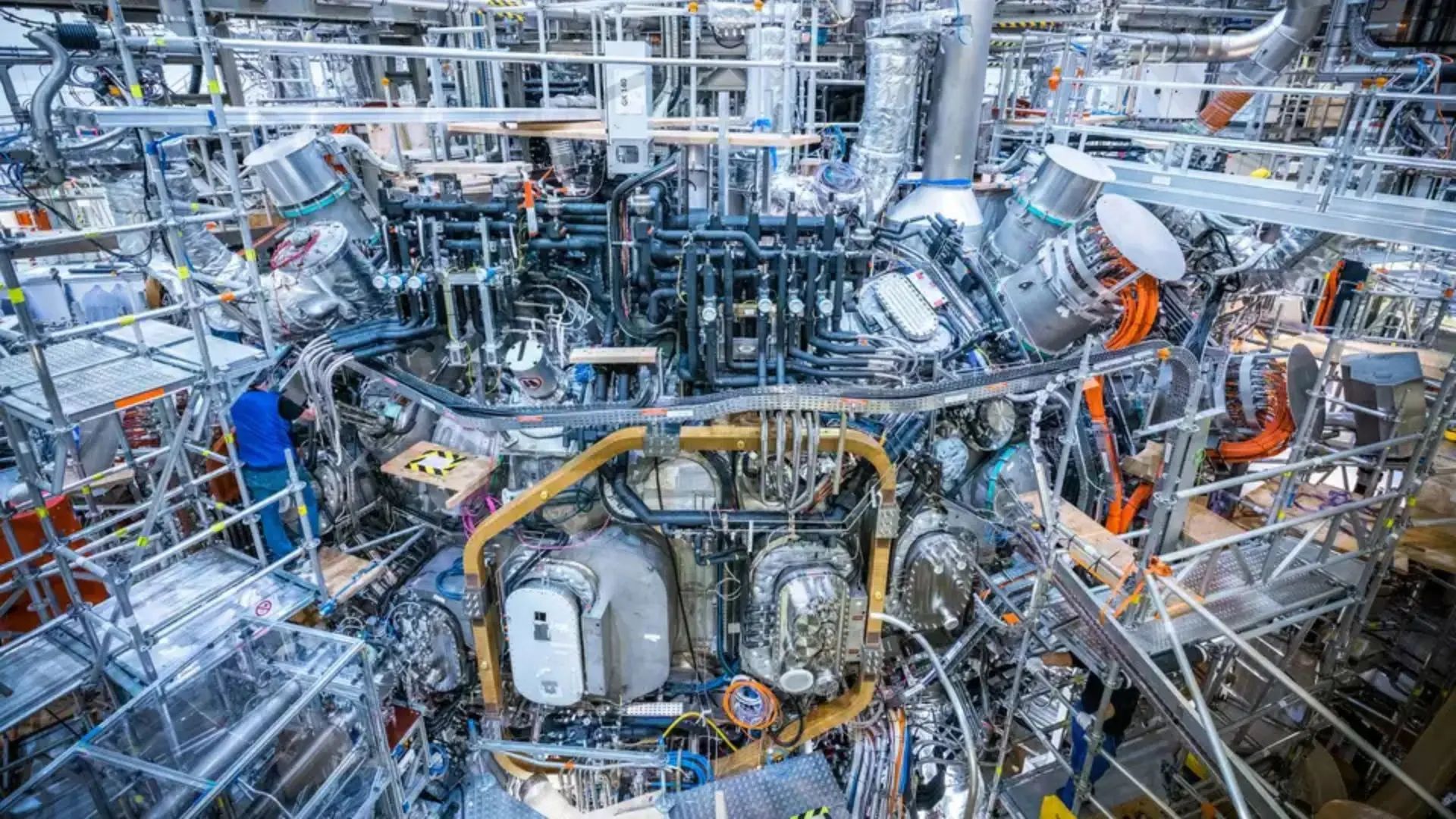
Proxima Fusion is working on a stellarator, a device designed to contain burning plasma for nuclear fusion through a complex shape with twists and curves. This approach contrasts with the more common tokamak, which uses a doughnut-shaped container. The company aims to create abundant, emission-free electricity by replicating the Sun's energy-producing reaction on Earth.

Fusion involves heating hydrogen isotopes like tritium and deuterium to form a hot plasma, which must be controlled to sustain the reaction. High temperatures, exceeding those on the Sun, are required without the Sun's gravitational forces.

to Francesco Sciortino, co-founder and CEO of Proxima Fusion, the stellarator's design could make plasma easier to control than in tokamaks, describing it as a simple machine once built. The company is developing a stellarator named Alpha, drawing from decades of research at the Max Planck Institute for Plasma Physics and its W7-X device.

Building stellarators is more difficult and expensive due to their intricate shapes. Proxima Fusion recently secured €400 million from the state of Bavaria and is seeking over a billion dollars from the federal government, with a decision expected next year.

The Fusion Industry Association reports 53 groups developing fusion technology. One tokamak-based project is the UK's Step, planned for a former coal-fired power station site in West Burton, Yorkshire, backed by the UK government. Ryan Ramsey, director of Organisational Performance at Step, stated that tokamaks benefit from extensive experimental data and simpler magnetic geometry, aiding manufacturability and cost.

Timeline Proxima Fusion is constructing a prototype magnetic coil for testing next year, followed by 40 more for Alpha. A magnet factory is in early development to support rapid production by 2028 or 2029. The company highlights Germany's manufacturing expertise, including 550,000 CNC machinists, compared to 350,000 in the United States.

This capability is essential for machining high-precision steel in the magnets. Proxima Fusion plans to use lessons from Alpha to design Stellaris, a fusion power plant. Across Europe, suppliers contribute to the effort, potentially positioning the region in future fusion industry leadership.

Key Facts

€400 million funding
secured by Proxima Fusion from Bavaria
53 fusion groups
tracked by Fusion Industry Association
550,000 CNC machinists
in Germany, aiding magnet production
Alpha stellarator
aims to produce net energy
Step project
UK tokamak prototype in Yorkshire

Story Timeline

4 events
  1. Recent

    Proxima Fusion secured €400 million from Bavaria and is bidding for federal funding.

    1 sourceBBC News
  2. Next year

    Decision on federal funding expected, and prototype magnetic coil testing planned.

    1 sourceBBC News
  3. 2028-2029

    Proxima Fusion aims to produce magnets at high speed for Alpha stellarator.

    1 sourceBBC News
  4. Decades prior

    Max Planck Institute for Plasma Physics developed W7-X stellarator over more than a decade.

    1 sourceBBC News

Potential Impact

  1. 01

    Successful stellarator development could lead to commercial fusion power plants in Europe.

  2. 02

    Increased funding may accelerate fusion research timelines across competing projects.

  3. 03

    Manufacturing advancements might boost Germany's role in high-tech energy sectors.

  4. 04

    Competition between stellarators and tokamaks could diversify fusion technology options.

Transparency Panel

Sources cross-referenced1
Framing risk15/100 (low)
Confidence score65%
Synthesized bySubstrate AI
Word count348 words
PublishedApr 20, 2026, 11:09 PM
Bias signals removed2 across 2 outlets
Signal Breakdown
Speculative 1Loaded 1

Related Stories

Tesla Cuts Model Y Starting Price in India by 12 Percentinvestors.com
technology1 hr agoDeveloping

Tesla Cuts Model Y Starting Price in India by 12 Percent

Tesla introduced a new Premium rear-wheel-drive Model Y in India and removed the Long Range rear-wheel-drive version. The change lowers the entry price by about 12 percent from the original 2025 launch price.

SA
1 source
Anthropic Raises $65 Billion at $965 Billion ValuationSemafor
ai1 hr agoDeveloping

Anthropic Raises $65 Billion at $965 Billion Valuation

Anthropic completed a $65 billion funding round at a $965 billion valuation. The round follows earlier growth that exceeded internal forecasts and a separate agreement to lease computing capacity.

Semafor
1 source
South African Researchers Develop Quantum and AI Tools for Cybersecuritythesouthafrican.com
ai1 hr agoDeveloping

South African Researchers Develop Quantum and AI Tools for Cybersecurity

Scientists and startup companies in South Africa are applying quantum communication and AI-powered tools to address rising global cyber threats. The work focuses on strengthening data protection methods.

Reuters
1 source