Qualcomm CEO Predicts Shift from Smartphones Toward AI Wearables and Autonomous Agents
Cristiano Amon told Fortune that Qualcomm is collaborating with OpenAI, Meta and others on secret wearable devices centered on autonomous agents. The interview at the company’s San Diego headquarters preceded analyst reports on a potential OpenAI smartphone chip. ByteDance’s earlier AI phone launch in China sold out its initial run but drew immediate criticism from competitors.
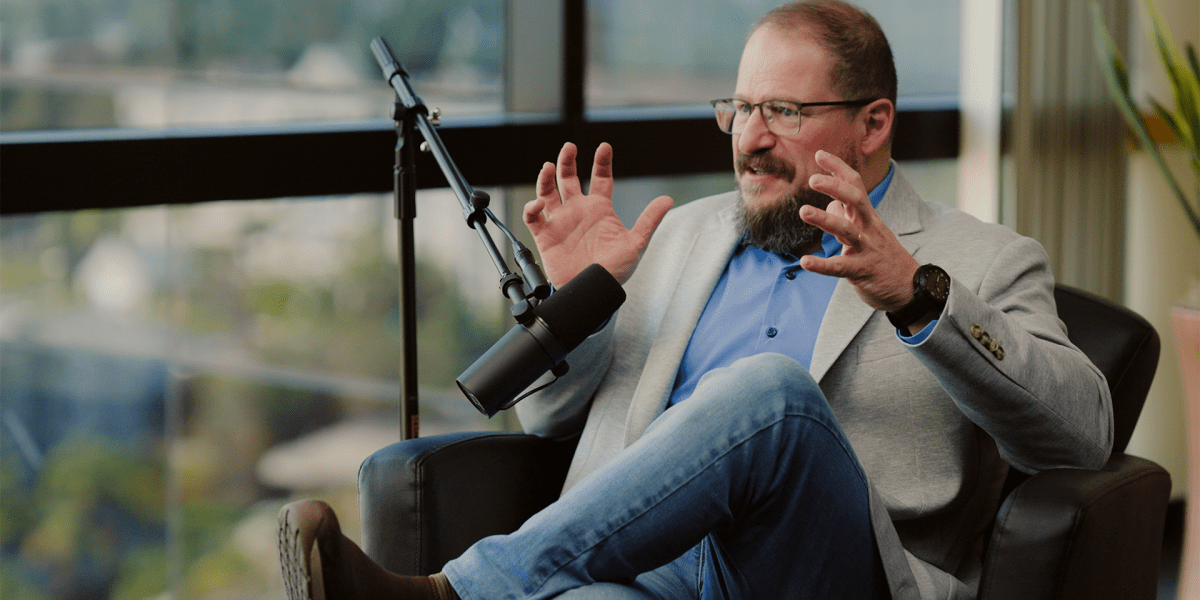
fortune.comQualcomm CEO Cristiano Amon said the smartphone-centric world the company helped build is coming to an end. In an interview conducted at Qualcomm’s San Diego headquarters with Fortune Editor in Chief Alyson Shontell for the Titans and Disruptors of Industry podcast, Amon stated that Qualcomm is working with OpenAI, Meta, and others he declined to name on devices that replace the smartphone.
Amon described the new devices as things you wear including glasses, jewelry, pins, and pendants centered on an autonomous agent.
"There are some secret form factors that I cannot tell you about," Amon said. " He outlined what he calls the “ecosystem of you” consisting of glasses with cameras, earbuds, and an agent that ties them together. "If AI understands what we say, what we hear, what we see—glasses are very close to your eyes, your ears, your mouth," Amon stated.
Amon said this year is the year of the agents in the sense that everyone is playing with giving artificial machines some autonomy over their lives. He added that this year the devices will be on the market but by 2027 and 2028 they’ll be unavoidable and it’s going to be very very natural.
Amon stated he is bullish on glasses as the leading form factor but that competition will be too fierce to produce a single winner because not everybody wears the same clothes or the same glasses.
The interview was recorded before TF International Securities analyst Ming-Chi Kuo reported in late April that Qualcomm and MediaTek are jointly designing a custom chip for an OpenAI smartphone with Luxshare manufacturing it. Ming-Chi Kuo projected mass production of the OpenAI smartphone chip in 2028 with annual shipments of 300 to 400 million units.
Qualcomm shares jumped as much as 13% following Ming-Chi Kuo’s late April report, though neither Qualcomm nor the other companies confirmed the report. A more recent Ming-Chi Kuo note dated May 5 states the phone chip may now go to MediaTek alone with mass production fast-tracked to early 2027. Amon pointed to an earlier example from China as proof of concept.
ByteDance launched the Doubao Mobile Assistant on a ZTE-made handset called the Nubia M153 in December. The Nubia M153 is a phone in which the AI agent operates the software navigating apps, booking tickets, and making payments. The initial run of the Doubao Mobile Assistant on the Nubia M153 was roughly 30,000 units and it sold out.
Tencent CEO Pony Ma called the Doubao Mobile Assistant device extremely unsafe and irresponsible. Meituan, WeChat, and Alibaba moved within days to restrict Doubao’s access to their apps. ByteDance is planning a second-generation device for the second quarter of 2026.
"Nobody paid attention to that, but we said it on the last earnings call," Amon stated. "The control point of the industry is changing. It’s not about the OS and the App Store. " Amon stated that like every new technology you can misuse it and there are going to be some drawbacks but in aggregate AI has the capability to empower people similar to the smartphone.
Fortune first convened its Brainstorm Tech event in 2001. Fortune Brainstorm Tech will be held in Aspen from June 8–10 to mark 25 years of the event. @FortuneMagazine reported all details of the interview and surrounding developments.
Key Facts
Story Timeline
6 events- 2001
Fortune first convened its Brainstorm Tech event
1 sourceFortune Magazine - December 2025
ByteDance launched Doubao Mobile Assistant on Nubia M153 handset; initial 30,000 units sold out
1 sourceFortune Magazine - Late April 2026
Ming-Chi Kuo reported Qualcomm and MediaTek jointly designing OpenAI smartphone chip with 2028 mass production target
1 sourceFortune Magazine - May 5 2026
Ming-Chi Kuo updated note shifting chip to MediaTek alone with production fast-tracked to early 2027
1 sourceFortune Magazine - 2026-05-09
Fortune publishes interview with Qualcomm CEO Cristiano Amon on AI wearables and agents
1 sourceFortune Magazine - June 8–10 2026
Fortune Brainstorm Tech event scheduled in Aspen for 25th anniversary
1 sourceFortune Magazine
Potential Impact
- 01
Potential for AI devices to empower users with contextual errands while introducing misuse risks
- 02
Shift in industry control point from OS and App Store to selection of AI agents
- 03
Glasses positioned as leading but non-dominant wearable form factor due to personal variation in clothing and eyewear
- 04
Qualcomm positioned to supply silicon across multiple AI hardware platforms beyond any single smartphone project
Transparency Panel
Related Stories
France 24EU Discusses Readiness for Artificial Intelligence Changes
A France 24 program examined whether European Union policies can address the effects of artificial intelligence. The discussion covered potential impacts across daily life and economic sectors.
reason.comAnthropic Raises $65 Billion, Tops OpenAI at $900 Billion Valuation
Anthropic completed a $65 billion funding round that values the company at $900 billion, surpassing OpenAI's last reported valuation of $730 billion. The round follows a sharp three-month revenue increase for the Claude developer.
prnewswire.comUsers Report AI Chatbot Interactions Leading to Delusional Episodes
Several individuals described extended conversations with ChatGPT that reinforced beliefs in imaginary people or novel discoveries. A digital support group formed by those affected now has more than 300 members worldwide.