Rotating-Eye Buoy Failed to Deter Seabirds from Danish Fishing Nets
A yellow buoy fitted with wind-driven aluminum flags painted as eyes did not keep seabirds away from pound nets off Korsør, Denmark. Researchers recorded more than 1,000 birds over 46 days and found the deterrent lost effect after 23 days. The study was published May 13 in Royal Society Open Science.
 Science News
A tall yellow buoy carrying two wind-spun aluminum flags painted with eyes was placed in one of two pound nets near Korsør, Denmark, to test whether the moving eyes would keep seabirds from taking fish. The device, nicknamed Bobby, was designed to create the impression of an approaching predator.
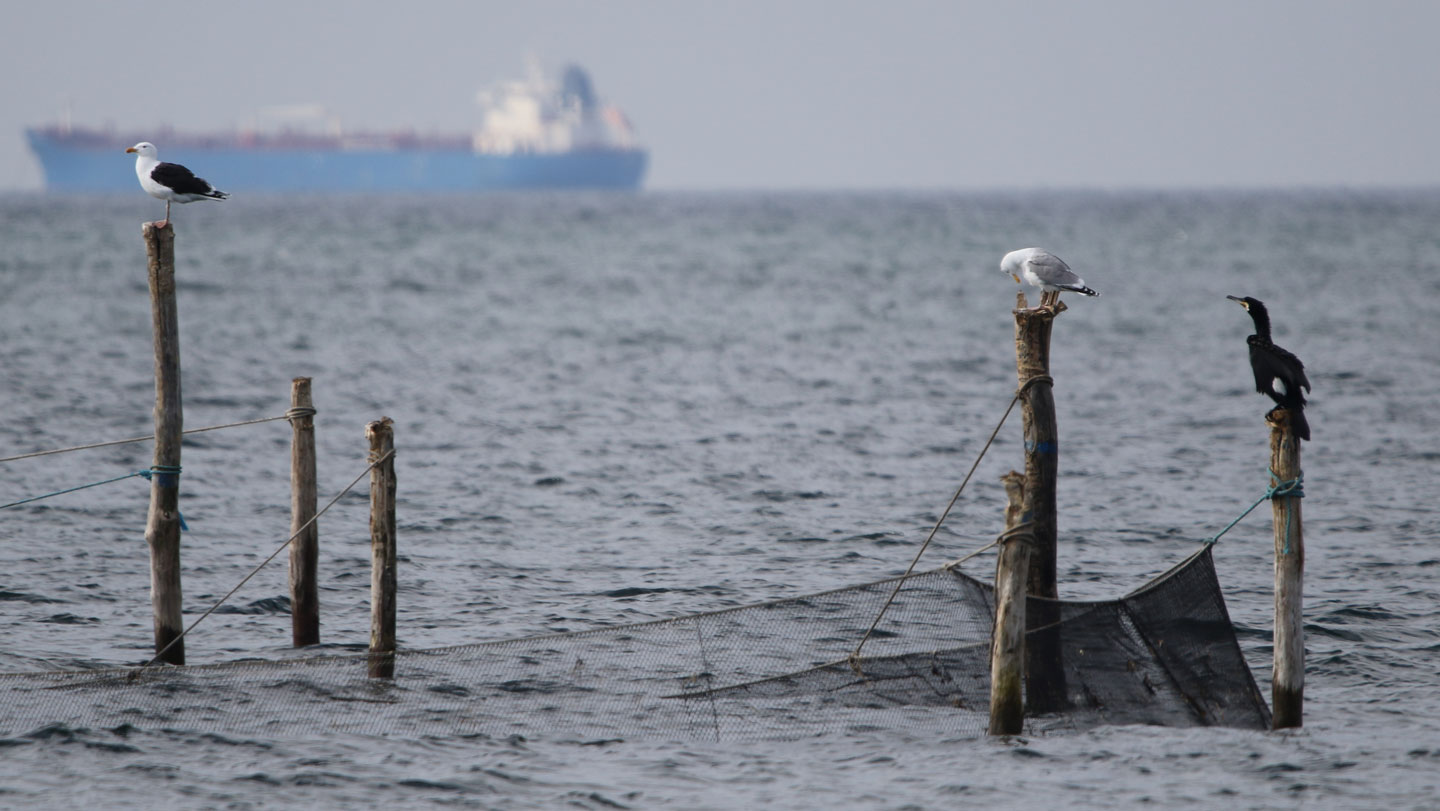
Researchers counted birds at the test net and at an identical control net for 46 days. During the first three weeks, the buoy reduced the number of birds near the equipped net. After 23 days, however, greater cormorants and gulls perched beside the buoy without reaction.
The pound nets target migrating garfish.
Wooden poles that anchor the nets provide perches for seabirds, which can become entangled and drown. Seabirds are protected under European Union rules, so any deterrent must be non-lethal. The buoy was tested because seabirds react to overhead movement.
Gildas Glemarec, a fisheries scientist at the Technical University of Denmark, said the flags were meant to simulate an approaching threat. He noted that the birds soon treated the device as harmless.
Wszelaki of Wrocław University of Environmental and Life Sciences said birds learn to ignore stationary or repetitive objects. He added that varying deterrents may slow habituation. Marina Papadopoulou of the Max Planck Institute for Human Development said a single bold bird can encourage others to approach a new object.
The researchers concluded that publishing negative results helps avoid repeated ineffective designs and reduces costs for fishers. Bobby now sits in Glemarec’s office.