Royal Observatory Director Says AI Reliance Reduces Human Questioning
Paddy Rodgers, director of the Royal Museums Greenwich, said instant AI answers risk reducing habits of questioning and evaluation. He spoke during the First Light project at the Royal Observatory Greenwich.
 bbc.co.uk
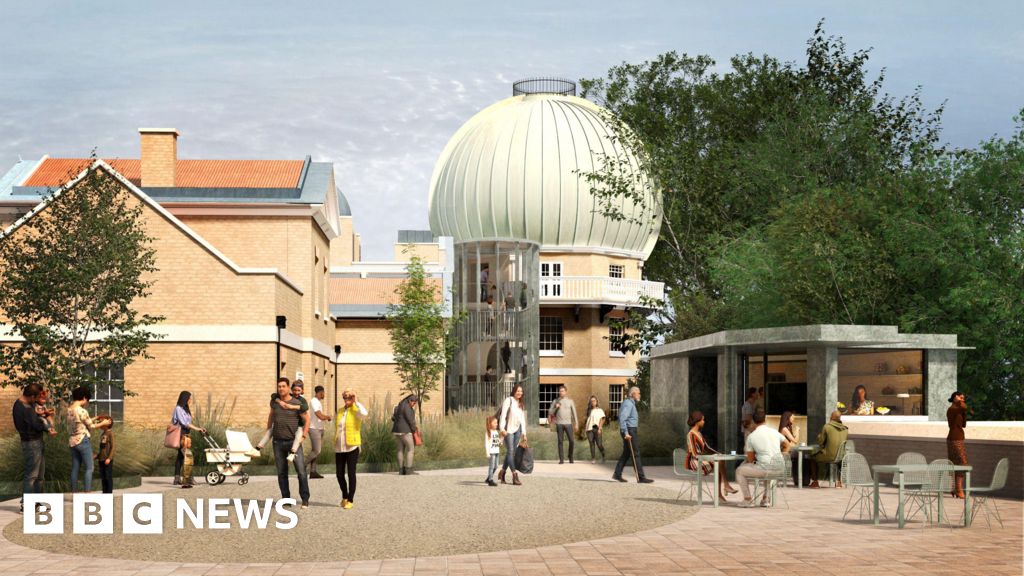
The director of the Royal Museums Greenwich said reliance on instant AI answers could reduce the habits of questioning and evaluation that support knowledge and innovation. Paddy Rodgers made the remarks while discussing the First Light project at the Royal Observatory Greenwich. The project aims to interpret the passion of astronomers over the last 350 years through science.
Rodgers noted that early astronomers collected large amounts of data about the heavens that later proved useful for purposes they had not anticipated. He said their work included tasks a machine would not perform, and that this data helped verify ideas about navigation on Earth 150 years later.
The Observatory operates as a museum that displays past research and discoveries. Rodgers said previous tools such as Wikipedia allowed users to return to original sources for verification, but AI responses can omit such information.
Rodgers said discoveries at the Observatory would not have occurred without technological innovation, but also required people to ask and pursue questions themselves. He added that unexpected results from direct inquiry might not appear in AI outputs.
Dr Anuschka Schmitt, assistant professor of information systems at LSE, said studies of cognitive outsourcing show that competencies, memory and learning can be negatively affected by contemporary AI use. She said it is important to consider when and where to apply the technology.
Rodgers said the Observatory's history demonstrates the power of human knowledge and the need to avoid complete dependence on AI.
Key Facts
Story Timeline
3 events- Today
Paddy Rodgers warned that reliance on instant AI answers risks losing habits of questioning and evaluation.
1 sourceBBC News - 2024
Sir Demis Hassabis shared the Nobel prize for Chemistry for work on protein structures using AI.
1 sourceBBC News - June 2025
A lecturer at Oxford Brookes University said AI tools can improve self-development when used responsibly.
1 sourceBBC News
Potential Impact
- 01
Educational institutions may adjust guidance on AI tool use.
- 02
Users may verify AI responses against original sources more often.
Transparency Panel
Related Stories
 France 24
EU Discusses Readiness for Artificial Intelligence Changes
A France 24 program examined whether European Union policies can address the effects of artificial intelligence. The discussion covered potential impacts across daily life and economic sectors.
 reason.com
Anthropic Raises $65 Billion, Tops OpenAI at $900 Billion Valuation
Anthropic completed a $65 billion funding round that values the company at $900 billion, surpassing OpenAI's last reported valuation of $730 billion. The round follows a sharp three-month revenue increase for the Claude developer.
 prnewswire.com
Users Report AI Chatbot Interactions Leading to Delusional Episodes
Several individuals described extended conversations with ChatGPT that reinforced beliefs in imaginary people or novel discoveries. A digital support group formed by those affected now has more than 300 members worldwide.