Russia Test-Launches RS-28 Sarmat ICBM from Plesetsk Cosmodrome
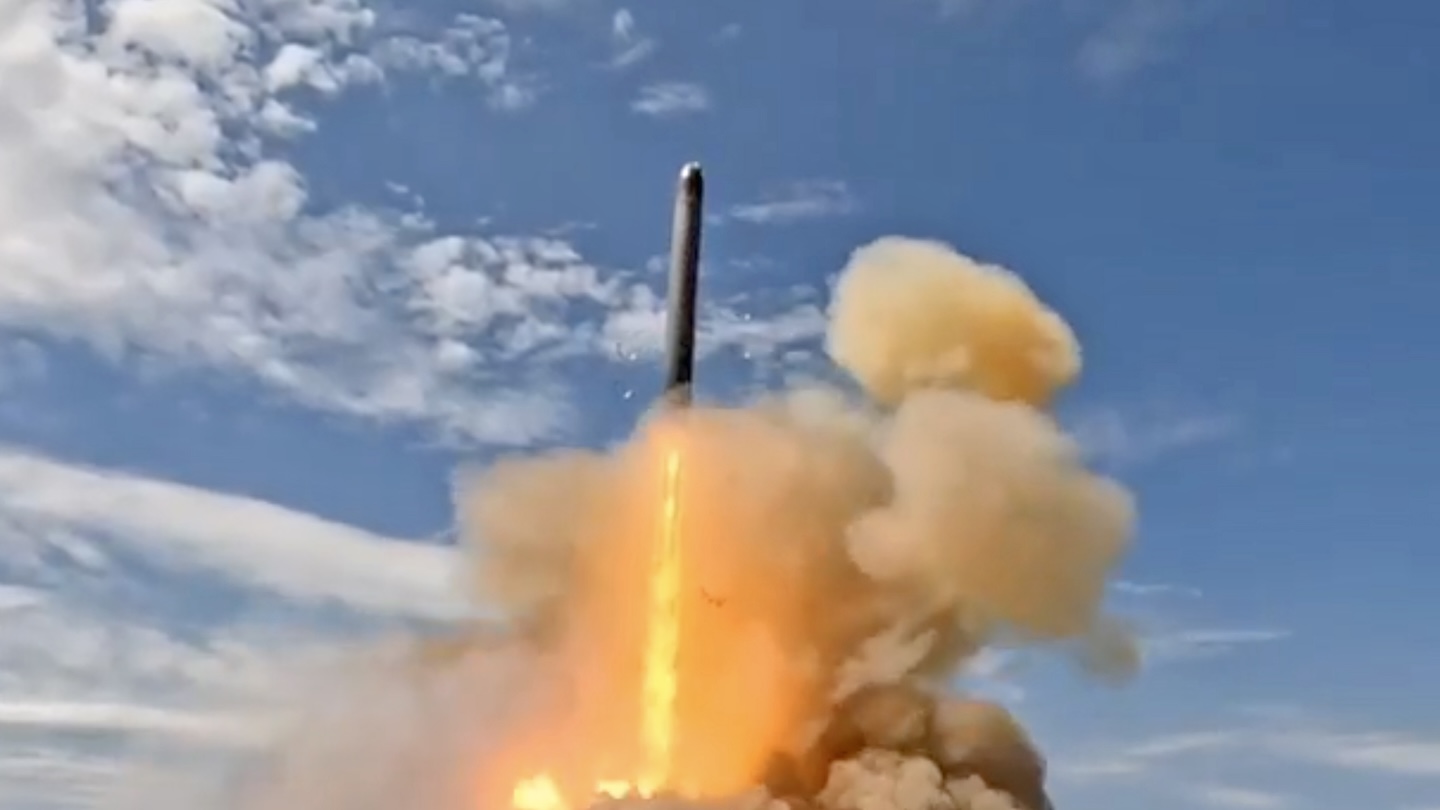
The missile reached its target at the Kura test range on Kamchatka roughly 30 minutes after lifting off at 11:15 a.m. Moscow time on May 12, 2026. President Vladimir Putin called the test a major event and unconditional success, saying it clears the way for the first Sarmat regiment to enter combat duty by the end of 2026.
 The War Zone
M. Moscow time on May 12, 2026. The test missile struck its designated target at the Kura test range on the Kamchatka Peninsula approximately 30 minutes later, according to Russian officials.
The War Zone reported that the launch occurred on Tuesday, May 12, 2026. Commander of the Strategic Rocket Forces Sergei Karakayev informed President Vladimir Putin of the successful Sarmat test on May 12, 2026. President Vladimir Putin monitored the launch via video link from his office bunker, the Kremlin said.
A pool photograph distributed by Sputnik shows President Putin holding a videolinked meeting with Sergei Karakayev on May 12, 2026. ” He stated that the positive results will allow deployment of the first missile regiment armed with this system to combat duty in the Uzhur formation of Krasnoyarsk Krai by the end of 2026.
The first Sarmat missile regiment will be deployed with the 62nd Red Banner Rocket Division at Uzhur in Siberia.
President Vladimir Putin stated that the Sarmat will enter service within the Strategic Missile Forces by the end of 2026. Putin says the Sarmat missile’s range could exceed 35,000 kilometers. The RS-28 Sarmat is known to NATO by the codename SS-29 Satan II and is intended to replace the Soviet-era R-36M2 system, also designated SS-18 Satan.
The Sarmat ICBM is a silo-launched, liquid-fueled, nuclear-armed missile. Details of the Sarmat were presented by Putin in 2018. The original plan was for the Sarmat to become operational in 2020. The first successful test launch of the Sarmat took place in 2022 from Plesetsk.
A Sarmat test launch failed in February 2023. A Sarmat test in September 2024 was unsuccessful and led to the destruction of the Yubileynaya test silo at Plesetsk. The New START Treaty expired in 2021.
As of September 2018, Russia had fewer than 520 deployed launchers under New START. New START allowed a maximum of 700 launchers. The apparent success of Tuesday’s test comes after a patchy development history for the program, which has faced repeated delays and technical setbacks.
The lifting of New START limits removes previous numerical caps on strategic systems, allowing Russia to proceed with Sarmat deployment while maintaining other ICBMs if it chooses. The War Zone reported that the missile has been beset by technical issues and delays.
Transparency
Reported by a single outlet. This score reflects source tier and factual specificity — corroboration is limited with one source.
Story details
Related Stories
 nypost.com
Berkshire Hathaway to Buy Taylor Morrison Home for $5 Billion in Cash
Berkshire Hathaway agreed to buy Taylor Morrison Home Corp. for $5 billion, or $50 per share in cash. The deal is the first multibillion-dollar acquisition under new Berkshire CEO Greg Abel.
 dig-in.com
Wildfires caused record insured losses in 2025 despite lower total area burned
A study found wildfires produced 38 per cent of global insured natural hazard losses in 2025. Major fires in the United States, South Korea and Europe killed about 90 people and forced roughly 300,000 evacuations.
New Jersey Restores Partial Family Visits at ICE Detention Center
Family visitation at Delaney Hall immigration detention facility will resume after a week of demonstrations and clashes. New Jersey's governor and federal officials confirmed the partial restoration Sunday following arrests and a nightly curfew.