Satellite Images Show Beirut Neighborhood Destruction, March to April 2026
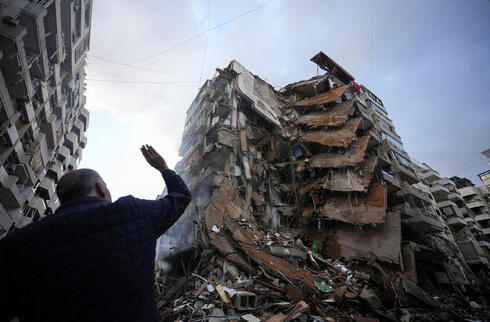
Satellite images of a Beirut neighborhood, captured on March 2 and March 30, 2026, indicate significant damage following the resumption of strikes on Hezbollah. Additional images from after April 8, 2026, reveal further destruction from a series of bombings. The images have circulated widely online.
 ynet.co.il
Satellite images depicting a Beirut neighborhood before and after recent military actions have gained widespread attention on social media. The images compare the area on March 2, 2026, with conditions on March 30, 2026, showing substantial structural damage. This damage occurred after strikes on Hezbollah resumed in the region.
The strikes are part of ongoing tensions between Israel and Hezbollah, which have escalated in recent months. Hezbollah, a militant group and political party based in Lebanon, has been involved in cross-border conflicts. The resumption of strikes followed a period of relative calm, leading to visible impacts on civilian areas in Beirut.
Further escalation occurred with a wave of bombings on April 8, 2026, which added to the existing destruction. Post-April 8 images highlight intensified damage in the same neighborhood, including collapsed buildings and debris. These developments have affected residential zones, displacing residents and straining local infrastructure.
Lebanon has faced repeated challenges from such conflicts, with Beirut serving as a key urban center. The neighborhood in question is located in a densely populated part of the city, home to thousands of residents. Emergency services have responded to the damage, though access to affected areas remains limited.
The circulation of these satellite images underscores the scale of the destruction. They provide visual evidence of changes over a short period, from late March to early April 2026. International observers have noted the images as a record of the conflict's impact on urban environments.
Looking ahead, reconstruction efforts in the affected areas will require significant resources. Humanitarian organizations are assessing needs for aid and shelter. The ongoing conflict raises concerns about long-term stability in the region, with potential for further military actions.
Story Timeline
3 events- After April 8, 2026
Wave of bombings caused additional destruction in Beirut neighborhood.
1 source@MarioNawfal - March 30, 2026
Satellite images showed damage after resumption of strikes on Hezbollah.
1 source@MarioNawfal - March 2, 2026
Initial satellite images captured Beirut neighborhood before strikes resumed.
1 source@MarioNawfal
Potential Impact
- 01
Residents in the Beirut neighborhood face displacement due to structural damage.
- 02
Regional tensions may prolong conflict affecting civilian life.
- 03
Local infrastructure in affected areas requires repair following bombings.
- 04
Humanitarian aid efforts increase to support impacted communities.
Multi-source corroboration verifies facts, not framing. This panel scores the Substrate rewrite you just read (top score) and the raw source bundle it came from. A positive delta means the rewrite stripped framing from the sources; a negative or zero delta means our neutralizer let some through.
Satellite images reveal targeted strikes on Hezbollah positions in Beirut, enabling Israel's defense against ongoing rocket attacks from Lebanon.
- Lede misdirectionnotable“TITLE: Satellite Images Show Destruction... BODY leads with images gaining attention on social media”Foregrounds image sharing over core event of military strikes and damageThe headline leads with who shared, posted, or reacted to the event rather than the substantive event itself — burying the actual news behind the messenger.
- Valence skewminor“substantial structural damage... visible impacts on civilian areas... displacing residents”Systematic negative descriptors on civilian and infrastructure effectsAdjectives and adverbs systematically slant toward one interpretation even though the underlying facts are neutral.
- Anonymous speculationminor“International observers have noted the images as a record”Unnamed observers used to emphasize conflict's negative urban impactUnnamed analysts, experts, or critics used to inject predictions or negative-valence claims that aren't sourced to named individuals.
Transparency Panel
Related Stories
 dailycaller.com
Federal Jury Finds Live Nation and Ticketmaster Operated Illegal Monopoly in Ticketing Market
A Manhattan federal jury ruled that Live Nation Entertainment and its Ticketmaster subsidiary violated antitrust laws by maintaining a monopoly over major concert venues and ticketing. The verdict followed four days of deliberations in a lawsuit brought by the U.S. Department of…
 indianexpress.com
United States Imposes Blockade on Iran
The United States has initiated a blockade of Iran's ports, prompting condemnation from China and efforts toward peace talks. The conflict, involving the US and Israel against Iran, includes a recent ceasefire announcement and searches for a missing US airman after a plane shootd…
 investing.com
U.S. Treasury Notifies Two Chinese Banks of Potential Sanctions Over Iranian Transactions
The U.S. Treasury has sent letters to two Chinese banks regarding potential Iranian money flows. Treasury Secretary Scott Bessent stated that secondary sanctions could be imposed if such transactions are proven. The action aims to address financial channels linked to Iran.