science
Scientists Assess Potential for Strong El Niño Event in 2024
Climate scientists have noted an increasing likelihood of an El Niño event forming later in 2024, with a 61% chance according to the National Oceanic and Atmospheric Administration. A strong El Niño, defined by sea surface temperatures rising at least 2°C in the central and eastern equatorial Pacific, could alter global weather patterns.
Apr 10, 6:35 PM·1m read1 source
 theinertia.com
Audio version
Tap play to generate a narrated version.
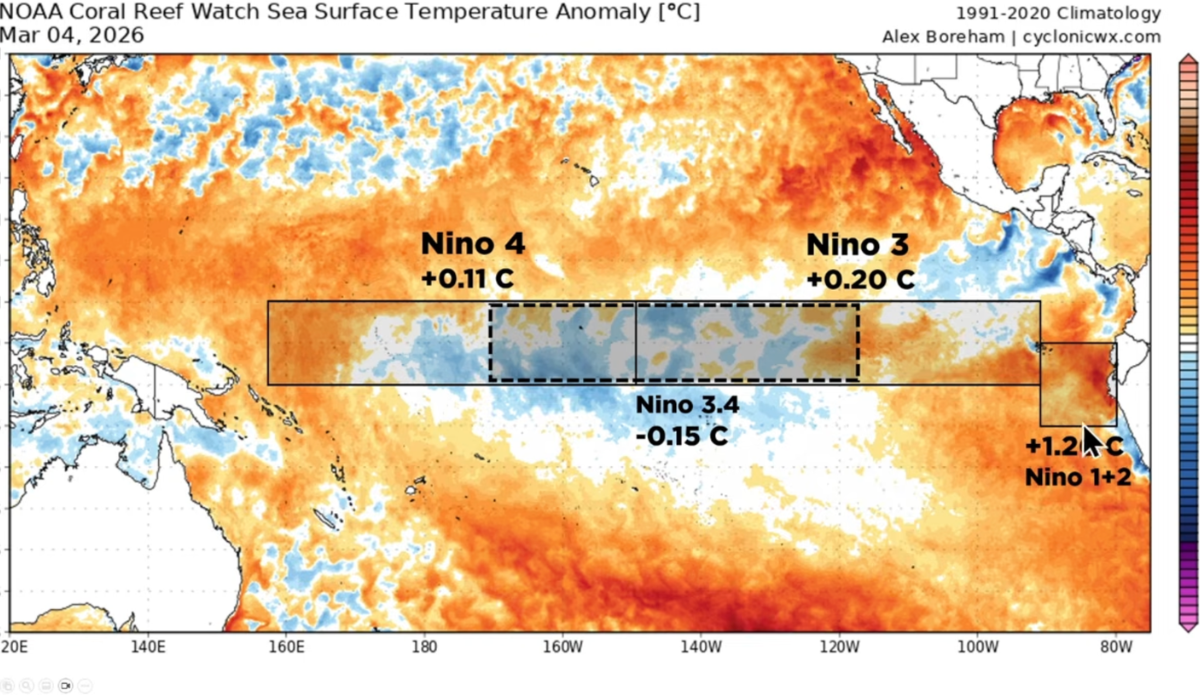
Niño El Niño involves warm water from the western Pacific moving eastward, replacing normally cooler water.
El Niño occurs when warm water that's built up in the West Pacific sloshes to the east and replaces that normally cold water with warmer water. And a super El Niño condition is when that warmer water basically erases the cold tongue.
5°C in weaker events.
Global Weather Impacts El Niño effects vary by region.
Areas with low normal rainfall may receive more rain, while typically wet areas may become drier. A strong El Niño could lead to a quieter Atlantic hurricane season but more activity in the central Pacific. South Asia's summer monsoon may weaken, and drought conditions could affect parts of the Amazon and Australia in fall and winter.
In the United States, southern regions might experience more rain and cooler temperatures, while northern areas could see warmer-than-average conditions. El Niño events have occurred five times at strong levels since 1950.
Change Scientists are examining the relationship between El Niño and climate change.
Some studies suggest that warmer atmospheres and oceans from fossil fuel emissions may intensify El Niño events, though consensus is not universal. Forecasting remains challenging in the current climate and more so in a warmer one.
The potential for altered rainfall patterns could affect crop production in various regions. Risks of crop failures in normally wet areas due to reduced rainfall during El Niño.