world
Scientists Identify 2023 Golden Orb Discovery as Base of Giant Sea Anemone in Gulf of Alaska
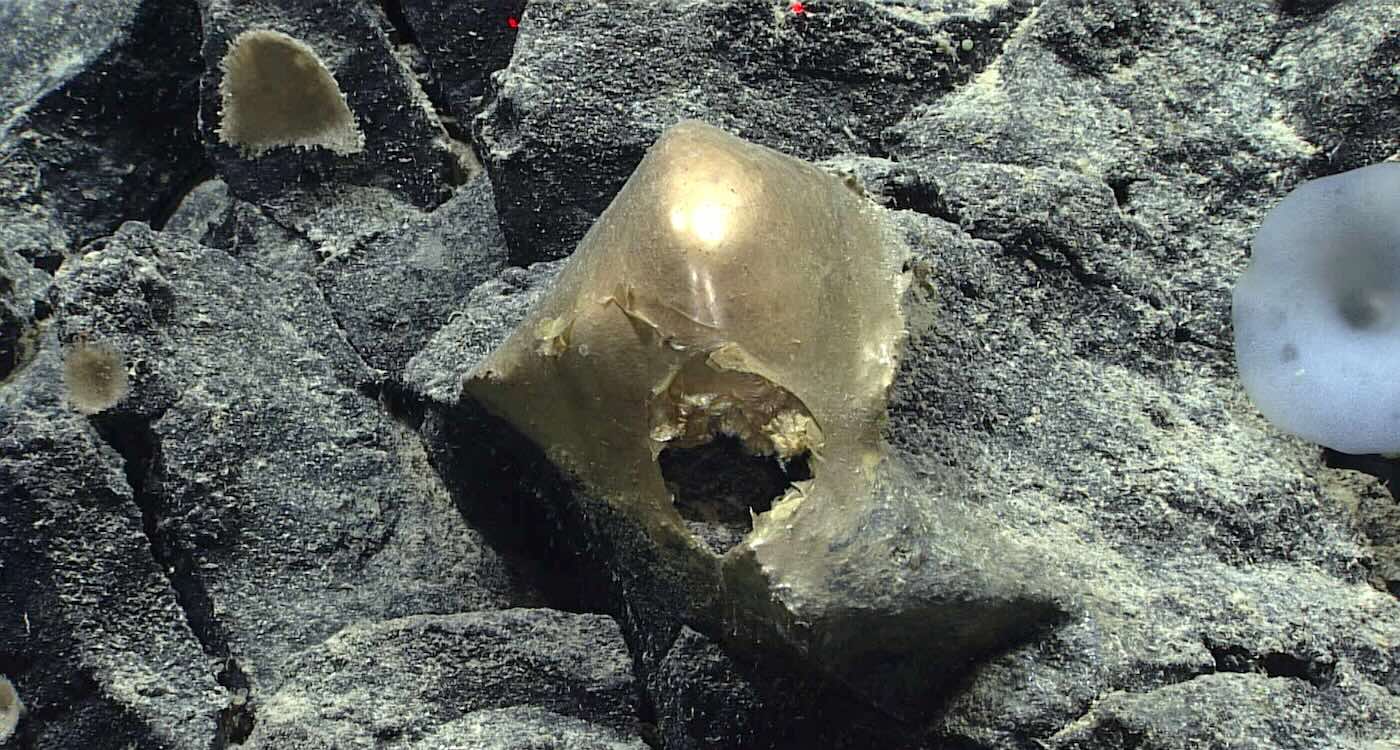
Researchers have determined that a mysterious golden orb found over two miles underwater in 2023 is part of a giant sea anemone species. The identification followed over two years of study involving morphological and genetic analysis. The anemone, Relicanthus daphneae, features large stinging cells and can grow tentacles up to six feet long.
Apr 23, 10:41 AM·2m read1 source
 goodnewsnetwork.org
Audio version
Tap play to generate a narrated version.
Developing·Limited corroboration so far. This page will refresh as more sources emerge.
Scientists have identified a mysterious golden orb discovered in 2023 as the base of a giant sea anemone, following over two years of analysis, CBS News reported. The object, found thousands of feet underwater in the Gulf of Alaska, was spotted by a remotely operated underwater vehicle over two miles deep.
Described as a strange, golden, mound-shaped object with a hole in it and stuck to a rock, the orb was collected and sent to the Smithsonian National Museum of Natural History for study.
Allen Collins, director of NOAA Fisheries' National Systematics Laboratory and a zoologist, said he thought routine processes would allow scientists to identify the object. 'This turned into a special case that required focused efforts and expertise of several different individuals, requiring morphological, genetic, deep-sea and bioinformatics expertise to solve,' Collins said.
Scientists discovered the unidentified golden orb-like organism on August 30 while operating a remote deep-sea diving vessel off the coast of Alaska.
They studied its physical structure and found it was a fibrous material covered with stinging cells like an anemone or coral. The stinging cells were identified as spirocysts, a specialized cellular structure that can capture prey. Spirocysts exist only on one group of aquatic invertebrates called cnidarians.
The research team compared the golden orb to a specimen collected in 2021 and found they were the same species. Initial DNA testing on the golden orb and the 2021 specimen was inconclusive. Whole-genome sequencing showed that the golden orb and the 2021 specimen were genetically almost identical to Relicanthus daphneae, a kind of cnidarian.