Semi-Automated System Detects Cleaner Fish Interactions With 90% Accuracy but 15% False Positive Rate
A new semi-automated method using DeepLabCut tracked and classified cleaning interactions between Labroides dimidiatus and Acanthurus leucosternon in laboratory trials. The approach reduced manual video review by 75%.
 app.buzzsumo.com
A research team developed a semi-automated system that tracks and classifies cleaning interactions between the cleaner wrasse Labroides dimidiatus and the powder blue tang Acanthurus leucosternon. The system achieved 90% accuracy in detecting interactions while reducing the amount of footage requiring manual annotation by 75%. 1038/s41598-026-56200-6.
Authors Raul Oliveira, Nuno Cruz Garcia, and José Ricardo Paula conducted the work. Raul Oliveira and José Ricardo Paula are affiliated with MARE – Marine and Environmental Sciences Centre & ARNET – Aquatic Research Network, Laboratório Marítimo da Guia, Faculdade de Ciências Universidade de Lisboa.
Nuno Cruz Garcia is affiliated with LASIGE, Departamento de Informática, Faculdade de Ciências Universidade de Lisboa.
José Ricardo Paula is the corresponding author. The experiments took place in a controlled three-dimensional laboratory setting.
Researchers used DeepLabCut for markerless pose estimation to track both fish species simultaneously. The model tracked both individuals with low error rates. From the tracking data, the team built a classification algorithm that detected cleaning interactions with 90% accuracy.
The algorithm misclassified approximately 15% of non-interactions as interactions and identified 25% of video content as containing interactions. Cleaner fish engage in mutualistic interactions by removing ectoparasites from client species, a behaviour that has traditionally been quantified through labour-intensive manual video analysis.
The project received support from a fellowship from the “la Caixa” Foundation (ID 100010434) with fellowship code LCF/BQ/PR24/12050006.
The work was supported by FLAD Science Award Atlantic—AtlanticDiversa (Proj. 2026/0095) funded by FLAD—Fundação Luso-Americana para o Desenvolvimento. 54499/PTDC/BIA-BMA/0080/2021) to JRP.
54499/UID/04292/2025). 54499/UID/PRR/04292/2025). The work was supported by the EQUIPAR+2 programme attributed to MARE (Reference: UID/PRR2/04292/2025).
54499/LA/P/0069/2020). The authors declare no competing interests. 0 International License.
Com reported the study details.
Transparency
Reported by a single outlet. This score reflects source tier and factual specificity — corroboration is limited with one source.
Story details
Related Stories
 abcnews.go.com
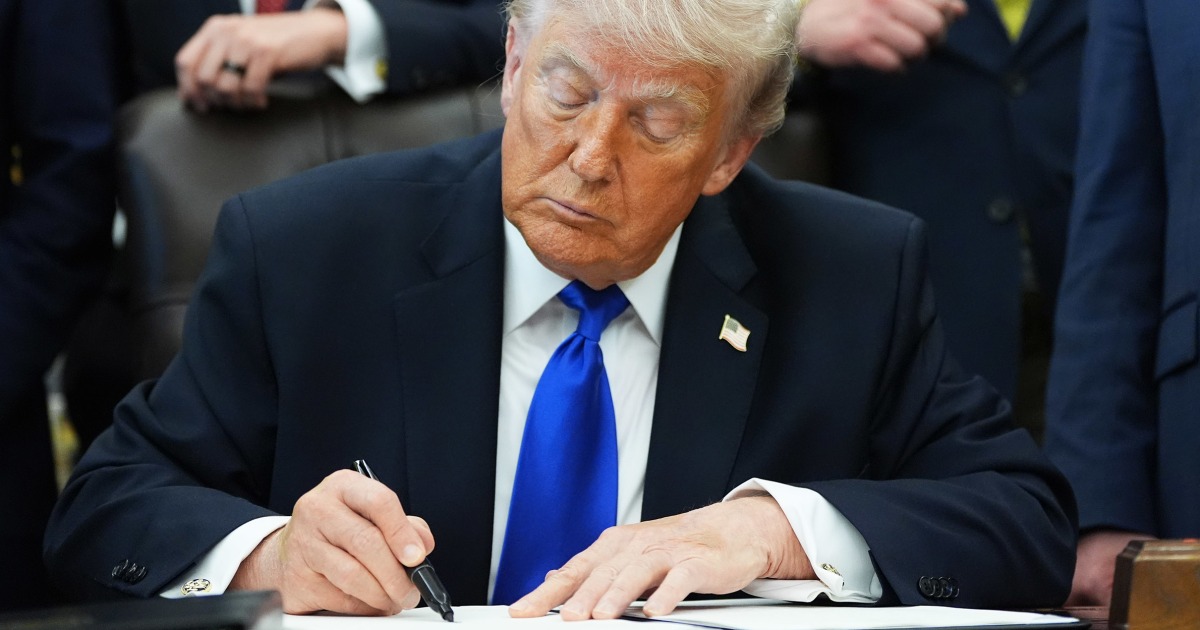
Trump Signs Executive Order Prioritizing AI for Cybersecurity Innovation
President Donald J. Trump signed an executive order on June 2 directing federal agencies to accelerate artificial intelligence development for protecting critical infrastructure. The order reverses earlier emphasis on slower deployment and risk reviews.
 nbcnews.com
Trump Signs AI Executive Order Promoting Innovation While Requiring Security Reviews
The order directs federal agencies to promote advanced AI development while addressing security concerns and reduces government review compared with an earlier draft.
 nbcnews.com
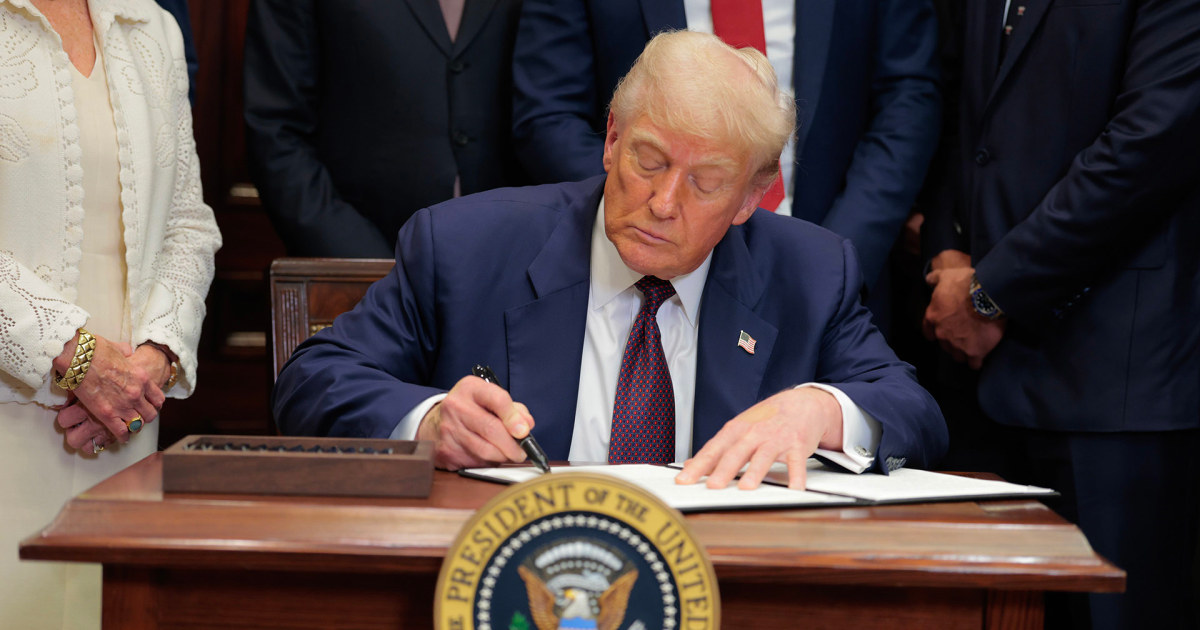
Trump Issues Executive Order for Voluntary 30-Day AI Model Sharing to Boost Innovation and Cybersecurity
President Trump signed an executive order on artificial intelligence and cybersecurity on June 2, 2026, establishing a voluntary 30-day pre-release window for frontier models and an industry collaboration on vulnerability scanning.