Senate Hearing Debates $100k H-1B Fee as Most Applicants Pay for 15-Day Processing
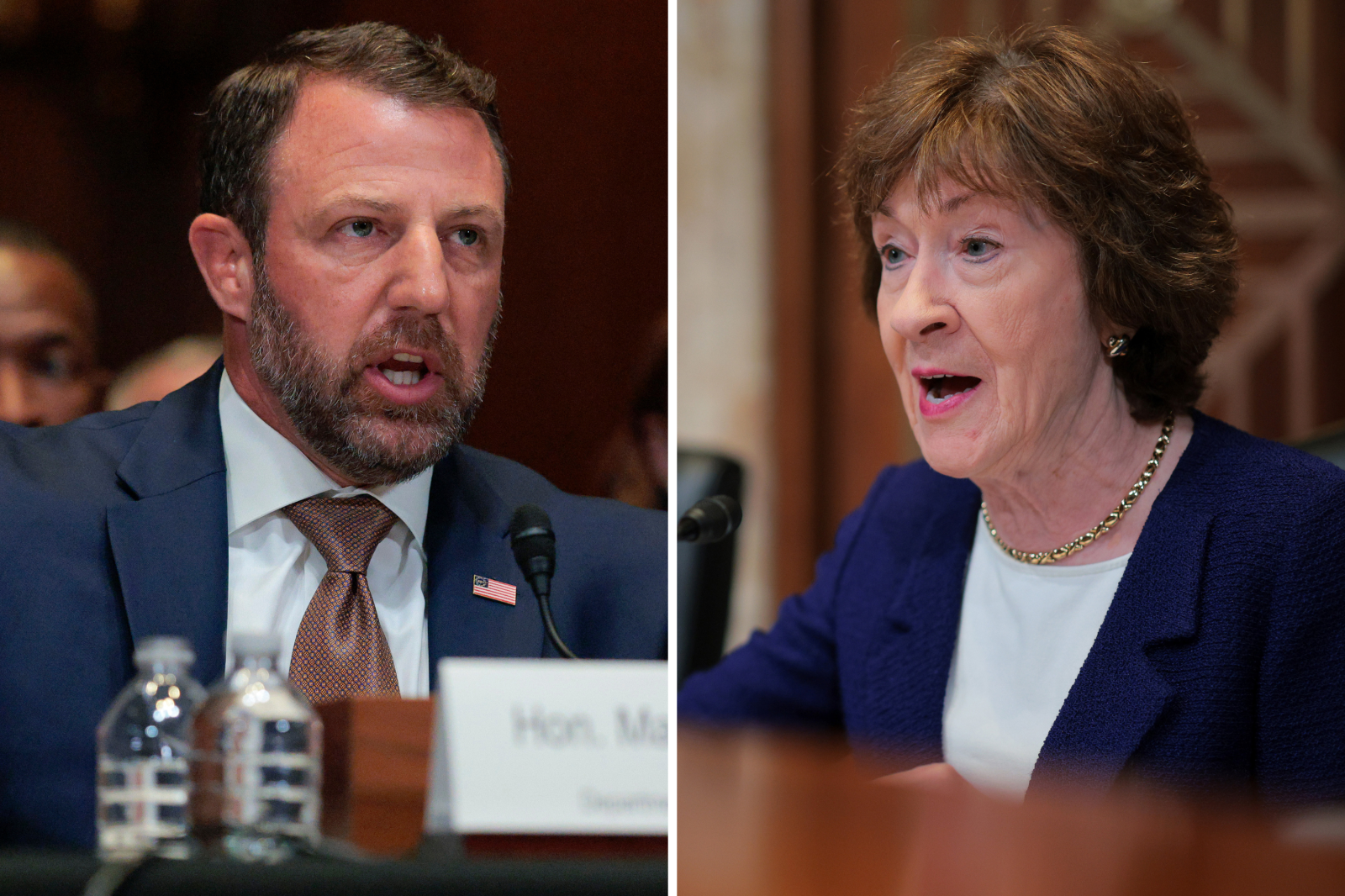
Homeland Security Secretary Markwayne Mullin testified Tuesday before the Senate Appropriations Committee on the Department of Homeland Security budget for fiscal year 2027. Senator Susan Collins questioned the fee's effect on healthcare staffing in underserved areas.
 Newsweek
Homeland Security Secretary Markwayne Mullin faced questions from Senator Susan Collins during a Tuesday Senate Appropriations Committee hearing on the Department of Homeland Security budget for fiscal year 2027. Collins, the committee chair, cited a rural hospital in northern Maine that paid the $100,000 fee to recruit a surgeon from overseas.
Mullin said the department has limited flexibility to grant waivers on a case-by-case basis.
He stated that applications submitted with the $100,000 fee are typically processed in about 15 days, compared with roughly seven and a half months for applicants seeking exemptions or alternative pathways. "We had 286,000 applicants a year to date for the H-1B visas.
Out of those, over 200,000 of them paid the $100,000 to be able to come in, because it allows us to process them in a little bit faster manner," Mullin said.
Collins responded that the fee creates different burdens depending on the employer. "I would suggest that there's a huge difference between bringing in a computer expert from another country to work in wealthy California and Silicon Valley versus a much-needed surgeon to work at a rural hospital," she said.
The Trump administration imposed the $100,000 fee on certain H-1B visa petitions at the start of 2026 after President Donald Trump signed a presidential proclamation introducing the fee in September 2025.
As of February 15, 2026, the administration had received 85 payments of the fee, according to a DHS filing. S. institutions.
Universities and nonprofit research organizations are exempt from the cap. A bipartisan group of 100 lawmakers sent a letter in February to then Homeland Security Secretary Kristi Noem warning that the fee could worsen staffing shortages and strain already underfunded hospitals.
In 2025, Senate Judiciary Committee Chairman Chuck Grassley and Senator Dick Durbin unveiled legislation to overhaul the H-1B and L-1 visa programs by raising wage requirements and increasing federal oversight.
Representative Bonnie Watson Coleman introduced legislation in March 2026 that would nullify the administration's $100,000 H-1B fee requirement. Representative Greg Steube has proposed legislation to eliminate the H-1B program entirely. Newsweek reported that 175 investigations have been opened into companies potentially abusing the H-1B visa program.
A federal judge in Boston heard arguments on May 29 in a lawsuit challenging the fee but did not immediately rule. S. District Judge Leo Sorokin questioned the breadth of the administration's legal authority to impose the fee.
U.S. Court of Appeals for the District of Columbia Circuit agreed to expedite the appeal.
A separate lawsuit in California challenging the fee remains active. The fee remains in effect pending further court decisions.
Transparency
Reported by a single outlet. This score reflects source tier and factual specificity — corroboration is limited with one source.
Story details
Related Stories
 Forbes
NASA Retires MAVEN After 11 Years of Mars Atmosphere Discoveries Following Unrecoverable Anomaly
The agency confirmed Wednesday that the orbiter, launched in 2013, is beyond recovery following a fast spin that drained its batteries. MAVEN completed more than a decade of atmospheric observations at Mars.
 tass.com
Trump Budget Reduces CDC Wastewater Surveillance Funding From $125M to $25M Annually
President Donald Trump's budget plan reduces annual funding for the CDC's National Wastewater Surveillance System from $125 million to $25 million, limiting national coverage after September 30, 2026.