Ships Linked to Iran Turn Back from Strait of Hormuz During U.S. Naval Blockade
The U.S. naval blockade of the Strait of Hormuz took effect on Monday, with six vessels complying with orders to turn around on Tuesday. No ships from Iranian ports have passed the blockade as of Tuesday. The blockade responds to Iran's failure to reopen the strait amid a conflict that began six weeks ago.
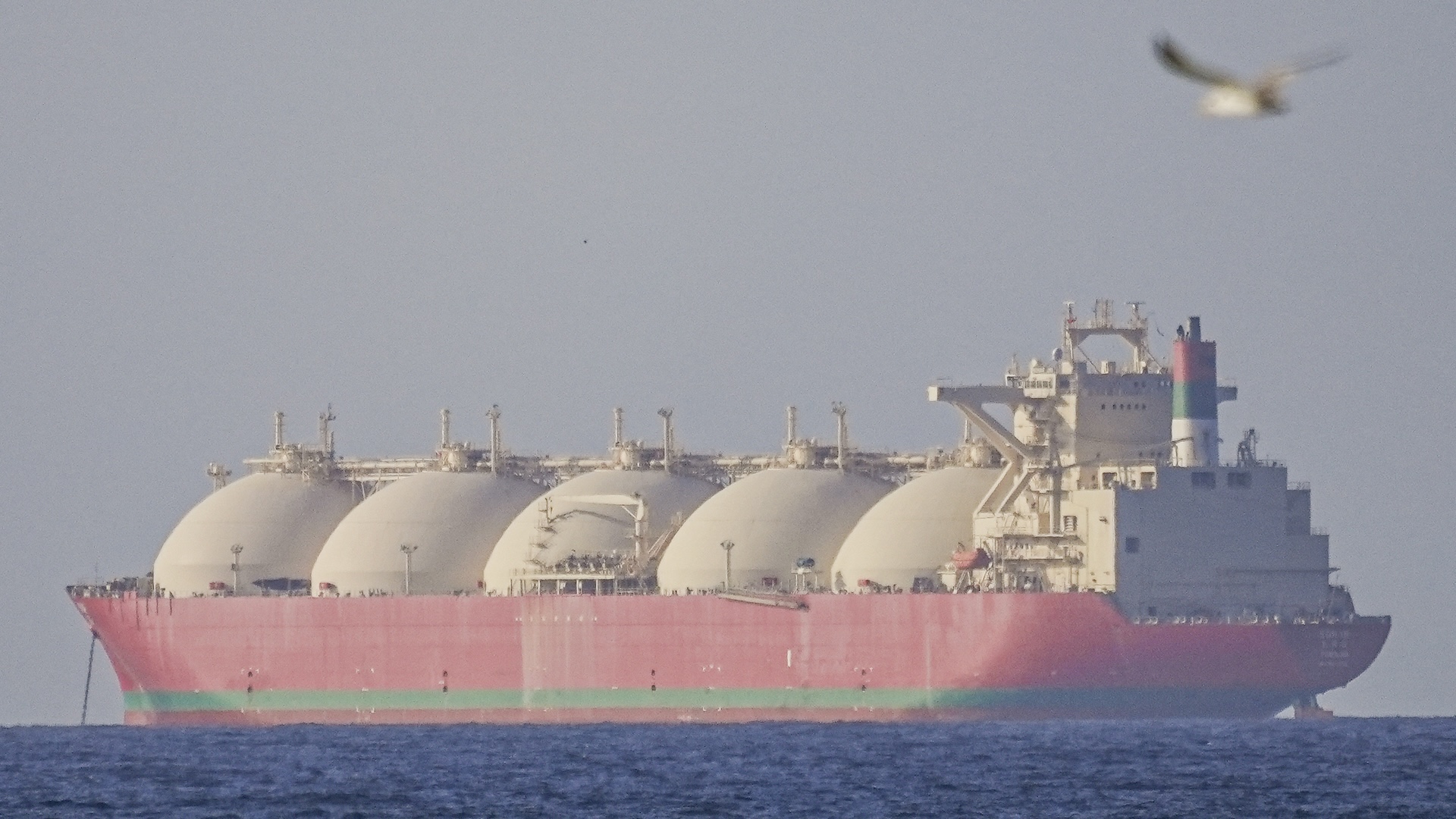 The War Zone
S. S. naval blockade of the Strait of Hormuz took effect on Monday, hours after two Iran-linked ships exited the strait. Four vessels with links to Iran crossed the strait after the blockade started, but two of them reversed course.
U.S. S. Central Command. S. Central Command stated. The US-sanctioned tanker Rich Starry sailed east from Sharjah in the UAE through the Strait of Hormuz overnight and then changed direction, according to MarineTraffic.
The bulk carrier Christianna sailed east through the strait on Monday after calling at Bandar Iman Khomeini in Iran and then turned back. The US-sanctioned tanker Elpis transited the Strait of Hormuz on Tuesday and may have come from the Iranian port of Bushehr, per MarineTraffic. The tanker Elpis was stationary on the eastern side of the Strait of Hormuz on Tuesday evening.
Two Iranian-flagged ships left the vicinity of Iran's Chabahar port after the start of the blockade on Tuesday, according to BBC Verify.
Pre-Blockade Ship Movements and Compliance The cargo ship Ashkan3 departed from close to Chabahar port on Tuesday, BBC Verify reported.
The container ship Shabdis departed from close to Chabahar port on Tuesday. The ships Ashkan3 and Shabdis traveled more than 500km out of Iranian waters after departing on Tuesday. At least four vessels with no obvious links to Iran crossed the Strait of Hormuz since the blockade started on Monday, per BBC Verify.
U.S. blockade, according to The New York Times. BBC Verify tracked 18 vessels transiting the Strait of Hormuz between the breakdown of ceasefire talks and President Donald Trump's announcement of a blockade on Sunday evening.
At least 16 of the 18 vessels tracked by BBC Verify appeared to have links to Iran. Ships that passed the Strait of Hormuz have taken a northerly route close to Iran's coastline and within its territorial waters, BBC Verify stated. An average of 138 ships passed through the Strait of Hormuz each day before the conflict started on 28 February, according to the Joint Maritime Information Centre.
U.S. blockade is in response to Iran knowingly failing to reopen the strait.
S. will take action against any ship found to be paying transit tolls to Iran. The Strait of Hormuz connects the Gulf with the Indian Ocean.
Two destroyers, the USS Frank E. Petersen and USS Michael Murphy, are in the area as part of a mission to clear sea mines previously laid by Iran's Islamic Revolutionary Guard Corps, according to Centcom. U.S.
along the entire Iranian coastline, per The War Zone. Nearly 800 ships have been stuck for several weeks, according to Richard Meade. The conflict began six weeks ago. S. conducted the 50th strike against alleged drug boats in the Pacific, according to The Dispatch.
Story Timeline
6 events- 2026-04-15 (Tuesday evening)
Tanker Elpis stationary on eastern side of Strait of Hormuz.
1 sourceMarineTraffic - 2026-04-15 (Tuesday)
Six vessels comply with U.S. orders to turn around; no ships from Iranian ports pass blockade; Ashkan3 and Shabdis depart near Chabahar and travel over 500km.
3 sourcesUS Central Command · BBC Verify · BBC Verify - 2026-04-15 (Tuesday)
Elpis transits Strait of Hormuz, possibly from Bushehr.
1 sourceMarineTraffic - 2026-04-14 (Monday)
U.S. blockade takes effect; Christianna sails east then turns back; two Iran-linked ships exit strait ahead of blockade.
3 sourcesThe New York Times · MarineTraffic · The New York Times - 2026-04-13 (Sunday evening)
Trump announces blockade.
1 sourceBBC Verify - 2026-02-28
Conflict starts; average of 138 ships pass strait daily before this date.
2 sourcesunattributed · Joint Maritime Information Centre
Potential Impact
- 01
Disrupted Iranian shipping routes, forcing vessels to turn back or take northerly paths within territorial waters.
- 02
Reduced strait transits from pre-conflict average of 138 ships daily.
- 03
Nearly 800 ships remain stuck, affecting global trade through the Gulf-Indian Ocean connection.
- 04
Clearance of IRGC-laid mines by U.S. destroyers, altering navigation hazards in the area.
- 05
U.S. enforcement actions against toll-paying ships, potentially increasing maritime tensions.
Multi-source corroboration verifies facts, not framing. This panel scores the Substrate rewrite you just read (top score) and the raw source bundle it came from. A positive delta means the rewrite stripped framing from the sources; a negative or zero delta means our neutralizer let some through.
The US blockade effectively enforces compliance, restoring safe passage through the strait after Iran's unlawful closure and deterring further aggression.
- Lede misdirectionnotable“TITLE: Ships Linked to Iran Turn Back from Strait of Hormuz Amid U.S. Naval Blockade”Leads with ship reactions instead of blockade implementationThe headline leads with who shared, posted, or reacted to the event rather than the substantive event itself — burying the actual news behind the messenger.
- Valence skewminor“U.S. blockade is in response to Iran knowingly failing to reopen the strait”Loaded phrasing assigns blame to Iran with 'knowingly failing'Adjectives and adverbs systematically slant toward one interpretation even though the underlying facts are neutral.
Transparency Panel
Related Stories
 Washington Examiner
Federal Jury Convicts Defendant on Gun Charges in Delaware Trial
A federal jury in Wilmington, Delaware, found the defendant guilty on all three felony gun charges related to a 2018 firearm purchase. The charges involved lying about drug use on a background check form and possessing a gun while addicted to or using illegal drugs. Sentencing is…
 indianexpress.com
United States Imposes Blockade on Iran
The United States has initiated a blockade of Iran's ports, prompting condemnation from China and efforts toward peace talks. The conflict, involving the US and Israel against Iran, includes a recent ceasefire announcement and searches for a missing US airman after a plane shootd…
 investing.com
U.S. Treasury Notifies Two Chinese Banks of Potential Sanctions Over Iranian Transactions
The U.S. Treasury has sent letters to two Chinese banks regarding potential Iranian money flows. Treasury Secretary Scott Bessent stated that secondary sanctions could be imposed if such transactions are proven. The action aims to address financial channels linked to Iran.