Shooting at White House Correspondents' Dinner Draws Historical Comparisons to Past Political Violence
A shooting incident occurred at the White House Correspondents' Association dinner on April 25, 2026, leading to the evacuation of attendees including HHS Secretary Robert F. Kennedy Jr. and President Trump. Historians noted parallels to political violence in the 1960s and 1970s.
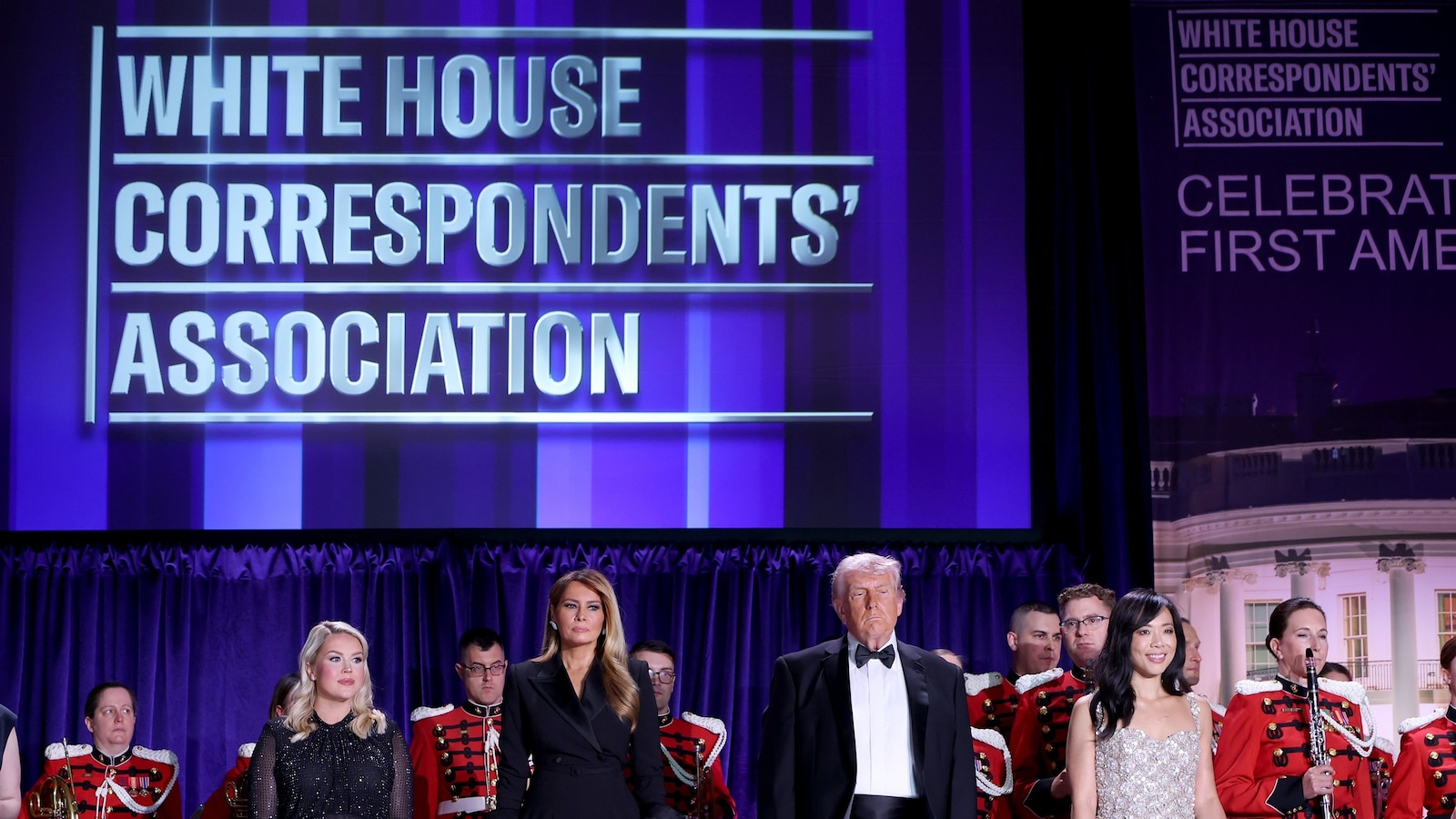
Substrate placeholder — needs review · Wikimedia Commons (CC BY-SA 3.0)A shooting took place at the White House Correspondents' Association dinner held at the Washington Hilton in Washington, D.C., on April 25, 2026. Robert F. , the secretary of health and human services, was chatting with guests when shots were fired.
Security agents shielded him and escorted him out through service corridors. President Trump was also rushed out of the event following the shots. The alleged shooter, Cole Tomas Allen, traveled across the country by train. Court documents indicate Allen's involvement in an alleged plot to assassinate President Trump and other cabinet members.
The incident recalled the assassination of Robert F. Kennedy in 1968 at the Ambassador Hotel in Los Angeles, shortly after a victory speech. Historians have compared the event to periods of political violence in the late 1960s and 1970s, which included assassinations and bombings.
Steven Hahn, a New York University history professor and author of 'Illiberal America,' stated that violence and politics have been central to the American experience since the republic's founding. He noted similarities between the current period and the 1960s and 1970s, marked by political divides and loss of faith in institutions.
Julian Zelizer, a Princeton historian and co-author of 'Fault Lines,' said that throughout American history, periods of high tension have led to bursts of violence against political leaders. He added that the United States experienced such a period from the late 1960s to the mid-1970s and is going through one today.
In the 1960s and 1970s, notable events included the assassination of John F. Kennedy in 1963, followed by the killings of Malcolm X, Martin Luther King, and Robert F. Kennedy. Between 1970 and 1971, there were approximately 2,500 bombings by groups such as the Weather Underground and the Symbionese Liberation Army.
The Symbionese Liberation Army was known for kidnapping newspaper heiress Patricia Hearst. From 1968 to 1972, more than 100 skyjackings occurred, carried out by groups including the Black Liberation Army and Puerto Rican nationalist groups. In 1975, there were two attempts on President Gerald Ford's life.
Lynette Fromme pointed a gun at Ford in Sacramento on September 5, 1975, but it failed to discharge. Three weeks later, Sarah Jane Moore fired a shot at Ford in San Francisco, which missed.
Historians noted differences, including a greater scale of violence in the earlier period with involvement of militant groups. Zelizer stated that in the 1970s, many elected officials pushed against divisions and appealed to broad majorities. Today, acts of political violence often involve individuals not belonging to organized groups but tied to online movements.
Zelizer said that violence is almost expected in the current polarized era. President Trump has been the target of three would-be assassins, according to reports.
Key Facts
Story Timeline
5 events- 2026-04-25
Shots were fired at the White House Correspondents' Association dinner, leading to the evacuation of Robert F. Kennedy Jr. and President Trump.
1 sourceCBS News - 1975-09
Two attempts were made on President Gerald Ford's life by Lynette Fromme and Sarah Jane Moore.
1 sourceCBS News - 1970-1971
Approximately 2,500 bombings occurred in the U.S. by radical groups including the Weather Underground.
1 sourceCBS News - 1968-1972
More than 100 skyjackings were carried out by groups such as the Black Liberation Army.
1 sourceCBS News - 1968
Robert F. Kennedy was assassinated at the Ambassador Hotel in Los Angeles.
1 sourceCBS News
Potential Impact
- 01
The incident may prompt increased security measures at public events involving government officials.
- 02
Court proceedings against Cole Tomas Allen may reveal more about motives for political violence.
- 03
Historians' comparisons could lead to broader public discussions on political polarization.
- 04
The event might influence perceptions of safety for cabinet members at public gatherings.
- 05
Reports of three attempts on President Trump could affect national discourse on institutional trust.
Transparency Panel
Related Stories
The Free PressSpirit Airlines Shuts Down After Failing to Secure $500 Million Federal Bailout
Spirit Airlines announced an abrupt shutdown over the weekend, citing surging jet fuel costs from the ongoing war in Iran as the final blow after years of financial struggles. Talks for a $500 million bailout from the Trump administration collapsed, leading to immediate cancellat…
France 24Russia Launches Drone and Missile Attacks Despite Ukraine's Unilateral Ceasefire
Russia fired over 100 drones and missiles at Ukraine overnight, killing at least 28 civilians and injuring dozens, hours after Kyiv's unilateral ceasefire began at midnight. Ukrainian officials condemned the strikes as evidence of Moscow's insincerity ahead of Russia's planned pa…
Supreme Court Temporarily Restores Mifepristone Access in Louisiana Case
The Supreme Court issued an emergency stay restoring nationwide mail and pharmacy access to the abortion pill mifepristone, following a Fifth Circuit ruling that restricted it. The case, brought by Louisiana, centers on standing issues and could force the Trump administration to…