Substrate
world

Slavutych Residents Mark 40th Anniversary of Chernobyl Disaster with Vigil

People gathered in Slavutych's central square early on April 26, 2026, to mark 40 years since the Chernobyl nuclear disaster with candles and symbols honoring victims and liquidators. The event proceeded despite wartime curfews in Ukraine. Attendees shared personal stories linking the 1986 accident to renewed fears from Russia's invasion.

The Independent
1 source·Apr 26, 6:45 AM(33 days ago)·3m read
|
Slavutych Residents Mark 40th Anniversary of Chernobyl Disaster with Vigilwinnipegfreepress.com
Audio version
Tap play to generate a narrated version.
Developing·Limited corroboration so far. This page will refresh as more sources emerge.

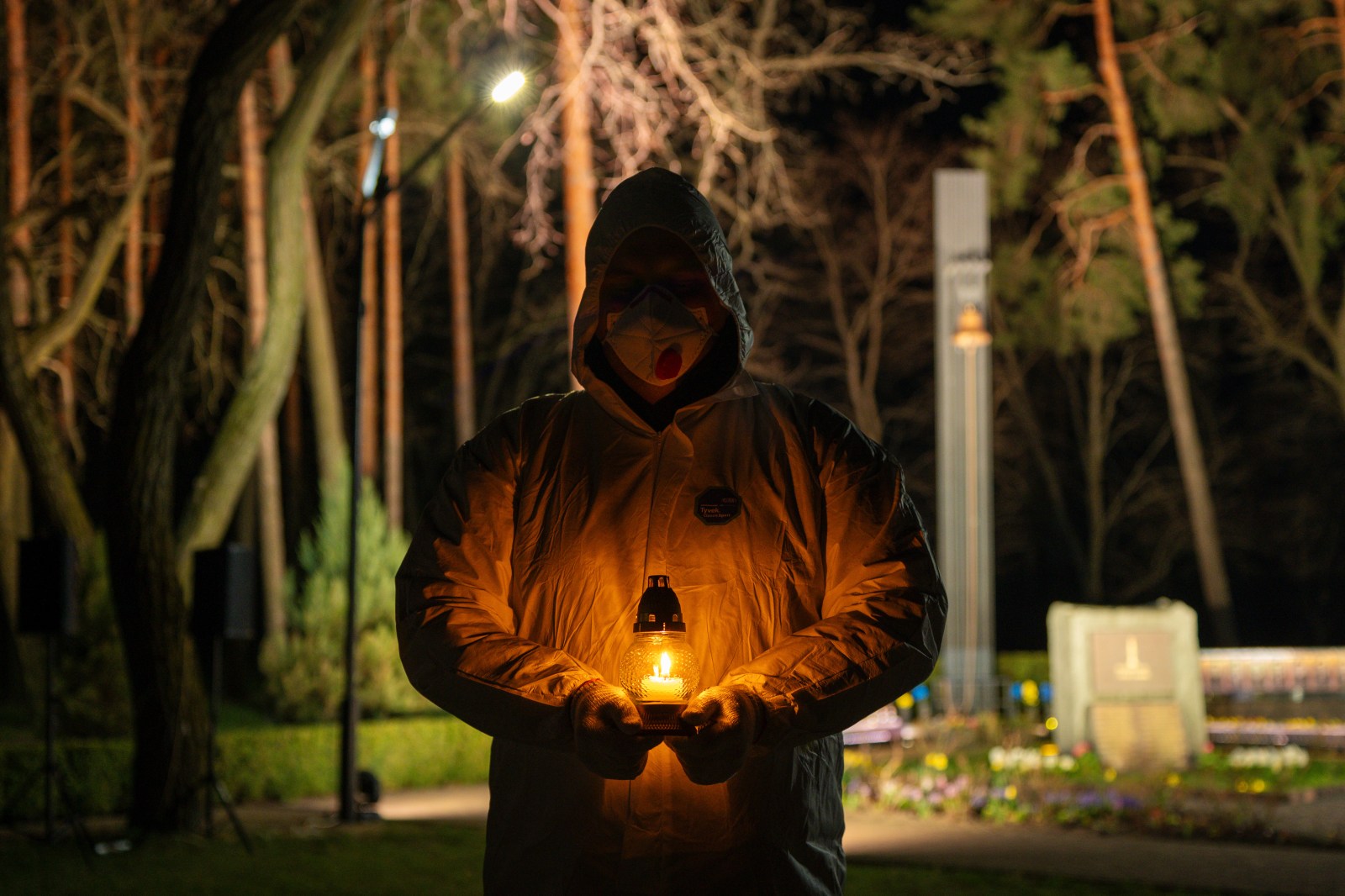
People streamed into the central square of Slavutych in the early hours of April 26, 2026, placing candles on a large radiation hazard symbol laid out on the ground as a midnight commemoration began for those killed in the Chernobyl disaster 40 years ago and the thousands who risked deadly radiation exposure to contain its aftermath.

Residents of Slavutych showed up for the vigil despite wartime curfews and official warnings against large gatherings during Russia’s war on Ukraine. People of all ages gathered in the square, some arriving as families carrying spring tulips and daffodils.

They lined up in a broad plaza framed by Soviet-era apartment blocks, where a memorial stands near a row of posters honoring local residents killed in the war. Soft music played in the background as poetry about the disaster drifted over loudspeakers during the commemoration. People dressed in white protective suits and face masks, symbolizing the liquidators, stood in silence holding candles.

Liudmyla Liubyva, 71, came to the ceremony with a friend. She used to attend with her husband, who worked at the Chernobyl Nuclear Power Plant but later developed a disability linked to radiation exposure and lost the ability to walk. Liudmyla Liubyva said it was important to honor those who sacrificed their health in the aftermath of the disaster, but Russia’s war has revived fears that the danger was never fully left behind.

“When the drone struck the arch, it felt like the world could return to 1986,” Liudmyla Liubyva said, referring to a Russian drone strike in 2025 that damaged the New Safe Confinement structure, the massive dome built to contain radiation from the destroyed reactor.

Larysa Panova, 67, often recalls the day of the April 26, 1986 accident that forced her to leave her native hometown of Chornobyl and begin a new life in Slavutych. Though the new city has long since become home, she still thinks of the forests and rich nature of the place she left behind, Larysa Panova said. “I never stop thinking of Chernobyl as my homeland,” Larysa Panova said.

Before Russia’s full-scale invasion, Larysa Panova regularly travelled back to visit relatives who remained in Chornobyl or simply to spend time in the land where she grew up. With the war, access to the Chernobyl exclusion zone became restricted. Slavutych endured a brief Russian occupation during Moscow’s push to seize the Ukrainian capital in the early days of the war.

Blackouts during the last winter forced some residents of Slavutych to cook meals over open fires in the streets. The city of Slavutych is located around 50 kilometers (32 miles) from the former Chernobyl Nuclear Power Plant. Soviet authorities began building the city of Slavutych in late 1986 to house workers from the Chernobyl Nuclear Power Plant and their families.

The first residents moved into Slavutych around 1988. The Chernobyl disaster occurred on April 26, 1986, in the Soviet Union. Soviet authorities did not report the explosion for two days after it occurred on April 26, 1986.

Winds carried the fallout from the Chernobyl explosion across Europe after April 26, 1986. Swedish experts went public with their concerns about the Chernobyl fallout after April 26, 1986. About 600,000 people, referred to as Chernobyl’s “liquidators,” were sent in to fight the fire at the Chernobyl nuclear plant and clean up the worst of its contamination after the April 26, 1986 disaster.

Thirty workers died within months from either the explosion or acute radiation sickness following the April 26, 1986 Chernobyl disaster. The Chernobyl accident exposed millions in the region to dangerous levels of radiation. The Chernobyl accident forced a wide-scale, permanent evacuation of hundreds of towns and villages in Ukraine and Belarus.

Key Facts

Commemoration event
People gathered in Slavutych on April 26, 2026, to mark the 40th anniversary of Chernobyl with candles, symbols, and poetry amid the ongoing war.
Chernobyl disaster details
The April 26, 1986 explosion killed 30 workers initially, exposed millions to radiation, and led to evacuations of hundreds of towns in Ukraine and Belarus.
Slavutych history
Built in late 1986 for Chernobyl workers, Slavutych is 50 km from the plant and has faced Russian occupation and blackouts during the war.
Recent damage
A 2025 Russian drone strike damaged the New Safe Confinement dome at Chernobyl, reviving fears among residents.
Personal accounts
Residents like Liudmyla Liubyva and Larysa Panova shared stories of loss, radiation effects, and restricted access due to the war.

Story Timeline

6 events
  1. 2026-04-26

    Residents of Slavutych held a midnight commemoration for the 40th anniversary of the Chernobyl disaster, placing candles and gathering despite wartime curfews.

    1 sourceThe Independent
  2. 2025

    A Russian drone strike damaged the New Safe Confinement structure at Chernobyl.

    1 sourceThe Independent
  3. 2022 (early days of war)

    Slavutych endured a brief Russian occupation during Moscow’s push to seize the Ukrainian capital.

    1 sourceThe Independent
  4. 1988

    The first residents moved into Slavutych.

    1 sourceThe Independent
  5. Late 1986

    Soviet authorities began building the city of Slavutych to house Chernobyl workers and families.

    1 sourceThe Independent
  6. 1986-04-26

    The Chernobyl nuclear disaster occurred, leading to immediate deaths, evacuations, and long-term radiation exposure.

    1 sourceThe Independent

Potential Impact

  1. 01

    Restricted access to the Chernobyl exclusion zone, limiting visits for former residents.

  2. 02

    Revived fears of radiation risks among Slavutych residents due to war-related incidents like the 2025 drone strike.

  3. 03

    Continued annual commemorations despite curfews, maintaining community remembrance of the disaster.

  4. 04

    Potential health and safety concerns from damaged containment structures at Chernobyl.

Transparency Panel

Sources cross-referenced1
Framing risk0/100 (low)
Confidence score65%
Synthesized bySubstrate AI
Word count614 words
PublishedApr 26, 2026, 6:45 AM
Bias signals removed2 across 2 outlets
Signal Breakdown
Loaded 2

Related Stories

WHO Chief Visits DRC as Ebola Death Rate Reaches 30-50%The Guardian
world1 hr ago

WHO Chief Visits DRC as Ebola Death Rate Reaches 30-50%

World Health Organization director-general Tedros Adhanom Ghebreyesus arrived in the Democratic Republic of the Congo to support containment of a new Ebola outbreak. The agency revised the death rate to 30-50% based on confirmed cases and recorded 10 confirmed and 223 suspected d…

SK
The Guardian
2 sources
Greek National Charged in UK With Aiding Iran-Linked Intelligence Servicewesternjournal.com
world1 hr ago

Greek National Charged in UK With Aiding Iran-Linked Intelligence Service

A 46-year-old Greek man living in Germany was charged under the UK National Security Act with assisting an intelligence service believed to be Iran by targeting a journalist at Iran International.

Reuters
BBC News
2 sources
Bilt Rewards reports $1 billion revenue target for 2026physicianonfire.com
world1 hr agoDeveloping

Bilt Rewards reports $1 billion revenue target for 2026

Bilt Rewards CEO Ankur Jain said the company's flagship credit card accounts for less than 11 percent of revenue. The firm now processes more than $100 billion in annual housing spend across one in four U.S. apartment buildings.

FO
1 source