world
SOCOM Seeks Lighter, Longer-Range Rifles and Machine Guns
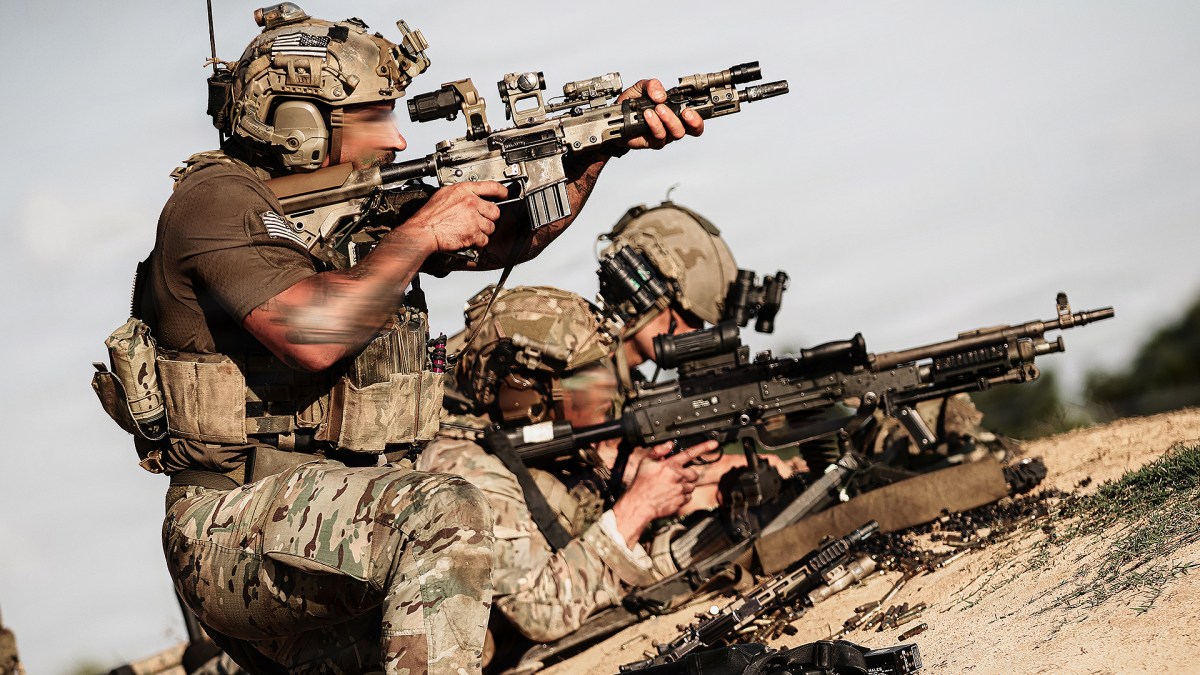
U.S. Special Operations Command is pursuing new carbines and machine guns that fire farther with greater accuracy while remaining lighter. The command is also exploring hypervelocity 5.56 ammunition and has paused one .338 Norma Magnum program.
May 21, 5:38 PM·1m read2 sources
TH
 The War Zone
Audio version
Tap play to generate a narrated version.
U.S. Special Operations Command is developing new rifles and machine guns that offer greater range, accuracy, and reduced weight for its operators. 56 ammunition that could be used in existing calibers.
Hypervelocity Carbine Program Lt. Col.
56x45mm rounds. Wood noted that the Army’s earlier work on higher-velocity rifles such as the M7 and M8 produced flatter trajectories and better barrier defeat. 56 ammunition is widely available. The program also draws on recent advances in steel-case ammunition alloys that exceed traditional brass performance and can cost less.
SOCOM has fielded the Mid-Range Gas Gun-Sniper variant since 2023. The command recently began procurement of the assault variant from Lewis Machine & Tool and is still discussing production timelines with vendors. 5mm Creedmoor.
338 Norma Magnum. A small number of the weapons are being issued to one undisclosed unit for combat evaluation. 62 variant. It expects this weapon to replace the MK 48 in the 2028-2029 timeframe. 50 caliber at long distances while remaining lighter and more portable for vehicle operations.
SOCOM is examining counter-drone ammunition for current rifle calibers and has tested shotguns and 40mm grenades for the same purpose. Wood declined to provide further details for operational security reasons.