world
South Korea Considers Regional Electricity Discounts for Heavy Industry Outside Seoul
Climate Minister Kim Sung-whan said the government is considering differentiated rates by region to help heavy users such as petrochemical and steel plants.
Jun 4, 3:20 AM·2m read1 source
 bbc.co.uk
Audio version
Tap play to generate a narrated version.
Developing·Limited corroboration so far. This page will refresh as more sources emerge.
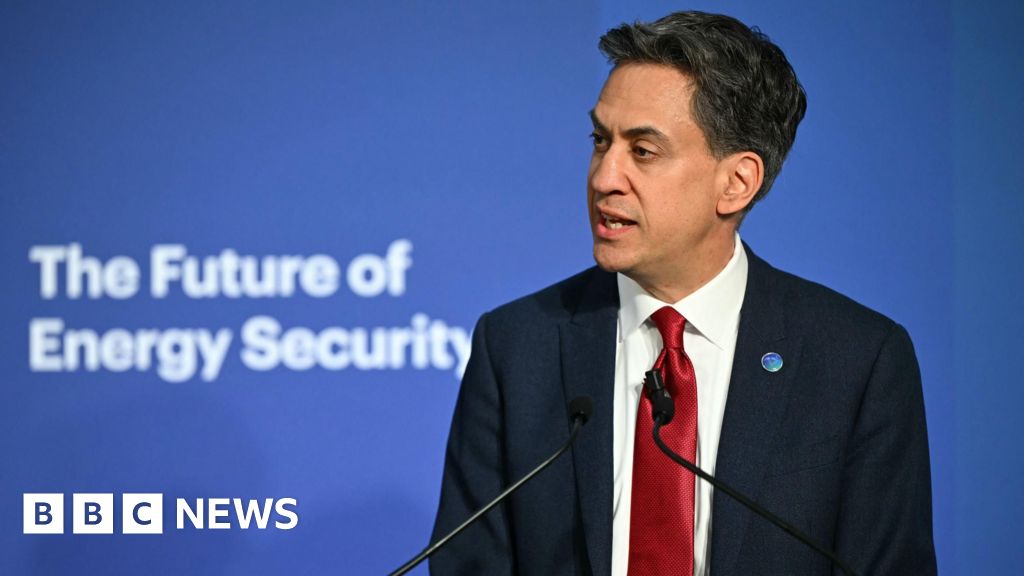
Climate Minister Kim Sung-whan said Thursday that South Korea is considering a regional electricity pricing system to lower costs for industries outside greater Seoul that consume large amounts of power. Kim spoke at a press conference at the government complex in Seoul marking the one-year anniversary of the Lee Jae Myung administration.
The administration moved responsibility for energy policy to the Ministry of Climate, Energy and Environment from the industry ministry.
7 percent in October 2024. 12) per kilowatt-hour, compared with 120 won per kWh in China and the United States. Kim said rates in Europe and Japan are slightly higher than South Korea's but that prices here should fall because Korean firms mainly compete with Chinese companies.
"One point I personally regret is that electricity rates were raised toward the end of the former Yoon Suk Yeol administration, and rates for industrial use, in particular, were substantially increased," Kim told reporters. The regional pricing plan is intended to give petrochemical and steel plants cheaper power.
Kim said the government is not facing immediate upward pressure on rates but will respond if energy price swings threaten Korea Electric Power Corp.
KEPCO would face operating losses if the average system marginal price reached 146 won per kWh. The price stood at about 126 won per kWh as of Tuesday. During the Russia-Ukraine war the price exceeded 190 won and briefly reached 200 won, leaving KEPCO with hundreds of trillions of won in debt.
Kim reaffirmed the government's plan to shift from coal to renewable energy and nuclear power. Last year Seoul set a target to cut greenhouse gas emissions 53-61 percent from 2018 levels by 2035. Under its nationally determined contribution target, South Korea aims for renewables to supply 30 percent of power by 2035, expand renewable capacity to 100 gigawatts by 2030, and end coal-fired generation by 2040.