South Korean Government Considers Emergency Arbitration in Samsung Labor Dispute
Officials have raised the possibility of invoking emergency arbitration powers to resolve a labor dispute at Samsung Electronics over employee bonuses. A strike is scheduled to begin on Thursday if negotiations fail.
 jpost.com
The government has raised the possibility of invoking its emergency arbitration powers as it presses for a resolution to the growing labor dispute at Samsung Electronics over employee bonuses. Prime Minister Kim Min-seok said in an emergency address on Sunday that the government would consider "all possible response measures, including emergency arbitration," if a strike at Samsung threatens to inflict serious damage on the national economy.
Kim described the upcoming negotiations as "effectively the last opportunity" to prevent a strike set to start on Thursday and urged both labor and management to recognize the gravity of the situation.
Electronics management and the company's largest labor union are scheduled to participate in a second postmediation meeting at the National Labor Relations Commission on Monday, just two days before the planned walkout. Samsung Electronics Executive Chairman Lee Jae-yong has reportedly adjusted his overseas business schedule to demonstrate commitment to resolving the crisis.
Samsung also replaced its lead negotiator at the union's request and is said to have offered performance bonuses equivalent to 600 percent of annual salary for workers in the semiconductor division. The key to resolving the dispute now lies in whether the union scales back what many view as excessive demands.
The union is seeking to abolish the current cap, which limits bonuses to 50 percent of annual salary, and instead institutionalize a system that grants employees 15 percent of the company's operating profit as performance pay.
Given the intense global competition surrounding AI semiconductors and the enormous investment required to maintain technological leadership, these demands risk undermining Samsung Electronics' future investment capacity. Management also bears responsibility.
By now, Samsung should have introduced more stable and predictable compensation systems, such as restricted stock units, commonly used by global semiconductor companies. If the negotiations collapse and the government invokes its emergency arbitration powers, both labor and management would lose the ability to resolve the dispute autonomously and instead become subject to compulsory government mediation.
Although neither the Korean Confederation of Trade Unions nor the Federation of Korean Trade Unions is directly involved in the dispute, both organizations have criticized the possible use of emergency arbitration, arguing that it could infringe on constitutionally protected labor rights.
The right to strike is indeed a fundamental constitutional right. However, the labor movement should also recognize that rights lose legitimacy when exercised in ways that endanger the broader public interest. As the government warned, a prolonged strike at Samsung Electronics would extend far beyond losses at a single company.
It could reduce exports, destabilize financial markets, weaken suppliers, damage employment and discourage domestic investment. If those consequences become unavoidable, emergency arbitration may no longer remain merely an option. Labor and management must now make responsible decisions with the broader national economy in mind.
Key Facts
Story Timeline
3 events- Sunday
Prime Minister Kim Min-seok delivered an emergency address on the labor dispute.
1 sourceYonhap - Monday
Samsung management and the union are scheduled for a second postmediation meeting.
1 sourceYonhap - Thursday
A strike at Samsung Electronics is set to begin if negotiations fail.
1 sourceYonhap
Potential Impact
- 01
Exports could decline if a prolonged strike occurs.
- 02
Suppliers could face reduced business.
- 03
Financial markets may experience instability.
Transparency Panel
Related Stories
 The Guardian
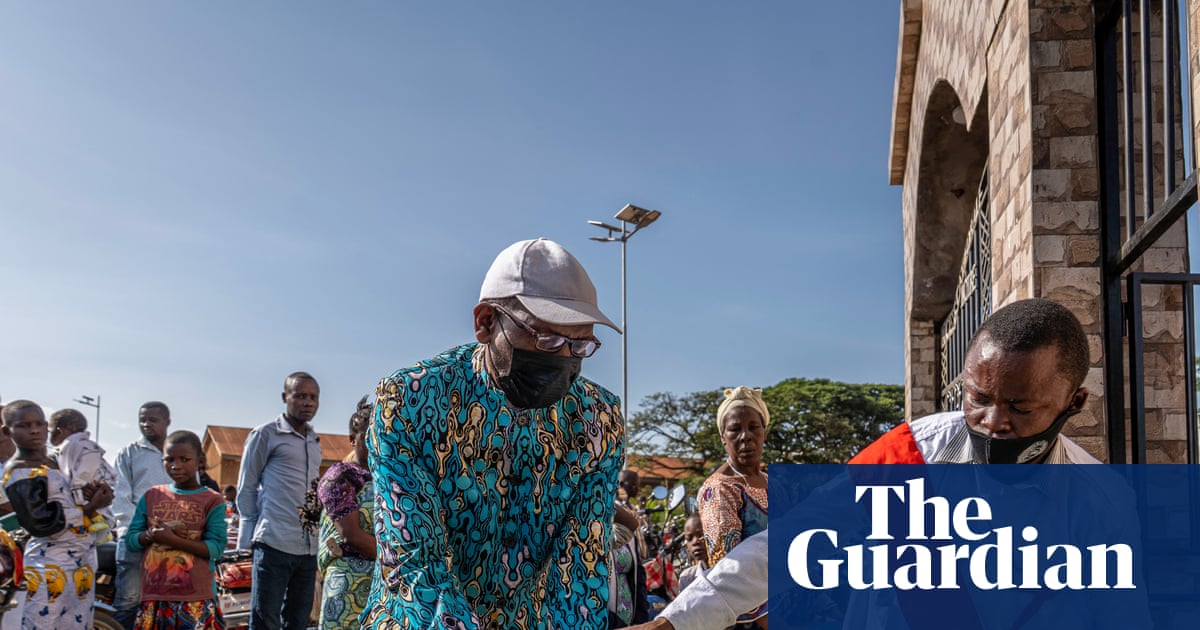
WHO Chief Visits DRC as Ebola Death Rate Reaches 30-50%
World Health Organization director-general Tedros Adhanom Ghebreyesus arrived in the Democratic Republic of the Congo to support containment of a new Ebola outbreak. The agency revised the death rate to 30-50% based on confirmed cases and recorded 10 confirmed and 223 suspected d…
 westernjournal.com
Greek National Charged in UK With Aiding Iran-Linked Intelligence Service
A 46-year-old Greek man living in Germany was charged under the UK National Security Act with assisting an intelligence service believed to be Iran by targeting a journalist at Iran International.
 straitstimes.com
Journalists in Gaza to Receive 2026 Golden Pen of Freedom Award
Three international news agencies will accept the award on behalf of their local staff still reporting from the territory. The World Association of News Publishers cited the journalists' continued coverage under extreme conditions.