Stablecoin Card Spend Remains Under 1% of Global Total Despite Reported 105% Growth
Retail stablecoin card spend has surged more than 105 percent over the past year and could soon reach double-digit market share in parts of Latin America, according to a Rain executive speaking at Consensus Miami 2026. Rain, which recently became a Mastercard Principal Member, is exploring on-chain settlement using regulated stablecoins to reduce trapped capital by more than 40 percent.
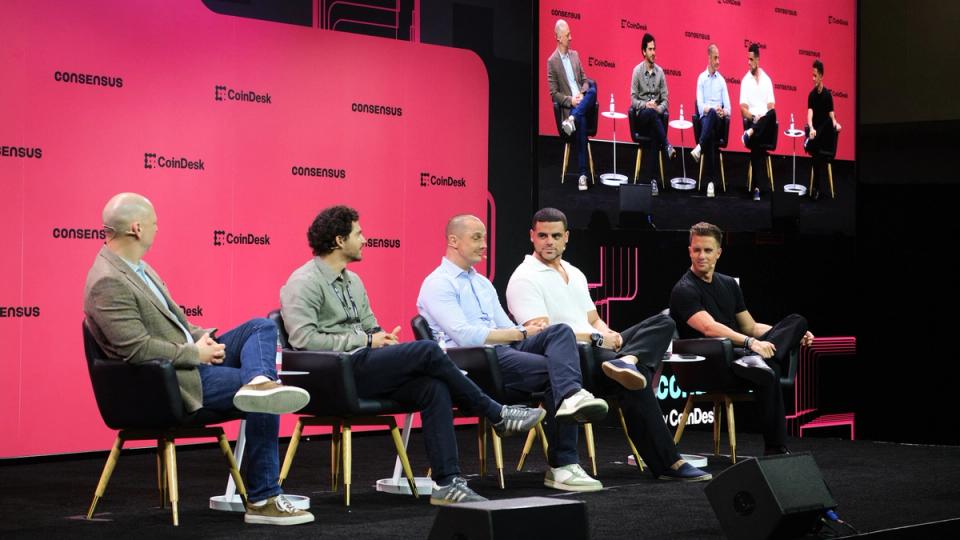
Substrate placeholder — needs reviewRetail stablecoin card spend grew about 105 percent to 106 percent over the past year, John Timoney, head of strategic partnerships at Rain, said during a panel at Consensus Miami 2026. Stablecoin-based cards could soon account for double-digit percentages of all cards in some Latin American markets, Timoney added.
Latin America has become one of the clearest markets for stablecoin card adoption. Cards are physical or virtual, allowing users to spend stablecoins such as USDT and USDC directly from a digital wallet. 9998.
Stablecoin cards are being used across custodial and non-custodial wallets, crypto exchanges and products that abstract the stablecoin experience from users. In many stablecoin card transactions the merchant still receives fiat. That approach separates card-based stablecoin spending from direct crypto push payments, where merchants may have to manage crypto settlement, volatility and transaction risk more directly.
Spend patterns of stablecoin card users are becoming harder to distinguish from ordinary card activity. Stablecoin card users are spending across typical merchant categories, including large global merchants and everyday purchases. “There’s nothing too remarkable about that,” Timoney said.
Despite their growth, stablecoin cards account for less than 1 percent of global card spend, Ray Hernandez, senior vice president of business development at Consensys, said during the same panel. Rain is a payments infrastructure platform that provides stablecoin infrastructure for card issuers. The company recently became a Mastercard Principal Member.
Rain and Mastercard are exploring on-chain settlement for some card program flows using regulated stablecoins. Stablecoin settlement enables weekend and holiday settlement, reducing trapped capital by more than 40 percent in some cases. Traditional card programs often need to pre-fund network obligations or borrow from networks when banking rails are closed.
Stablecoins can move outside bank cut-off times. Rain is trying to make stablecoin balances usable through existing networks that already reach merchants globally. “The card networks over decades have rolled up hundreds of millions of merchants,” Timoney said.
Mastercard has been moving deeper into stablecoin payments. Earlier this year Binance, PayPal and Ripple joined Mastercard’s broader blockchain payments push. 8 billion.
Christian Rau, Mastercard’s senior vice president of digital assets and blockchain, said mainstream adoption will depend on making the technology invisible to consumers. “The normal benchmark these days is you have a card sitting on your iPhone or on an Android. You tap it, the money is gone,” Rau said.
The MetaMask Card was developed with Mastercard and Baanx. The MetaMask Card lets users spend from a self-custodial wallet while assets are converted into fiat at the time of purchase. Hernandez said the next stage depends on easier on-ramps, abstracted network fees and more local payment infrastructure.
Today’s crypto card users are still mostly crypto-native consumers who already hold assets on-chain. That view drew a challenge from Mark Zalan, CEO of GoMining, who argued that stablecoins and card infrastructure add unnecessary intermediaries to crypto payments. Zalan said users want to hold bitcoin in self-custody and spend it without converting into stablecoins or relying on off-ramps.
Timoney pushed back, saying payments are not only money movement. Card networks also handle chargebacks, merchant risk and other protections consumers and merchants expect. Rau made a similar point. Most consumers were “socialized with deposit insurance” and chargeback protection, he said.
“Payment is more than moving money from A to B,” Rau said.
Key Facts
Story Timeline
5 events- 2026-05-08 10:11
CoinDesk publishes article on stablecoin card growth featuring Consensus Miami 2026 panel
1 sourceCoinDesk - 2026-05-08
John Timoney speaks on panel at Consensus Miami 2026 detailing 105-106% retail spend growth
1 sourceCoinDesk - 2026
Rain becomes Mastercard Principal Member and begins exploring on-chain settlement
1 sourceCoinDesk - 2026
Mastercard agrees to buy BVNK for up to $1.8 billion as part of blockchain payments push
1 sourceCoinDesk - 2026
Binance, PayPal and Ripple join Mastercard’s broader blockchain payments initiative
1 sourceCoinDesk
Potential Impact
- 01
Reduced trapped capital improves card economics and financial flexibility for issuers
- 02
Increased stablecoin usability through existing card networks without reinventing merchant infrastructure
- 03
Shift toward invisible on-chain technology for mainstream consumers using familiar card interfaces
- 04
Potential double-digit market share for stablecoin cards in select Latin American countries
Transparency Panel
Related Stories
S&P 500 and Nasdaq Close at Record Highs
The S&P 500 rose 0.8 percent to end the week near 7400, recording both its highest daily and weekly closes in history. The Nasdaq also achieved record daily and weekly closes. A leveraged trader shorting both indexes sits on more than $1.9 million in unrealized losses after addin…
BenzingaLime Files for Nasdaq IPO Under Ticker LIME
The Uber-backed micromobility company incorporated as Neutron Holdings, Inc. filed its S-1 with the U.S. Securities and Exchange Commission on Friday. Lime reported revenue growth to $886.7 million last year while posting positive free cash flow, yet flagged substantial doubt abo…
theyeshivaworld.comIDF Strikes 85 Hezbollah Sites in Lebanon as Both Sides Report Attacks and Casualties
The Israeli military conducted air and ground strikes on more than 85 Hezbollah infrastructure targets in the past 24 hours, including weapon storage facilities and an underground production site in the Beqaa Valley. Three IDF soldiers were wounded in two separate explosive drone…