Substrate
ai

Startup Raises $140 Million to Deploy Wave-Powered Floating AI Data Centers

A U.S.-based company has secured $140 million in new funding to develop autonomous floating nodes that generate electricity from ocean waves to power onboard AI computing systems. The nodes would use seawater for cooling and transmit results via satellite.

Fox News
FO
fortune.com
3 sources·May 15, 12:20 PM(14 days ago)·2m read
Startup Raises $140 Million to Deploy Wave-Powered Floating AI Data CentersFox News
Audio version
Tap play to generate a narrated version.
Developing·Limited corroboration so far. This page will refresh as more sources emerge.

A company developing floating AI data centers has raised $140 million in Series B funding to advance its plan to place computing power at sea. The round brings the company's total funding to $210 million and was led by an investor focused on frontier technologies.

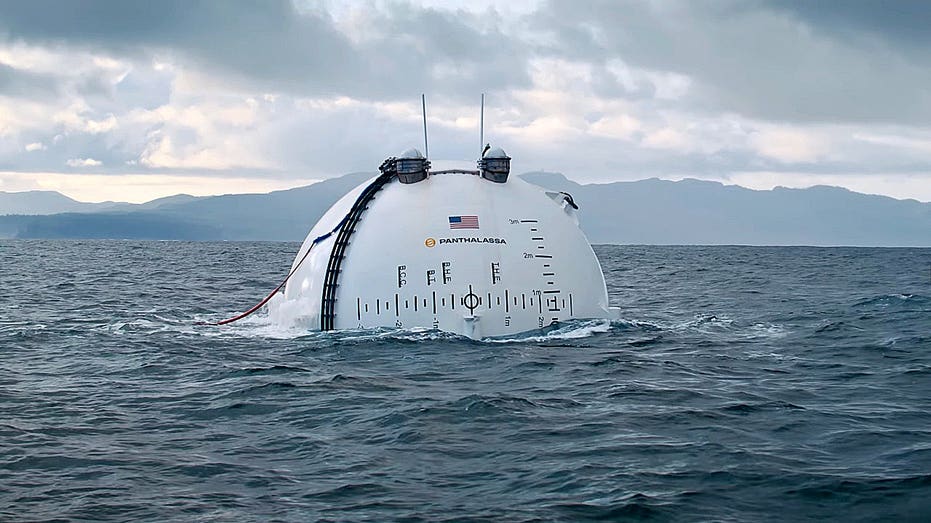
The money will be used to complete a pilot manufacturing facility near Portland, Oregon, and to deploy the first Ocean-3 pilot nodes in the northern Pacific Ocean later this year. The floating nodes are designed to capture wave motion to generate electricity while using surrounding seawater to cool onboard servers.

The company has spent a decade refining the technology for power generation, computing and autonomous operations at sea. Earlier prototypes, Ocean-1 and Ocean-2, were tested in 2021 and 2024. Instead of relying on land-based power grids, the nodes would produce their own electricity from waves in energy-dense regions far from shore.

The systems would perform AI inference tasks, responding to prompts after models have been trained elsewhere. Results would be sent back to users via low-Earth-orbit satellite links.

Each node consists of a surface structure that bobs with the waves and a long submerged tube that oscillates to drive internal turbines. The AI servers are housed in a sealed compartment cooled by seawater. This approach aims to address the massive electricity and cooling demands of AI data centers without drawing on terrestrial infrastructure.

The company plans commercial deployment in 2027 after demonstrating reliable AI inference with the Ocean-3 series. However, operating far offshore introduces limitations. Satellite connections provide lower bandwidth and higher latency than fiber-optic cables used by land-based data centers, making coordination between multiple nodes more difficult.

Repair and maintenance present additional hurdles. While land facilities can dispatch technicians quickly, floating nodes in rough seas would require specialized vessels and favorable weather windows. Saltwater corrosion, storms and constant motion add stress to hardware and could increase long-term operational costs.

Land-based facilities face constraints including limited grid capacity, community opposition and high cooling costs. The company argues its approach could ease pressure on electrical grids and reduce the need for new power plants onshore. Previous offshore experiments have shown mixed results.

One major technology company tested submerged servers using seawater for cooling and reported lower failure rates than land-based counterparts before ending the project. Other efforts in Asia have explored similar underwater concepts near coastal cities where land is scarce.

The latest funding reflects increased investor interest in unconventional compute infrastructure as demand for AI continues to surge. The company states it is now ready to build factories and deploy fleets, positioning ocean wave energy alongside solar and nuclear as a major new source of clean power.

>"The future demands more compute than we can imagine. Extra-terrestrial solutions are no longer science fiction. Any impact would emerge gradually if the nodes prove reliable at scale and help meet rising electricity demand without straining local infrastructure.

Success could influence debates over marine environmental oversight and governance of computing resources in international waters. The company must still demonstrate that its autonomous systems can operate for years in harsh ocean conditions with minimal human intervention.

If successful, the approach could expand available capacity for certain AI workloads. If not, it would underscore the practical difficulties of moving critical infrastructure offshore.

Key Facts

$140 million
raised in latest funding round
$210 million
total funding after Series B
Ocean-3
pilot nodes to deploy in northern Pacific in 2026
Wave energy
powers onboard AI inference servers
Seawater cooling
used for hermetically sealed AI hardware

Story Timeline

5 events
  1. May 2026

    The company announced $140 million Series B funding round.

    2 sourcesFox News · Fortune Magazine
  2. 2024

    Ocean-2 prototype completed testing.

    2 sourcesFox News · Fortune Magazine
  3. 2021

    Development of Ocean-1 prototype began.

    2 sourcesFox News · Fortune Magazine
  4. Later 2026

    Ocean-3 pilot nodes scheduled for deployment in northern Pacific.

    2 sourcesFox News · Fortune Magazine
  5. 2027

    Company targets initial commercial deployments.

    2 sourcesFox News · Fortune Magazine

Potential Impact

  1. 01

    Operational challenges at sea may increase maintenance costs compared to terrestrial facilities.

  2. 02

    Commercial rollout in 2027 would test viability of satellite-linked ocean compute at scale.

  3. 03

    Demonstrated reliability could open new clean power pathway using wave energy for AI workloads.

  4. 04

    Successful deployment could reduce demand for new land-based data centers and associated grid infrastructure.

  5. 05

    Regulatory questions could emerge around environmental impact and jurisdiction in international waters.

Transparency Panel

Sources cross-referenced3
Framing risk18/100 (low)
Confidence score74%
Synthesized bySubstrate AI
Word count547 words
PublishedMay 15, 2026, 12:20 PM
Bias signals removed3 across 2 outlets
Signal Breakdown
Speculative 1Loaded 1Editorializing 1

Related Stories

South African Researchers Develop Quantum and AI Tools for Cybersecuritythesouthafrican.com
ai43 min agoDeveloping

South African Researchers Develop Quantum and AI Tools for Cybersecurity

Scientists and startup companies in South Africa are applying quantum communication and AI-powered tools to address rising global cyber threats. The work focuses on strengthening data protection methods.

Reuters
1 source
EU Discusses Readiness for Artificial Intelligence ChangesFrance 24
ai4 hrs agoDeveloping

EU Discusses Readiness for Artificial Intelligence Changes

A France 24 program examined whether European Union policies can address the effects of artificial intelligence. The discussion covered potential impacts across daily life and economic sectors.

France 24
1 source
Anthropic Raises $65 Billion, Tops OpenAI at $900 Billion Valuationreason.com
ai22 hrs agoDeveloping

Anthropic Raises $65 Billion, Tops OpenAI at $900 Billion Valuation

Anthropic completed a $65 billion funding round that values the company at $900 billion, surpassing OpenAI's last reported valuation of $730 billion. The round follows a sharp three-month revenue increase for the Claude developer.

cnbc.com
UN
KO
The New York Times
MarketWatch
5 sources