Strike by 300 CPKC signals workers enters third week as labor board prepares to hear union complaints
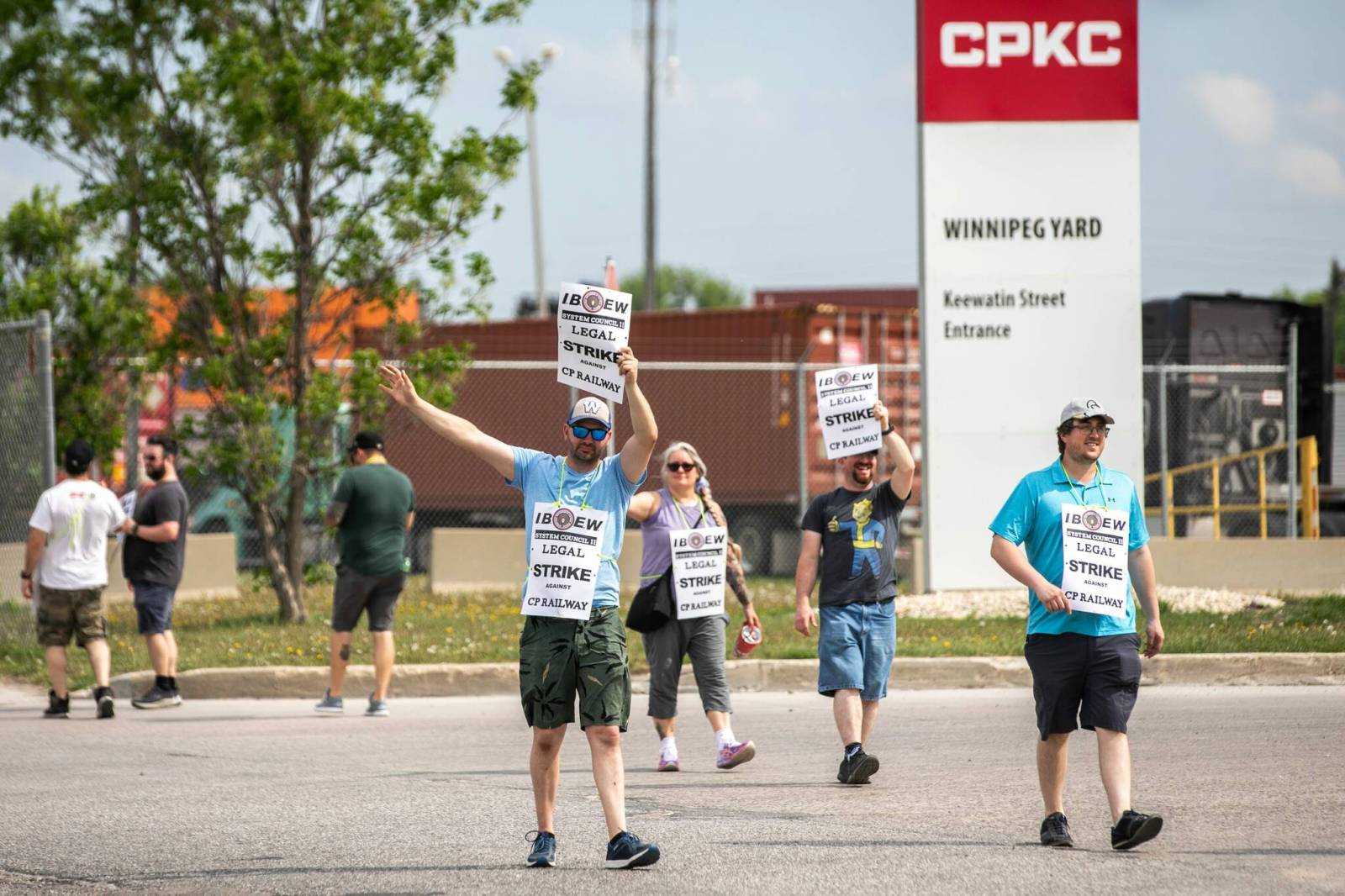
Approximately 300 CPKC signals and communications employees have been on strike for two weeks. The union and railway will appear Monday before the Canada Industrial Relations Board over contractor complaints.
 winnipegfreepress.com
Approximately 300 signals and communications employees of Calgary-based CPKC have been on strike for two weeks. The International Brotherhood of Electrical Workers represents the workers. The union has accused CPKC of using contractors to perform work of striking employees, alleging the practice contravenes federal legislation.
Jason Sommer, the IBEW’s senior general chairman, said the union submitted evidence to the Canada Industrial Relations Board that contractors have completed work beyond what the Canada Labour Code permits. “A lot of our members, instead of focusing their attention on picketing, are instead going out to locations that are publicly available in public view and with their cellphones are taking videos and photographs of these third-party contractors doing our work,” Sommer said.
A hearing between the IBEW and CPKC is scheduled for Monday before the CIRB.
The board confirmed that one complaint will be heard then and that the remaining complaints concerning CPKC are under investigation. Bill C-58, which amended the Canada Labour Code to prohibit replacement workers at federally regulated companies, came into force in 2025. Companies found in violation can face fines of $100,000 per day.
Since the law took effect, the CIRB has received eight complaints and has issued no fines. CPKC stated it will participate in Monday’s hearing. ” Rafael Gomez, director for the Centre for Industrial Relations and Human Resources at the University of Toronto, said only about three per cent of collective agreements reach a strike and that it is not surprising the full extent of the legislation has not yet been applied.
Audrey Farrier, a labour relations professor at the University of Calgary, noted that companies may continue using existing staff hired before notice to bargain, provided they normally worked at the specific location, and that replacement workers may also be used to prevent imminent threats to life, health, safety, or serious environmental and property damage.