Substrate
science

Study Examines Effects of Cocaine and Metabolite on Salmon Behavior

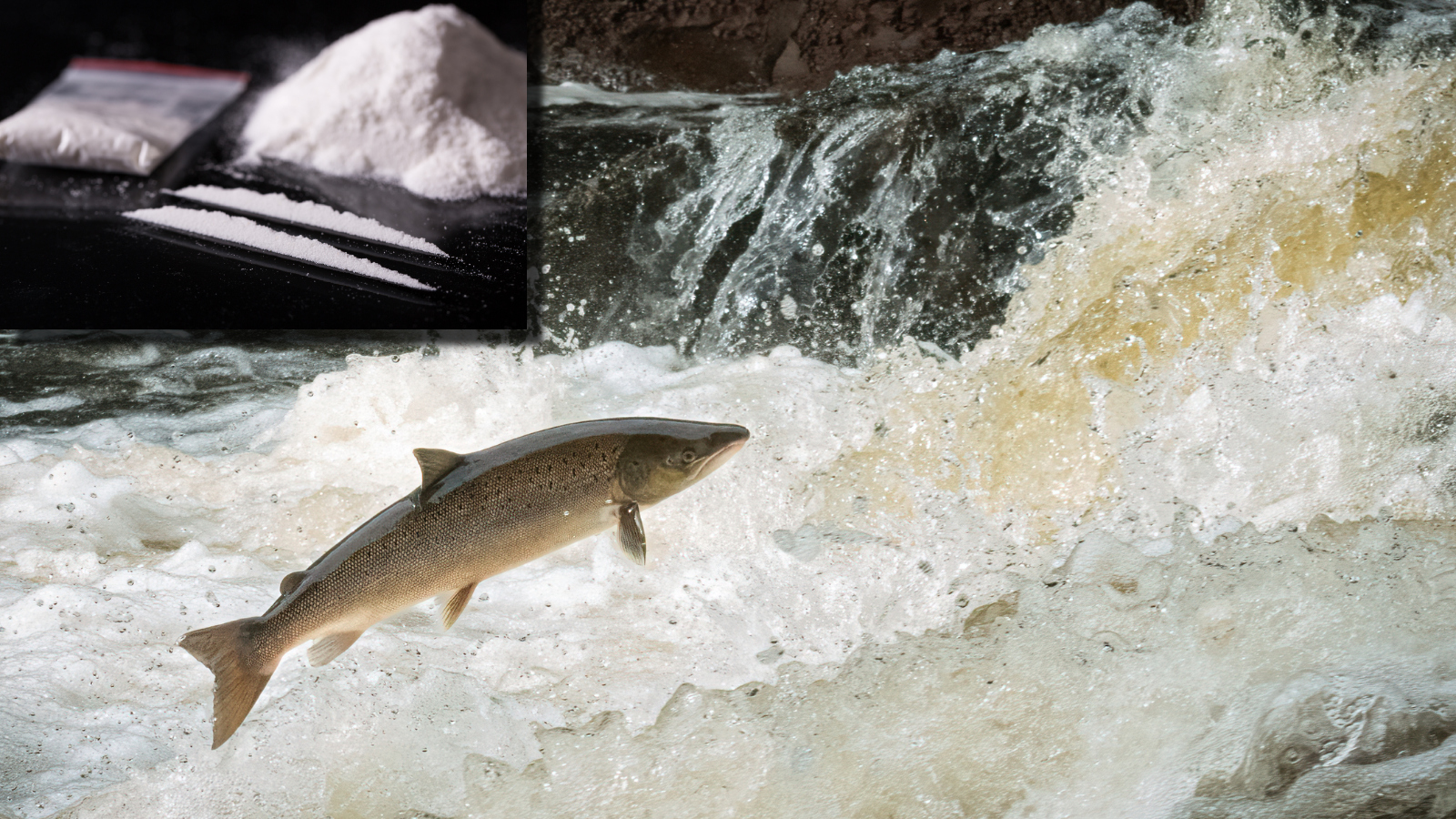
Researchers in Sweden conducted a study on Atlantic salmon exposed to cocaine and its byproduct benzoylecgonine. The fish exhibited increased swimming speed and distance compared to unexposed salmon. The findings highlight potential ecological impacts of drug pollutants in waterways.
The Sydney Morning Herald
1 source·Apr 21, 9:30 AM(15 days ago)·2m read
Study Examines Effects of Cocaine and Metabolite on Salmon Behaviorbrobible.com
Audio version
Tap play to generate a narrated version.
Developing·Limited corroboration so far. This page will refresh as more sources emerge.

A study published in the journal Current Biology examined how cocaine and its metabolite benzoylecgonine affect the behavior of Atlantic salmon in a natural setting. The research was led by Jack Brand, an environmental toxicologist at the Swedish University of Agricultural Sciences.

The team implanted tracking tags and slow-release capsules into two-year-old salmon at a hatchery in southern Sweden. The capsules delivered daily doses equivalent to levels found in polluted waterways. Some fish received cocaine, others benzoylecgonine, and a control group received none.

The salmon were released into Vättern, a lake in Sweden routinely stocked for recreational fishing.

eight weeks, researchers tracked the fish movements. Salmon exposed to cocaine swam faster and farther than the control group. Those exposed to benzoylecgonine showed even greater increases, swimming nearly twice as far per week and traveling about 12 kilometers farther from the release site.

The study suggests that focusing only on cocaine in risk assessments may underestimate the effects of its breakdown products. Tomas Brodin, a co-author and colleague of Brand at the university, stated that the results indicate ecological impacts of drug metabolites.

The research builds on prior lab studies but is the first to observe these effects in the wild.

A 2016 study found cocaine and other pharmaceuticals, including Prozac, Advil, Benadryl, and Lipitor, in juvenile chinook salmon tissues in Puget Sound, Washington. Another study from last year showed that salmon exposed to antianxiety drugs were less fearful and more vulnerable to predators.

James Meador, an environmental toxicologist and affiliate professor at the University of Washington, who was not involved in the study, said that alterations to fish physiology or behavior should be considered adverse. Meador noted that such changes could force fish to expend more energy.

He described the presence of drugs in aquatic environments as an environmental engineering problem. In the United States, treatment facilities process about 128 billion liters of wastewater daily, and upgrading them to remove chemical compounds would be costly but feasible.

Brand described cocaine, benzoylecgonine, and similar chemicals as invisible agents of global change affecting various animals. The study obtained permission from local authorities after a tedious process involving paperwork. Countless prior studies have examined cocaine's effects on animals in laboratories.

Key Facts

Benzoylecgonine exposure
caused salmon to swim nearly twice as far per week
Study location
Vättern lake in Sweden for eight-week tracking
2016 findings
cocaine and pharmaceuticals in Puget Sound salmon
Wastewater volume
128 billion liters processed daily in U.S.
Behavioral alterations
considered adverse by experts

Story Timeline

4 events
  1. Monday

    Study on cocaine and benzoylecgonine effects on salmon published in Current Biology.

    1 sourceThe Sydney Morning Herald
  2. Last year

    Study found wild salmon exposed to antianxiety drugs were less fearful and more likely to be eaten by predators.

    1 sourceThe Sydney Morning Herald
  3. 2022

    Researchers implanted salmon with tracking tags and drug capsules before releasing them into Vättern lake.

    1 sourceThe Sydney Morning Herald
  4. 2016

    Study detected cocaine and other drugs in juvenile chinook salmon tissues in Puget Sound, Washington.

    1 sourceThe Sydney Morning Herald

Potential Impact

  1. 01

    Upgrades to wastewater treatment facilities could be pursued to remove chemical pollutants.

  2. 02

    Risk assessments may need to include drug metabolites to better evaluate ecological effects on fish.

  3. 03

    Further studies might explore impacts on other aquatic species beyond salmon.

  4. 04

    Awareness of drug pollution might influence environmental policies on wastewater management.

  5. 05

    Changes in fish behavior could affect predator-prey dynamics in polluted waterways.

Transparency Panel

Sources cross-referenced1
Framing risk0/100 (low)
Confidence score70%
Synthesized bySubstrate AI
Word count377 words
PublishedApr 21, 2026, 9:30 AM
Bias signals removed2 across 1 outlet
Signal Breakdown
Loaded 1Framing 1

Related Stories

NASA Releases Thousands of Photos from Artemis II Lunar MissionNASA / Harrison H. Schmitt / Wikimedia (Public domain)
science3 hrs ago

NASA Releases Thousands of Photos from Artemis II Lunar Mission

NASA has released over 12,000 images from the Artemis II mission, which orbited the moon in April 2026. The photos capture views of Earth, the lunar surface, and a solar eclipse observed during the crew's return. Astronauts from the mission also visited the United Nations headqua…

Nbc News
UN
The Atlantic
Benzinga
Business Insider
5 sources
Houtman Abrolhos Corals Show High Resilience to 2025 Heatwave, Unlike Global Lossesnewscientist.com
science5 hrs agoDeveloping

Houtman Abrolhos Corals Show High Resilience to 2025 Heatwave, Unlike Global Losses

Coral reefs at the Houtman Abrolhos Islands off Western Australia endured a prolonged heatwave in early 2025 virtually unscathed, unlike widespread global die-offs. Researchers found exceptional heat tolerance across multiple species, with lab tests showing survival rates far exc…

New Scientist
1 source
Three Die in Hantavirus Cases on MV Hondius Cruise Shipdeccanchronicle.com
science13 hrs agoFraming55Framing risk55/100Rewrite largely sticks to facts but inherits mild consensus framing around human-to-human transmission risk and repeatedly centers WHO spokespeople for reassurance.Click to jump to full framing analysis

Three Die in Hantavirus Cases on MV Hondius Cruise Ship

A hantavirus outbreak on the MV Hondius cruise ship has killed three passengers and sickened seven others, prompting an international response coordinated by the World Health Organization. The ship, carrying 147 people from 23 nationalities, is set to sail to Spain's Canary Islan…

Stat
Cbs News
2 sources