Study Finds Abdominal Muscle Contractions Move Fluid in Mouse Brains
Research on mice shows that contractions in abdominal muscles during movement cause the brain to shift inside the skull. The motion occurs through a network of veins and appears to drive cerebrospinal fluid out of the brain. Scientists said the mechanism may help clear waste proteins and other material from brain tissue.
thehindu.comResearch on mice has found that contractions in abdominal muscles during movement cause the brain to move inside the skull, according to a study published April 27 in Nature Neuroscience. Neuroscientist Patrick Drew, a professor at Penn State University and associate director of the Huck Institutes of the Life Sciences, said imaging has long shown that the brain moves gently inside the fluid-filled skull cavity.
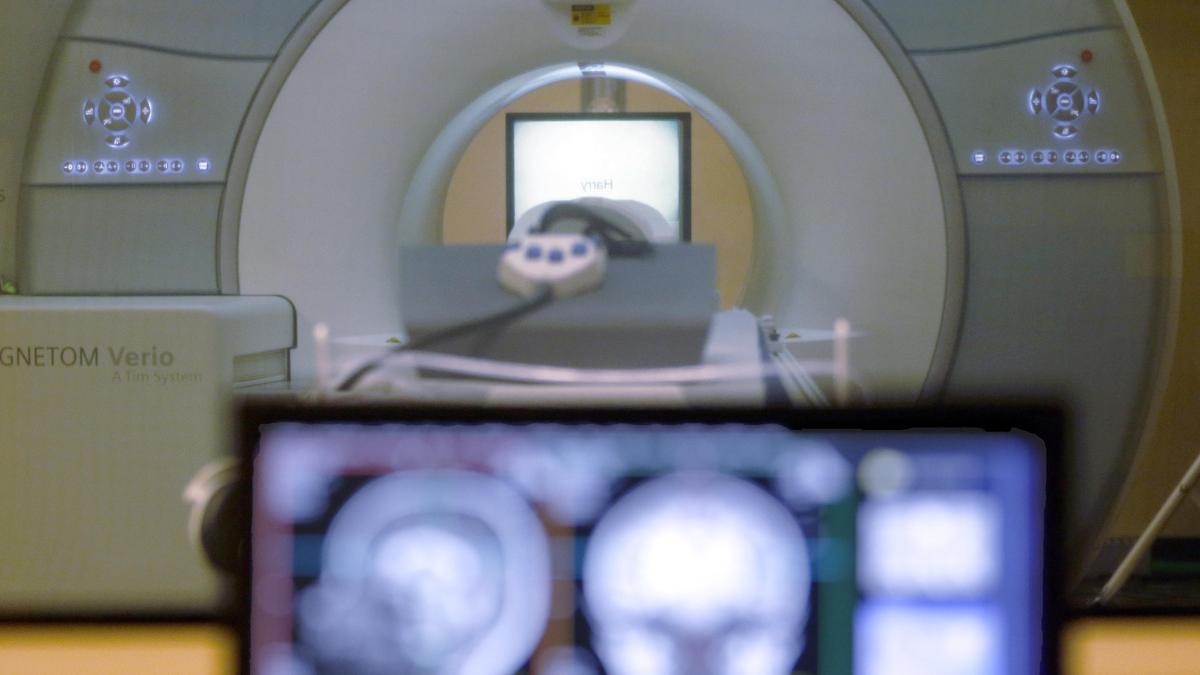
The source of that motion had not been clear. Drew's team used advanced imaging to observe mouse brains before and after the animals began walking. The brain moved just milliseconds before a mouse took a step, at the moment when abdominal muscles contracted in preparation for movement.
Researchers then applied slight pressure to the abdominal muscles of lightly anesthetized mice using pressure sensors. The same brain motion occurred. Breathing or cardiac activity did not produce the same response. The connection is the vertebral venous plexus, a network of veins that links the abdomen to the spine in both mice and humans.
"It's like a hydraulic system. It really is very much like the jacks that push your car up, or something that an excavator might have," Drew said. "Whenever you tense those muscles, which you do whenever you make a movement . . . " Computer simulations run by the team showed that the contractions generated by walking move cerebrospinal fluid out of the brain.
Drew said the mechanism may play a role in flushing excess proteins and other unnecessary material from brain tissue. "It's more speculative, but using simulations, we can see that this sort of motion should drive fluid movement and could help clear waste in the brain," Drew said.

Future research will examine whether the brain detects these mechanical signals and how conditions such as obesity affect the relationship between abdominal muscles and the brain. Michael Goard, an associate professor at UC Santa Barbara who studies sensory and spatial processing, said the work thoroughly identified the mechanical causes of the movement during locomotion.
The findings clarify a long-observed cerebral movement and its link to physical activity. They suggest a basic physiological process that could apply to broader research on brain waste clearance. The study does not address whether the same mechanism operates identically in humans.
Key Facts
Story Timeline
3 events- April 27, 2026
The study was published in Nature Neuroscience.
1 sourceLos Angeles Times - Before publication
Researchers observed mouse brains with advanced imaging during walking and applied abdominal pressure.
1 sourceLos Angeles Times - Before publication
Computer simulations showed contractions move cerebrospinal fluid out of the brain.
1 sourceLos Angeles Times
Potential Impact
- 01
Future studies may test whether the mechanism operates in humans during normal activity.
- 02
Research could examine effects of obesity on abdominal pressure and brain fluid movement.
- 03
Findings may inform investigations into brain waste clearance and related neurological conditions.
- 04
The work provides a mechanical explanation for previously observed brain motion inside the skull.
Transparency Panel
Related Stories
tass.comEight Hantavirus Cases Confirmed on MV Hondius Cruise, Three Fatal
Health officials have confirmed eight cases of Andes hantavirus tied to an expedition cruise aboard the MV Hondius, with three deaths reported. The World Health Organization assesses the broader public health risk as low. An epidemiologist highlighted rapid spread of misinformati…
thedrinksbusiness.comLVMH's Arnault Visits Seoul Stores as US Treasury Secretary Travels to Asia
LVMH Chairman and CEO Bernard Arnault is expected to visit South Korea next week for the first time in three years, touring newly opened Louis Vuitton outlets in major department stores. Separately, U.S. Treasury Secretary Scott Bessent plans a one-day stop in Seoul en route to C…
Substrate placeholder — needs reviewCDC Classifies Hantavirus Outbreak as Level 3 Emergency
The Centers for Disease Control and Prevention activated its Emergency Operations Center on Friday after classifying the ongoing hantavirus outbreak as level 3, the lowest of its emergency activation levels. Two new suspected cases were reported the same day linked to a cruise sh…