technology
Study Projects Atlantic Ocean Current to Weaken 50 Percent by 2100
A new analysis of climate models finds the Atlantic Meridional Overturning Circulation will lose roughly half its strength by the end of the century. The projection is based on two decades of direct observations and statistical methods that favor simulations showing steeper declines.
May 20, 11:00 AM·1m read1 source
 Science News
Audio version
Tap play to generate a narrated version.
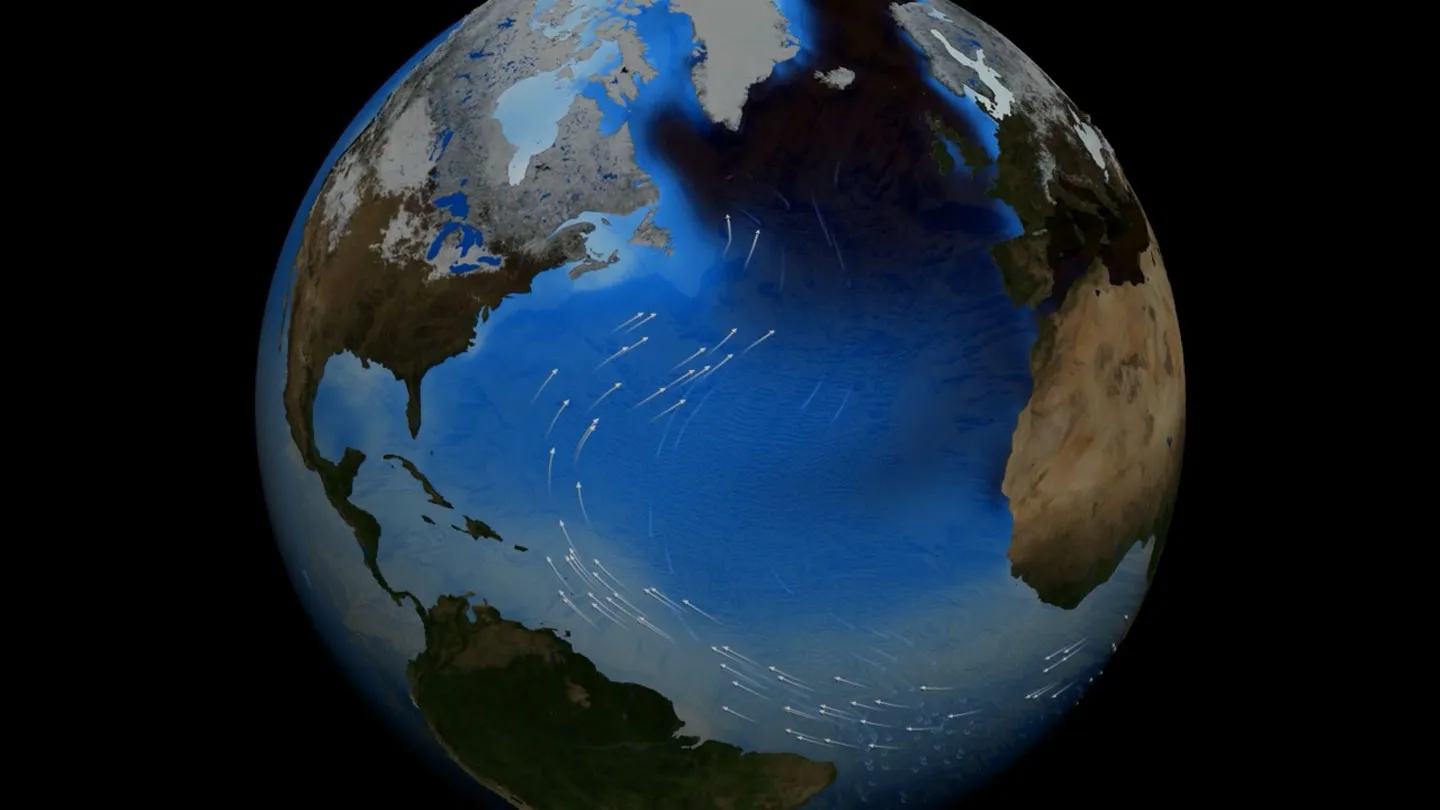
Researchers report that the Atlantic Meridional Overturning Circulation will weaken by about 50 percent by 2100. The current carries warm surface water from the tropics northward and releases heat to the atmosphere in the North Atlantic before the denser water sinks and returns south along the seafloor.
A study published April 15 in Science Advances used ridge-regularized linear regression to evaluate roughly 50 climate simulations. The method placed greater weight on models that best matched observed changes in South Atlantic surface salinity, producing a narrower range of outcomes centered on a 51 percent decline plus or minus 8 percent.
Stefan Rahmstorf of the Potsdam Institute for Climate Impact Research said the analysis shows that simulations with the strongest decline are the most realistic ones. Valentin Portmann of the University of Bordeaux noted that uncertainty in the projections stems mainly from differences among the models rather than from varying greenhouse-gas scenarios.
A separate paper published April 24 in Science Advances examined one conceptual intervention: an 80-kilometer series of dams across the Bering Strait that would limit freshwater inflow into the Atlantic. The same analysis highlighted additional factors that affect the current, including freshwater from Greenland’s melting ice sheet and circulation patterns in the Nordic Seas.
Observational records show South Atlantic surface waters have grown saltier in recent decades, consistent with the statistical link between higher salinity and weaker overturning strength.