Substrate
world

Sudan Farmers Face Rising Costs From Middle East Conflict

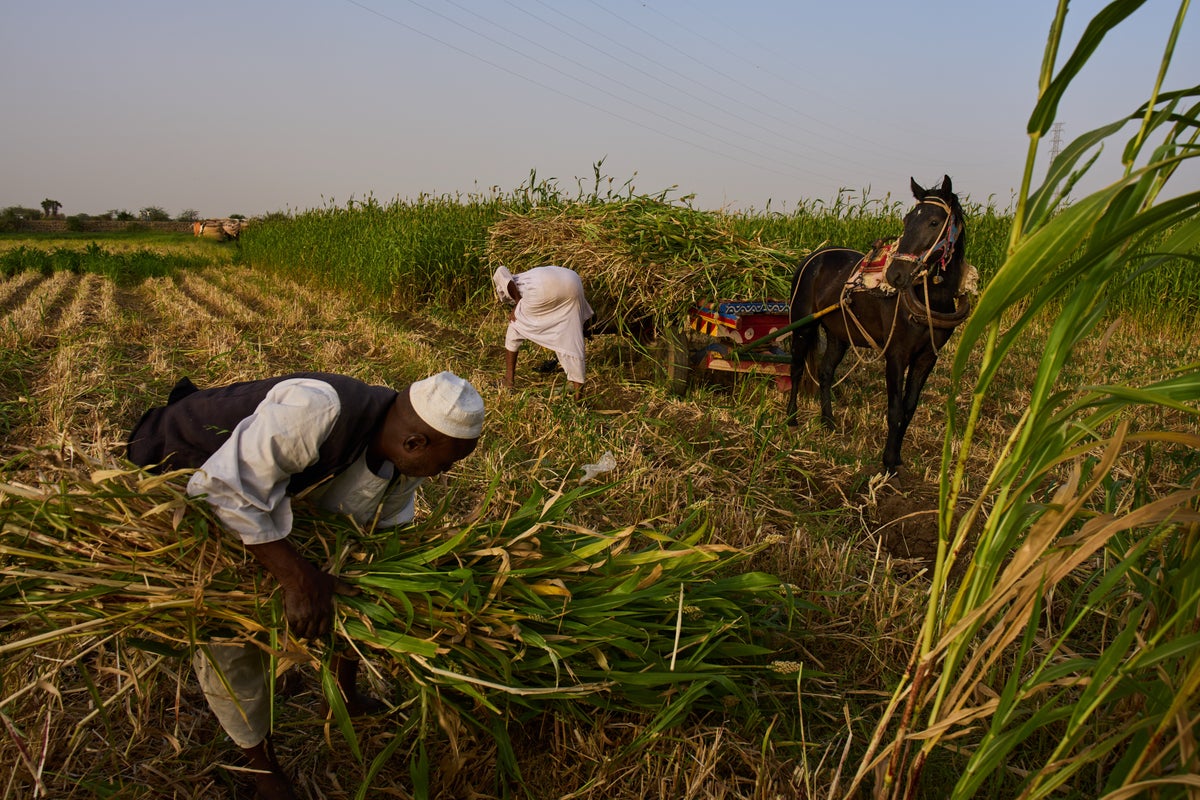
Sudanese farmers already displaced by three years of domestic war are now confronting higher fuel and fertilizer prices triggered by disruptions in the Middle East. The increases have led some to cut planted areas in half or skip planting entirely as the country faces acute hunger affecting 19 million people.
The Independent
1 source·May 8, 5:14 AM(22 hrs ago)·3m read
Sudan Farmers Face Rising Costs From Middle East ConflictThe Independent
Audio version
Tap play to generate a narrated version.
Developing·Limited corroboration so far. This page will refresh as more sources emerge.

Sudanese farmers already struggling after three years of domestic conflict are confronting higher costs for fuel and fertilizer following disruptions from the conflict in the Middle East. Omer al-Hassan returned to his land two years after being forced off by the war in Sudan.

He and other farmers told The Associated Press they are now bracing for an expensive planting season, with some reducing production or not planting at all. The conflict has affected supply chains for imports coming through the Gulf region, which supplies more than half of Sudan's sea-imported fertilizer.

Fuel prices have risen around 30 percent, pushing up food prices across the country. " He and 10 other farmers working his land, which also grows potatoes and tomatoes, reported spending two months clearing weed-choked fields before planting onions.

They stated they cannot cover agricultural costs without government support. This has forced cuts in production and rationing of fertilizer. Another farmer, Mohammed al-Badri, said he could afford to plant only half his farm. "The rest of it is nothing," he said.

A 50-kilogram bag of urea fertilizer now costs about $50, up from $11 during the same period last year, according to Abdoun Berqawi, a farmer in Gezira, one of the country's main food-producing regions. Fuel for tractors has increased from $2.50 to $8 per gallon.

Sorghum, millet and sesame, key staple crops in Sudan, are now at risk. Farmers already affected by fighting between the Sudanese military and the Rapid Support Forces face higher expenses for fertilizer, gasoline for equipment and diesel for irrigation pumps.

The increases have created difficulties for farmers preparing for the planting season that runs from June to November. Berqawi described it as a dangerous reality without government intervention. Merghany Omar, a farmer in al-Matammah in River Nile province, said those who took bank loans risk jail if poor yields prevent repayment.

He added that onion farming no longer covers its planting costs.

Humanitarian Situation Worsens The U.N.

World Food Program estimates 19 million people across Sudan face acute hunger, with many families on the brink of famine. Famine was declared last year in parts of Darfur and Kordofan. Melaku Yirga, Mercy Corps vice president for the Africa region, said the conflict has triggered a dangerous chain reaction at the wrong moment.

He visited the provinces of Kassala and Gedaref, both important food-producing areas. "People are buying less food, cutting or skipping meals, selling assets and taking greater risks just to survive," Yirga said. " In urban areas, vegetable and dairy prices have risen about 40 percent because of fuel price spikes.

Remote regions including Kordofan, White Nile, Darfur and Blue Nile are affected most severely because agricultural zones are poorly connected. Food assistance shipments to Sudan now travel 9,000 kilometers farther due to detours around the Strait of Hormuz and the Bab el-Mandeb Strait, according to the World Food Program.

Iranian-backed Houthi rebels in Yemen have threatened shipping in the Red Sea area. Mubarak al-Nour, a farmer and former parliamentarian in Gedaref, said delays in obtaining fertilizer could cause farmers to miss the planting season. Some are switching to cheaper crops that require less or no fertilizer and scaling back on corn, sesame and other rain-fed crops.

Fuel shortages in some areas stem from warring parties blocking supplies, according to Mathilde Vu, an advocacy manager with the Norwegian Refugee Council. Local fuel markets have been bombed in recent months. Samy Guessabi, country director for Action Against Hunger in Sudan, noted the situation is compounded by currency depreciation.

Agriculture ministry officials did not immediately respond to requests for information on addressing the crisis.

Key Facts

19 million
people face acute hunger in Sudan
30%
rise in fuel prices
$50
current cost of 50kg urea fertilizer
9,000 km
extra distance for WFP aid shipments
Half
of some farms left unplanted

Story Timeline

4 events
  1. 2023

    War between Sudanese military and Rapid Support Forces began, displacing farmers.

    1 sourceThe Independent
  2. 2025

    Famine declared in parts of Darfur and Kordofan regions.

    1 sourceThe Independent
  3. 2026

    Middle East conflict disrupts fertilizer and fuel supplies to Sudan.

    1 sourceThe Independent
  4. 2026-05

    Farmers report 30% fuel price rise and fertilizer costs jumping from $11 to $50 per bag.

    1 sourceThe Independent

Potential Impact

  1. 01

    More families in remote regions may resort to eating leaves or animal feed due to food shortages.

  2. 02

    Food prices in Sudan have risen, with vegetables and dairy up about 40 percent in urban areas.

  3. 03

    World Food Program shipments to Sudan now travel 9,000 kilometers farther, increasing costs and delays.

  4. 04

    Farmers with bank loans face risk of jail if poor yields prevent loan repayment.

Transparency Panel

Sources cross-referenced1
Confidence score65%
Synthesized bySubstrate AI
Word count649 words
PublishedMay 8, 2026, 5:14 AM
Bias signals removed2 across 1 outlet
Signal Breakdown
Loaded 1Editorializing 1

Related Stories

Eight Hantavirus Cases Confirmed on MV Hondius Cruise, Three Fataltass.com
world48 min agoFraming68Framing risk68/100Rewrite inherits strong consensus framing that centers misinformation panic and ivermectin-skeptic hero narrative over the actual hantavirus outbreak and its three fatalities.Click to jump to full framing analysis

Eight Hantavirus Cases Confirmed on MV Hondius Cruise, Three Fatal

Health officials have confirmed eight cases of Andes hantavirus tied to an expedition cruise aboard the MV Hondius, with three deaths reported. The World Health Organization assesses the broader public health risk as low. An epidemiologist highlighted rapid spread of misinformati…

MA
Stat
2 sources
LVMH's Arnault Visits Seoul Stores as US Treasury Secretary Travels to Asiathedrinksbusiness.com
world2 hrs agoFraming55Framing risk55/100Rewrite inherits anonymous sourcing and lede misdirection from sources; luxury exec visit and diplomatic travel are framed as reactive processes rather than substantive events.Click to jump to full framing analysis

LVMH's Arnault Visits Seoul Stores as US Treasury Secretary Travels to Asia

LVMH Chairman and CEO Bernard Arnault is expected to visit South Korea next week for the first time in three years, touring newly opened Louis Vuitton outlets in major department stores. Separately, U.S. Treasury Secretary Scott Bessent plans a one-day stop in Seoul en route to C…

yna.co.kr
Al Jazeera
3 sources
CDC Classifies Hantavirus Outbreak as Level 3 EmergencySubstrate placeholder — needs review
world2 hrs ago

CDC Classifies Hantavirus Outbreak as Level 3 Emergency

The Centers for Disease Control and Prevention activated its Emergency Operations Center on Friday after classifying the ongoing hantavirus outbreak as level 3, the lowest of its emergency activation levels. Two new suspected cases were reported the same day linked to a cruise sh…

JE
upi.com
oann.com
zerohedge.com
4 sources