Supreme Court to Decide if Government Must Justify Prolonged Detention of Criminal Immigrants
The Supreme Court said Monday it will decide whether federal officials may hold criminal immigrants in detention without a bond hearing when removal proceedings stretch on. The case also asks whether the government must prove by clear and convincing evidence that continued detention is required.
 Washington Examiner
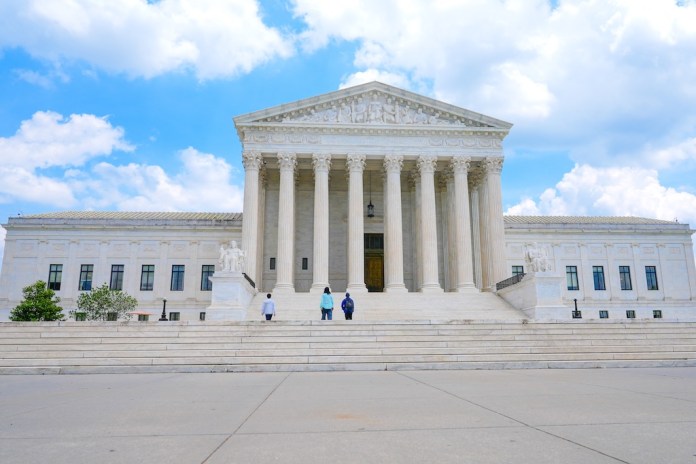
The Supreme Court announced Monday that it will hear Genalo v. Black, a case that asks whether federal immigration officials may detain a criminal immigrant awaiting removal proceedings indefinitely or must provide a bond hearing if detention becomes unreasonably prolonged.
The Justice Department asked the court to decide whether the government bears the burden of proving by clear and convincing evidence that a criminal immigrant must remain detained.
The court also agreed to address whether the case for one of the two criminal immigrants is moot. , both criminal legal permanent residents. The government sought to remove them based on their criminal convictions and placed them in detention pending removal proceedings.
M. filed habeas corpus petitions in federal court challenging the length of their detention. The 2nd Circuit held that the Due Process Clause requires a bond hearing if detention becomes unreasonably prolonged and that the government bears the burden of justifying continued detention.
The case is expected to be heard during the Supreme Court’s next term, between October and April 2027. The Supreme Court’s current term is expected to conclude by the end of June 2026. The Supreme Court has 20 cases remaining from its current term for which it has heard arguments but not yet issued opinions.
It has already accepted 11 other cases for its next term in addition to Genalo v. Black.
U.S. Border, and a case over whether federal courts must defer to immigration judges in asylum cases. The high court said Monday that it would hear the case as part of an orders list that included three cases accepted for arguments in the upcoming term and dozens of cases that the Supreme Court declined to take up.