Supreme Court Expedites Opinion in Louisiana Redistricting Case, 8-1 Over Jackson Dissent
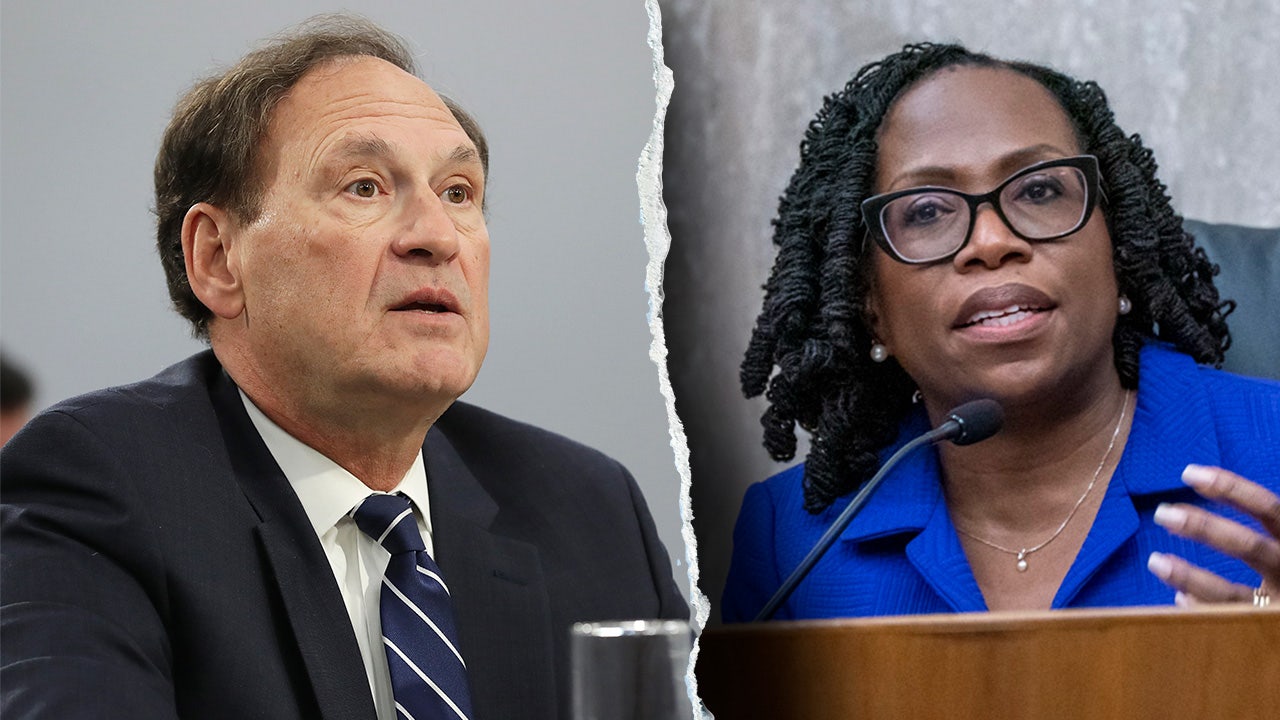
The U.S. Supreme Court granted a request to immediately finalize its ruling invalidating Louisiana's 2024 congressional map, allowing the state to redraw districts before the 2026 elections. Justice Ketanji Brown Jackson dissented, arguing the move created chaos, while Justice Samuel Alito, joined by two others, called her rationale baseless.
yna.co.krU.S. Supreme Court on Monday night granted a request to immediately finalize its opinion in Louisiana v. Callais, bypassing the usual 32-day waiting period to allow Louisiana to redraw its congressional map in time for the 2026 elections.
The order, issued on an 8-1 margin with Justice Ketanji Brown Jackson dissenting, came after the court invalidated the state's 2024 map by a 6-3 vote on April 29, 2026. That map, adopted by the Louisiana Legislature, had created two majority-Black districts following lower court rulings that an earlier map with one such district likely violated Section 2 of the Voting Rights Act.
Non-African-American voters who challenged the 2024 map asked the Supreme Court on April 29, 2026, to finalize the opinion immediately, citing the need for more time to implement a remedial map amid potential delays in the state's congressional primaries.
Louisiana informed the court on April 30, 2026, that it had postponed those primaries, originally scheduled for May 16, 2026. Gov. Jeff Landry stated that using the 2024 map would constitute an emergency under state law, as it would mean electing representatives under an unconstitutional map as determined by the Supreme Court.
Jackson noted that in the last 25 years, the Supreme Court has granted a request to fast-track issuance of its final opinion only twice when one litigant objected. Justice Samuel Alito, joined by Justices Clarence Thomas and Neil Gorsuch, wrote a five-paragraph concurring opinion responding to Jackson's dissent. He noted that the constitutional question in Louisiana v.
Callais was argued and conferenced nearly seven months ago. The Supreme Court normally waits 32 days after a decision before sending the opinion and judgment to the lower court, to allow time for rehearing petitions. In this case, the court explained in an unsigned order that the defenders of the map had not indicated intent to seek reconsideration.

U.S. House of Representatives. The Louisiana Legislature plans to hear public comments on a new proposed congressional map on May 8, 2026, which would include one majority-Black district.
Lawsuits have been filed in federal and state courts in Louisiana challenging Gov. Jeff Landry's postponement of the May 16 primary. The Supreme Court ruled 6-3 that Louisiana's 2024 congressional map violated Section 2 of the Voting Rights Act.
The court's decision in Callais raised the bar for Voting Rights Act lawsuits alleging racial gerrymandering, according to multiple sources. In the aftermath, states like Alabama have initiated special sessions to redraw their congressional maps.
Stakeholders on various sides expressed differing views. The challengers emphasized the need for swift action to avoid unconstitutional elections, while defenders of the 2024 map, including Black voters, had argued it complied with Voting Rights Act requirements. Gov.
Landry positioned the postponement as necessary to uphold the Constitution, stating that electing under the invalidated map would subject voters to impermissibly elected representatives. The procedural move drew commentary from justices highlighting tensions in implementation. Alito posited that delaying the judgment could itself appear partisan by benefiting one side in the redistricting battle.
Jackson countered that granting the request inserted the court into an ongoing election process with political undertones, urging adherence to default procedures to avoid partiality. The case originated from challenges to Louisiana's maps after the 2020 census, with initial rulings finding dilution of Black voting power.
The 2024 map aimed to remedy that by connecting Black populations across districts, but the Supreme Court found it constituted impermissible racial gerrymandering.
This ruling aligns with recent decisions limiting race-based considerations in electoral maps. Lawsuits challenging the primary postponement allege procedural irregularities, with plaintiffs seeking to restore the original schedule. The proposed new map, set for public input, reverts to a single majority-Black district, potentially shifting the partisan balance in Louisiana's delegation.
Republicans could gain one or two seats under a revised map, according to analyses in the sources. The Supreme Court's acceleration of the judgment marks a rare deviation from its standard practice, as noted by Jackson, occurring only twice in 25 years amid objections.
Alito's concurrence directly addressed this, arguing the circumstances justified the expedited process given the timeline for elections.
The full impact on 2026 congressional races remains under review as Louisiana proceeds with redistricting.
Key Facts
Story Timeline
6 events- 2026-05-04
Supreme Court grants request to immediately finalize opinion in Louisiana v. Callais on an 8-1 vote, with Jackson dissenting and Alito concurring.
5 sources@zerohedge · Washington Examiner · The Washington Times · The Federalist - 2026-04-30
Louisiana informs Supreme Court of postponement of congressional primaries originally set for May 16.
1 source@zerohedge - 2026-04-29
Supreme Court issues 6-3 decision invalidating Louisiana's 2024 congressional map with two majority-Black districts.
3 sources@zerohedge · Washington Examiner · The Guardian - 2026-04-29
Non-African-American voters request Supreme Court to finalize opinion immediately.
1 source@zerohedge - 2024
Louisiana Legislature adopts congressional map creating two majority-Black districts.
2 sources@zerohedge · Washington Examiner - Prior to 2024
Two lower courts rule earlier Louisiana map with one majority-Black district likely violated Section 2 of Voting Rights Act.
1 source@zerohedge
Potential Impact
- 01
Other states like Alabama initiate redistricting sessions following the ruling.
- 02
Higher bar for Voting Rights Act claims could reduce race-based gerrymandering challenges nationwide.
- 03
Republicans may gain one or two U.S. House seats in Louisiana under new map.
- 04
Increased partisan tensions in redistricting as states act amid ongoing elections.
- 05
Lawsuits challenge primary postponement, potentially restoring original schedule.
Transparency Panel
Related Stories
North Korea Updates Constitution, Omits Korean Unification References Amid International Trade Fair
North Korea has revised its constitution to eliminate references to unification with South Korea. The country also opened the Pyongyang Spring International Trade Fair on Monday, showcasing domestic products like the Jindallae smartphone. More than 290 enterprises from several na…
channelnewsasia.comU.S. Pauses One-Day Ship Guidance in Strait of Hormuz as Iran Talks Advance
President Trump announced a pause in the one-day-old effort to guide ships out of the Strait of Hormuz, citing progress toward an agreement with Iran. Secretary of State Marco Rubio declared the war with Iran concluded after a month-old cease-fire. The U.S. blockade remains in pl…
Trump Signs Memorandum to Revive Presidential Physical Fitness Award at White House Event
President Donald Trump signed a memorandum on May 5, 2026, restoring the Presidential Physical Fitness Award and reintroducing a competitive fitness test in U.S. schools. The event featured student athletes on the White House South Lawn, where Trump demonstrated his signature dan…