Supreme Court Hears Arguments on Trump Termination of TPS for Haitians and Syrians
The U.S. Supreme Court heard oral arguments on whether the Trump administration can terminate Temporary Protected Status for hundreds of thousands of immigrants from Haiti and Syria. Justices considered the extent of judicial review over such executive decisions. The case could affect protections for up to 1.3 million people from various countries.
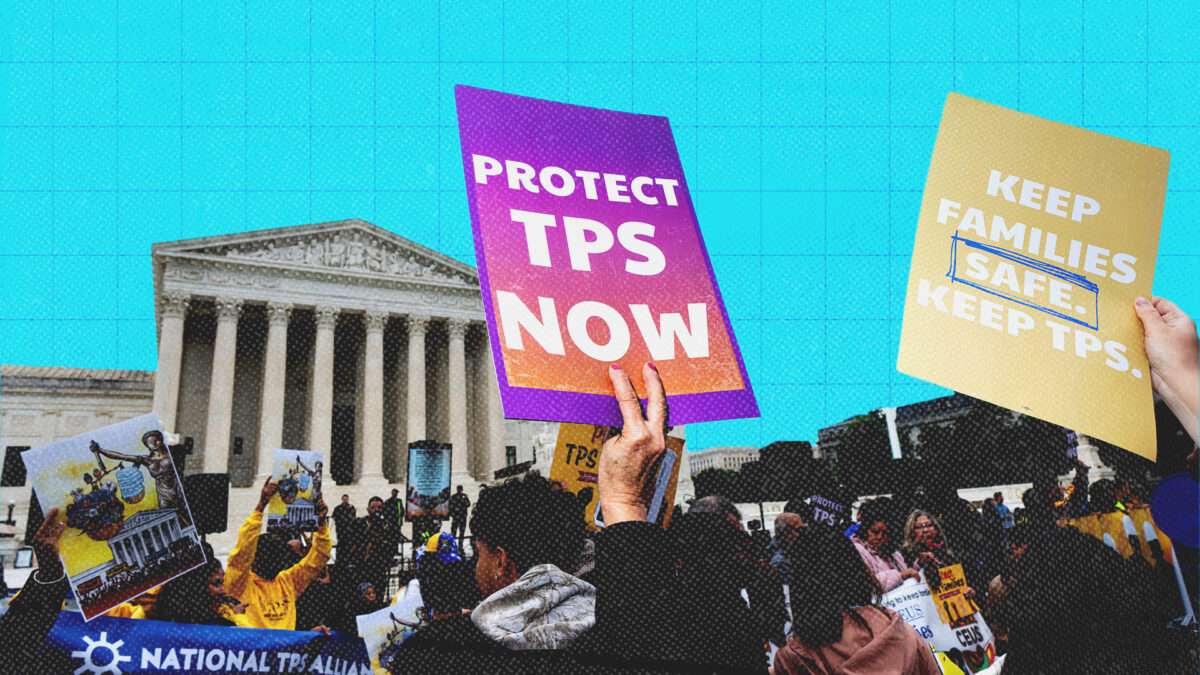
ReasonThe U.S. Supreme Court on April 29, 2026, heard oral arguments in consolidated cases challenging the Trump administration's termination of Temporary Protected Status (TPS) for approximately 350,000 Haitians and 6,000 Syrians. The administration seeks to end these humanitarian protections, which shield immigrants from deportation due to unsafe conditions in their home countries.
Lower federal courts in New York and Washington, D.C., had blocked the terminations. U.S. Solicitor General John Sauer, representing the administration, argued that TPS decisions by the Department of Homeland Security (DHS) are not subject to judicial review under the 1990 law establishing the program.
He described such decisions as foreign policy judgments entrusted to the executive branch. Sauer drew parallels to the 2018 Supreme Court ruling in Trump v. Hawaii, which upheld travel restrictions on several countries.
Arulanantham, representing Syrian TPS holders, contended that former DHS Secretary Kristi Noem failed to follow proper procedures when terminating the protections. He argued that the administration's position treats the TPS statute as a "blank check" without accountability.
Arulanantham emphasized that DHS did not adequately review conditions in Syria before the decision. The Haitian challengers' case includes allegations that the termination violates the Equal Protection Clause due to discriminatory intent. U.S. District Judge Ana Reyes in February blocked the Haiti termination, citing evidence of racial animus in the administration's actions.
“Now, we have a president saying at one point that Haiti is a ‘filthy, dirty and disgusting s-hole country’ – I’m quoting him.”
Liberal justices, including Sonia Sotomayor and Ketanji Brown Jackson, questioned whether racial bias influenced the decisions. Sotomayor referenced Trump's comments on preferring immigrants from Norway, Sweden, and Denmark over those from Haiti and African nations. Sauer responded that the statements addressed crime and instability, not race.
and Broader Implications Chief Justice
John Roberts expressed skepticism about extending the Trump v. Hawaii precedent to TPS, noting differences in context involving aliens already present in the U.S. Conservative justices Samuel Alito and Neil Gorsuch asked no questions of Sauer, which reports indicated may signal agreement with the administration's position.
The court's conservative majority appeared sympathetic to the government's arguments during the hearing. TPS, created in 1990, allows the DHS secretary to designate countries facing war, natural disasters, or instability, permitting nationals to live and work in the U.S. temporarily.
It does not provide a path to citizenship. Haitians have held TPS since a 2010 earthquake that killed over 300,000 people, while Syrians have been protected since 2012 amid civil war. Noem terminated Syria's TPS last year, citing moves toward "stable institutional governance" after the late-2024 fall of President Bashar al-Assad.
For Haiti, she stated no extraordinary conditions prevented safe return, despite ongoing gang violence. Challengers disputed these assessments, arguing inadequate consultation with the State Department. If the Supreme Court rules for the administration, it could enable ending TPS for all designated countries, affecting nearly 1.3 million people at the start of Trump's second term.
Last year, the court allowed termination of TPS for over 300,000 Venezuelans via its emergency docket. A decision is expected by late June or early July 2026.
The Trump administration has revoked or sought to deny TPS extensions for immigrants from multiple countries since Trump returned to office in 2025. Lower courts have ruled they cannot second-guess the substance of DHS conclusions but can review procedural compliance.
Arulanantham warned that unchecked power could lead to arbitrary designations or terminations. Senior citizens have joined advocacy efforts, highlighting the role of TPS holders as caregivers. Community members held signs supporting TPS extension during related rallies.
The cases stem from class-action lawsuits by affected immigrants.
“The secretary can terminate TPS but he must turn square corners, follow the rules Congress set.”
Reports noted the administration's actions open the door to deporting hundreds of thousands. Syria remains divided and violent a year after Assad's fall, per background details. Haiti continues to face significant humanitarian crises.
Key Facts
Story Timeline
6 events- Apr 29, 2026
Supreme Court heard oral arguments on Trump administration's termination of TPS for Haitians and Syrians.
6 sourcesThe Guardian · The Washington Times · Reason - Feb 2026
U.S. District Judge Ana Reyes blocked termination of TPS for Haitians, citing racial animus.
2 sourcesThe Guardian · Reason - 2025
Trump administration terminated TPS for over 300,000 Venezuelans, upheld by Supreme Court on emergency docket.
1 sourceThe Guardian - Late 2024
Fall of Syrian President Bashar al-Assad led to assessments of Syria's stability for TPS review.
2 sourcesThe Guardian · The Washington Times - 2012
Syria designated for TPS due to civil war.
3 sourcesThe Guardian · Reason · The Washington Times - 2010
Haiti designated for TPS following devastating earthquake.
3 sourcesThe Guardian · Reason · The Washington Times
Potential Impact
- 01
Trump administration could terminate TPS for all designated countries if court rules in its favor.
- 02
Hundreds of thousands of immigrants face deportation to unstable home countries.
- 03
Lower courts' blocks on terminations are overturned, enabling immediate enforcement.
- 04
Future TPS decisions become immune to judicial review, limiting challenges.
- 05
Advocacy groups increase efforts to protect caregivers and communities reliant on TPS holders.
- 06
Broader immigration policies shift toward reduced humanitarian protections.
Transparency Panel
Related Stories
Melania Trump Honors Mothers of 103rd Sustainment Command Fallen
First Lady Melania Trump held a White House tribute to military mothers on May 6 2026. The ceremony centered on families of service members from the 103rd Sustainment Command killed on March 1.
thewrap.comEEOC Sues New York Times Over Promotion Decision, Alleging Race and Sex Discrimination
The Equal Employment Opportunity Commission filed a federal lawsuit Tuesday claiming The New York Times denied a promotion to a white male editor to meet race and sex representation goals. The suit seeks backpay and alleges violations of Title VII of the Civil Rights Act of 1964.…
Ramaswamy Wins Ohio GOP Governor Primary as Sheahan Falls Short in House Race
Vivek Ramaswamy defeated Casey Putsch to win the Republican nomination for Ohio governor on Tuesday. Former ICE deputy director Madison Sheahan finished third with roughly 20 percent of the vote in the 9th Congressional District primary, which Derek Merrin won. The outcomes set u…