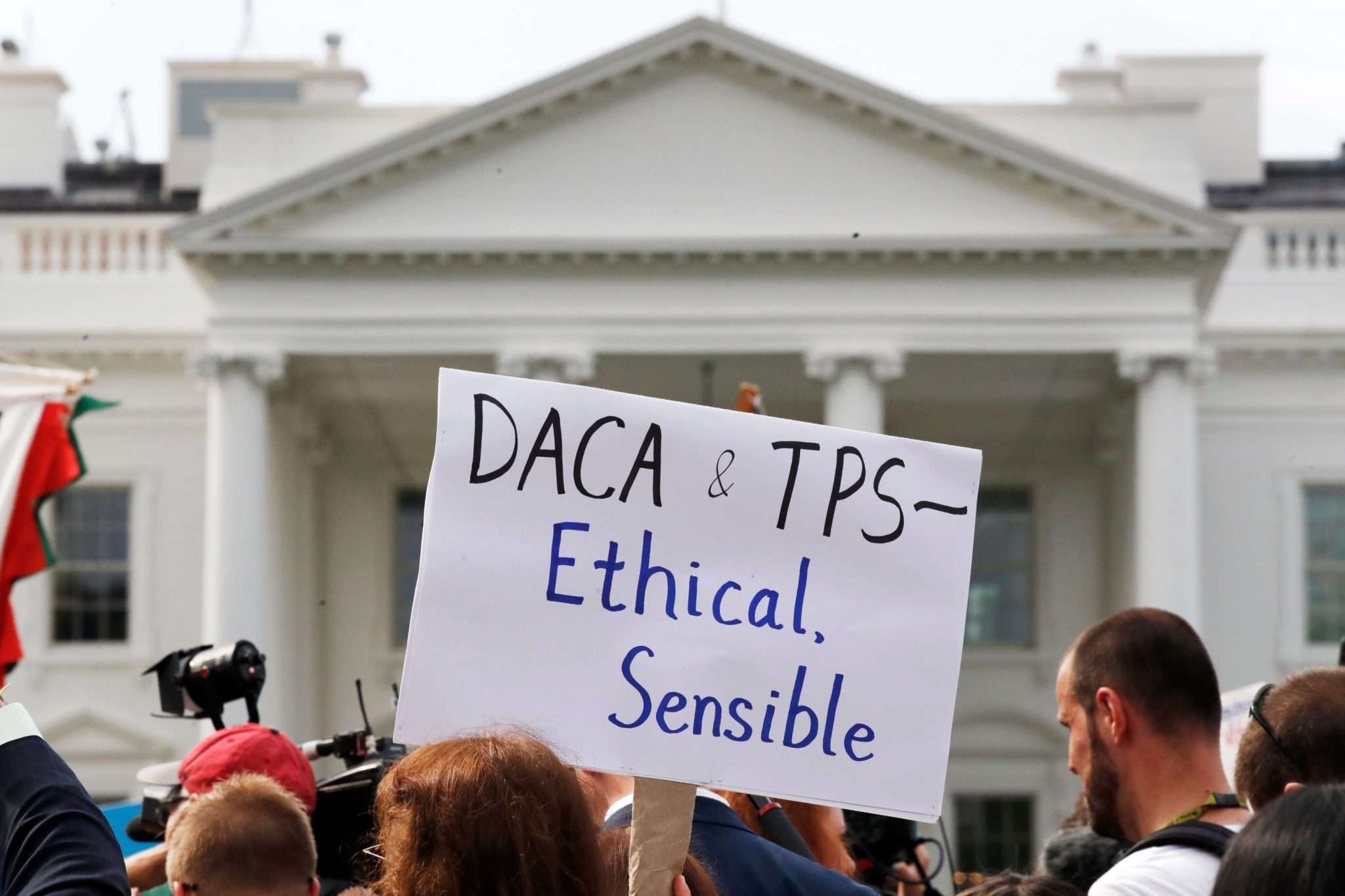
Supreme Court Hears Arguments on Trump Bid to End TPS for Haitians and Syrians
The U.S. Supreme Court heard arguments on whether the Trump administration can end temporary protected status for migrants from Haiti and Syria without judicial review. The case involves appeals of lower court orders blocking the terminations, potentially affecting up to 1.3 million people from 17 countries. A decision is expected by summer.
FortuneThe U.S. Supreme Court heard oral arguments on April 29, 2026, in a case involving the Trump administration's decision to terminate temporary protected status (TPS) for migrants from Haiti and Syria. The administration appealed lower court rulings that halted the Department of Homeland Security's efforts to end these designations.
TPS provides temporary relief from deportation for individuals from countries facing armed conflict, natural disasters, or other extraordinary conditions. The designations for Haiti date to 2010 following an earthquake, and for Syria to 2012 amid civil war.
According to Department of Homeland Security statements in court filings, the terminations were based on assessments that conditions in those countries had improved sufficiently to no longer warrant TPS extensions.
Solicitor General D. John Sauer, representing the administration, argued that the homeland security secretary holds unreviewable discretion over TPS decisions. He stated in oral arguments, "The kind of determination that is at issue here is just the sort of determination that lies kind of at the heartland of what has been traditionally entrusted to the political branches," as reported in Fortune.
Sauer further contended that judicial review could interfere with executive branch authority on immigration and foreign policy, citing congressional intent for TPS to be temporary. The administration's position, as outlined in briefs, emphasizes that ending outdated designations allows for focused enforcement on current immigration priorities.
Lawyers for the migrants, including Ahilan Arulanantham representing approximately 350,000 Haitian TPS holders and 6,000 Syrian TPS holders, argued that the administration must adhere to statutory procedures, such as reviewing country conditions and providing 60 days' notice.
Arulanantham stated during arguments, "The bottom line is the secretary can terminate TPS, but he must turn square corners and follow the rules Congress set," according to ABC. Justice Sonia Sotomayor referenced President Donald Trump's past statements on Haitian immigrants, questioning potential discriminatory intent.
Justice Ketanji Brown Jackson noted a lower court finding by Judge Ana Reyes of discriminatory animus. However, the administration's briefs deny any racial bias, referencing a 2018 Supreme Court ruling that upheld a travel ban despite similar claims.
Conservative justices, including Justice Amy Coney Barrett, expressed skepticism toward the challengers' procedural arguments, with Barrett questioning the utility of reviewing processes if substantive decisions remain the same. Justice Brett Kavanaugh highlighted changes in Syria following the fall of President Bashar Assad in late 2024, though migrant lawyers countered that violence persists based on State Department reports.
Chief Justice John Roberts, who authored the 2018 travel ban opinion, asked if the administration sought to expand that precedent. The court has previously permitted the administration to end TPS for Venezuelans pending litigation.
The case could impact up to 1.3 million TPS holders from 17 countries if the court rules in the government's favor. Migrant advocates, such as Sejal Zota of Just Futures Law, have described the stakes as involving life-or-death outcomes. Court documents reference four Haitian women deported in February 2026 who were later found beheaded in Haiti.
TPS holder Maryse Balthazar, a nursing assistant in the U.S. for 16 years with two children, stated her properties in Haiti were destroyed. Rose-Thamar Joseph of the Haitian Community Help and Support Center noted that Haitian TPS holders include homeowners, business owners, and taxpayers whose removal could affect the economy.
The administration has not publicly detailed specific security threats tied to the terminations in the provided sources. No comments from Haiti's or Syria's foreign ministries appear in the source materials as of April 29, 2026.
The broader context includes other immigration cases before the court this term, such as those on birthright citizenship and asylum. A decision is expected by summer 2026 and may influence ongoing TPS litigation without resolving all terminations.
Key Facts
Story Timeline
6 events- Apr 29, 2026
Supreme Court heard oral arguments on Trump administration's appeal to end TPS for Haitian and Syrian migrants.
3 sourcesFortune · ABC - Feb 2026
Four Haitian women deported from the U.S. were found beheaded in Haiti.
1 sourceFortune - Jan 2025
Trump inaugurated; DHS began ending TPS for 13 countries.
2 sourcesFortune · ABC - Late 2024
Fall of President Bashar Assad's government in Syria.
2 sourcesFortune · ABC - 2012
Syria granted TPS designation due to civil war.
2 sourcesFortune · ABC - 2010
Haiti granted TPS after catastrophic earthquake.
2 sourcesFortune · ABC
Potential Impact
- 01
Administration may reattempt TPS terminations following procedural steps if challengers win.
- 02
Up to 1.3 million migrants could face deportation if the court rules for the administration.
- 03
U.S. industries like nursing could experience workforce shortages from TPS terminations.
- 04
Local economies in areas with Haitian communities will see reduced tax revenue and business activity.
- 05
Ruling may influence other immigration cases on birthright citizenship and asylum.
- 06
Ongoing litigation could delay deportations for affected migrants.
Transparency Panel
Related Stories
koreatimes.co.krMiddle East Conflict Closes Strait of Hormuz, European Jet Fuel Rises From $831 to $1,838 per Tonne
The ongoing conflict in the Middle East has driven jet fuel prices to more than double in recent weeks, leading to widespread flight cancellations and higher ticket costs. Airlines across Europe and North America have reduced schedules, while governments prepare measures to mitig…
680news.comGap Co-Founder Doris Fisher Dies at 94 Surrounded by Family
Doris Fisher, who co-founded The Gap Inc. in 1969 with her husband Don, died on May 2, 2026, at age 94. She served as the company's merchandiser for nearly four decades and helped build it into a global brand generating over $15 billion in annual sales. Fisher is survived by thre…
sfist.comGap Co-Founder Doris Fisher Dies at 94 in San Francisco
Doris Fisher, who co-founded the Gap retail chain in 1969, died on Saturday at age 94. She played a key role in building the company into a global brand by focusing on merchandise and style trends like jeans and casual wear. Her death was confirmed by a company spokesman.