Supreme Court Rules on Race in Congressional Redistricting
The U.S. Supreme Court ruled in Louisiana v. Callais that race can only be considered in drawing congressional districts if present-day intentional racial discrimination is proven. The decision rejected efforts to remedy past racism in redistricting, prompting states to redraw maps and delay primaries.
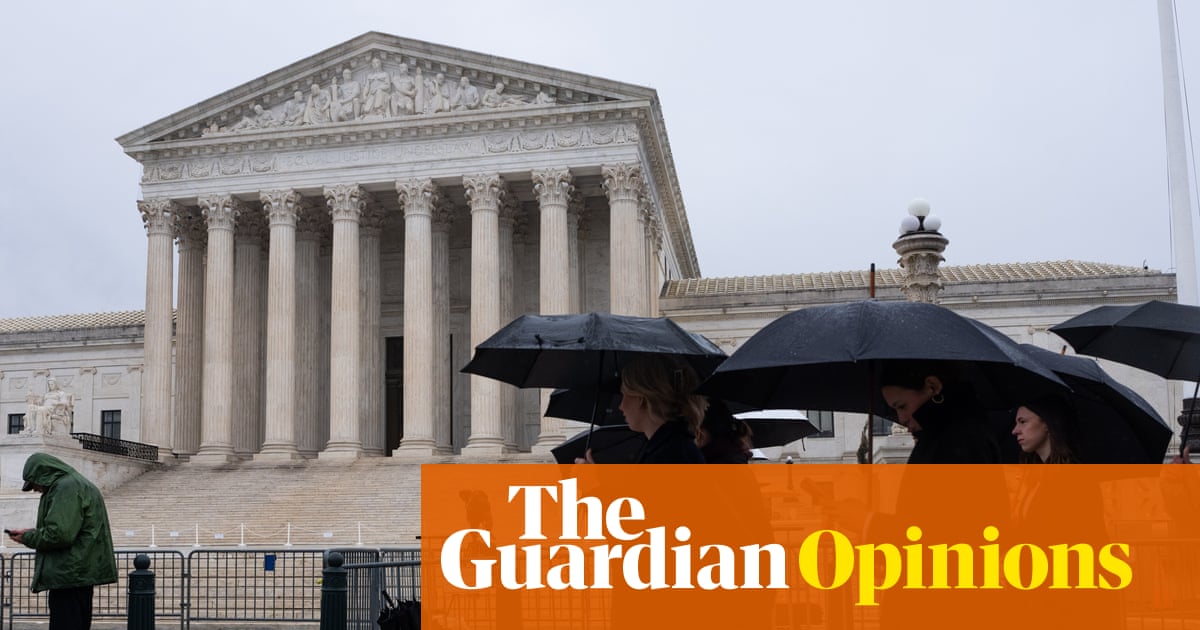
Diliff / Wikimedia (CC BY-SA 3.0)The U.S. Supreme Court ruled on Wednesday in Louisiana v. Callais that the Voting Rights Act permits consideration of race in redistricting only to remedy proven intentional discrimination in voting practices. " The decision reversed a lower court order that had required Louisiana to redraw its congressional map to include a second majority-Black district.
The ruling cited the Court's 2013 decision in Shelby County v. Holder, which struck down the Voting Rights Act's preclearance formula for certain states, noting that "things have changed dramatically" since the law's enactment in 1965.
The case originated from a challenge by Black voters in Robinson v. Landry, who argued that Louisiana's initial congressional map, with one majority-Black district out of six despite Black residents comprising about one-third of the population, violated Section 2 of the Voting Rights Act.
A federal district court agreed and ordered a new map with a second majority-Black district connecting areas from Baton Rouge to Shreveport. Non-Black voters then filed suit in Callais, claiming the revised map constituted an impermissible racial gerrymander.
Justice Alito's opinion emphasized that Section 2 "does not authorize courts to redraw districts solely to achieve proportional representation based on race," and referenced the 2019 ruling in Rucho v. Common Cause, which held that federal courts cannot review claims of partisan gerrymandering absent racial discrimination.
Justice Clarence Thomas concurred separately, describing the Court's prior Voting Rights Act jurisprudence as a "disastrous misadventure" that should now end. Dissenting, Justice Elena Kagan wrote that the majority's decision "renders Section 2 all but a dead letter," arguing it completes the "demolition" of the Voting Rights Act begun in Shelby County.
The dissent highlighted ongoing racial polarization in Southern voting, where Black voters predominantly support Democrats and white voters support Republicans.
Following the ruling, Louisiana Governor Jeff Landry announced the suspension of the state's congressional primaries to allow for map revisions. The decision prompted responses in other states, including calls from officials in Tennessee, Georgia, South Carolina, and Mississippi to convene special sessions for redistricting.
" Press Robinson, a plaintiff in the original Robinson v.
Civil rights groups, including those cited by NPR, expressed concern that the ruling could reduce Black representation in Congress and at state and local levels. No official statements from the U.S. Department of Justice on the ruling were reported in available sources as of May 3, 2026.
The decision caused delays in Louisiana's primaries, leading to voter confusion on the first day of early voting, as reported by The New York Times. The Voting Rights Act, enacted in 1965 under President Lyndon B. Johnson, originally included preclearance requirements amended in 1982 to address effects of dilution without proving intent.
Chief Justice John Roberts, in the 2013 Shelby County opinion, described the preclearance formula as outdated due to increases in Black voter turnout and elected officials.
Key Facts
Story Timeline
8 events- May 4, 6:03 AM ET
4 new sources added: The New York Times, RealClearPolitics, The Guardian, Grist
4 sourcesThe New York Times · RealClearPolitics · The Guardian - May 4, 4:03 AM ET
3 new sources added: CBS News, ABC News, Mississippi Today
3 sourcesCBS News · ABC News · Mississippi Today - May 1, 2026 — 3 days ago
Supreme Court ruled in Louisiana v. Callais, limiting race in redistricting.
9 sourcesThe Atlantic · The New Yorker · The Guardian - Apr 29, 2026 — 5 days ago
GOP politicians in Tennessee, Georgia, South Carolina, and Mississippi called for special sessions to redraw maps.
2 sourcesThe Atlantic · Mississippi Today - Apr 2026
Alabama Governor Kay Ivey called special session to redraw maps before primaries.
3 sourcesThe Atlantic · CBS News · ABC News - 2022
Black plaintiffs in Robinson v. Landry challenged Louisiana's map for diluting Black votes.
2 sourcesThe Atlantic · The New Yorker - 2013
Supreme Court in Shelby County v. Holder ended preclearance under Voting Rights Act.
3 sourcesThe Atlantic · The New Yorker · The Guardian - 1965
Voting Rights Act signed into law by President Lyndon B. Johnson.
4 sourcesThe Atlantic · CBS News · NPR · The New Yorker
Potential Impact
- 01
Civil rights groups face higher barriers to challenge discriminatory maps under new standards.
- 02
Southern states will redraw maps to reduce majority-Black districts, decreasing Black representation in Congress.
- 03
Elections in 2026 see shifts in House composition favoring Republicans in the South.
- 04
Voter confusion increases due to delayed primaries and changing districts in affected states.
- 05
Republican incumbents gain advantage in redrawn districts protecting their seats.
- 06
Legal challenges to redistricting rise but succeed less often due to elevated proof requirements.
Transparency Panel
Related Stories
North Korea Updates Constitution, Omits Korean Unification References Amid International Trade Fair
North Korea has revised its constitution to eliminate references to unification with South Korea. The country also opened the Pyongyang Spring International Trade Fair on Monday, showcasing domestic products like the Jindallae smartphone. More than 290 enterprises from several na…
channelnewsasia.comU.S. Pauses One-Day Ship Guidance in Strait of Hormuz as Iran Talks Advance
President Trump announced a pause in the one-day-old effort to guide ships out of the Strait of Hormuz, citing progress toward an agreement with Iran. Secretary of State Marco Rubio declared the war with Iran concluded after a month-old cease-fire. The U.S. blockade remains in pl…
Trump Signs Memorandum to Revive Presidential Physical Fitness Award at White House Event
President Donald Trump signed a memorandum on May 5, 2026, restoring the Presidential Physical Fitness Award and reintroducing a competitive fitness test in U.S. schools. The event featured student athletes on the White House South Lawn, where Trump demonstrated his signature dan…