Substrate
politics

Supreme Court Rules in Voting Rights Act Case; States Consider Redistricting Changes

The U.S. Supreme Court issued a 6-3 ruling narrowing the Voting Rights Act of 1965 by restricting claims of racial gerrymandering. States including Tennessee and Alabama initiated steps to redraw congressional maps, while Georgia declined changes for the current cycle.

Cnn
AB
Politico
Washington Examiner
The Washington Times
City Journal
+6
12 sources·Apr 30, 7:59 AM(3 days ago)·2m read
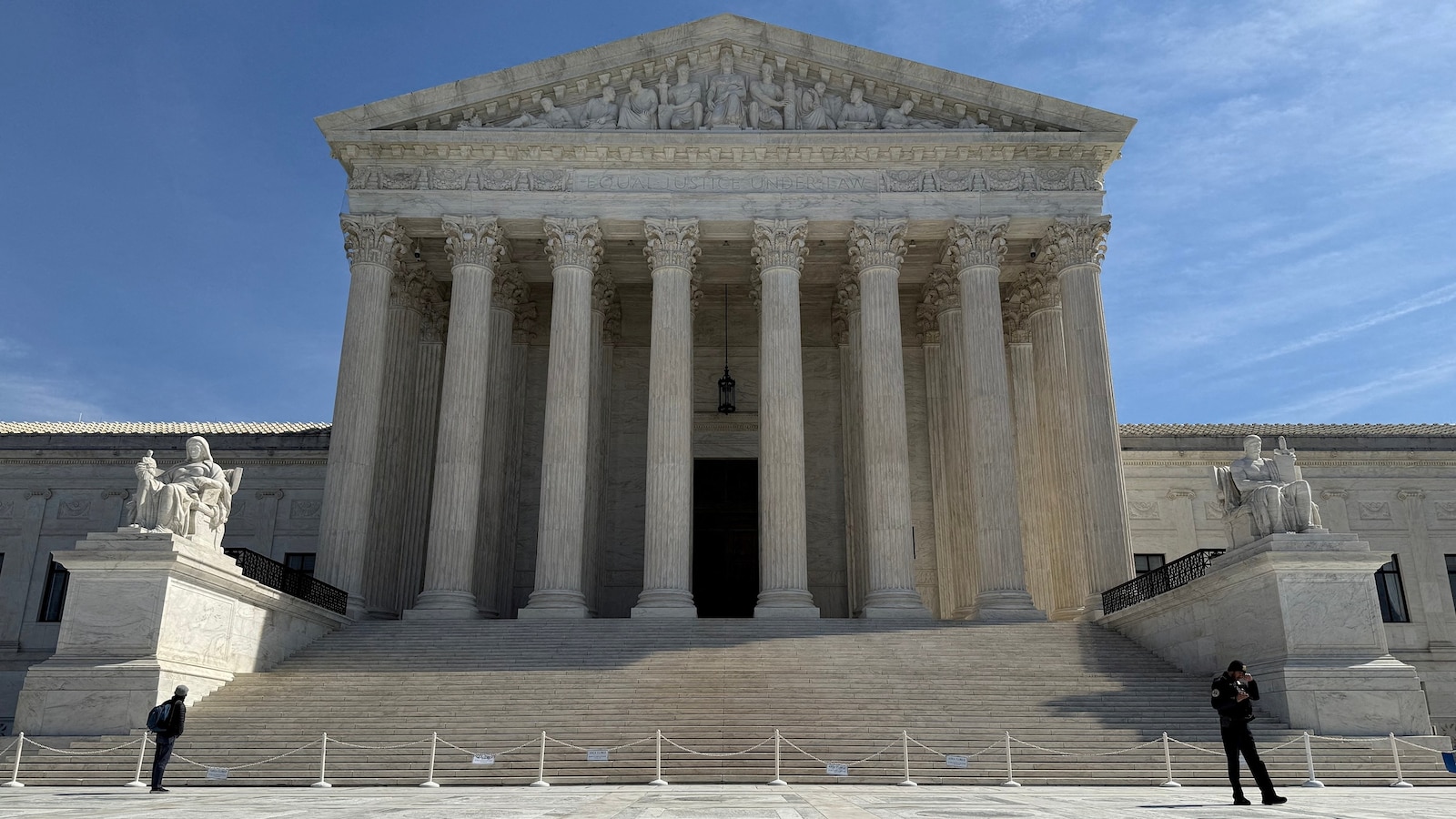
Supreme Court Rules in Voting Rights Act Case; States Consider Redistricting ChangesMathieu Landretti / Wikimedia (CC BY-SA 4.0)
Audio version
Tap play to generate a narrated version.

The U.S. Supreme Court ruled 6-3 in the case known as Louisiana v. Callais, determining that certain applications of the Voting Rights Act of 1965 in congressional redistricting were unconstitutional. Justice Samuel Alito wrote the majority opinion, stating that the ruling addresses challenges to maps based on racial gerrymandering claims.

Georgia Gov. Brian Kemp said in a statement that the state will not redraw its congressional map before the 2026 midterm elections, noting that the primary is scheduled for May 19 and that any changes would disrupt the ongoing voting process. According to Politico, Kemp indicated that redistricting could be considered for the 2028 elections.

The Washington Times reported that Kemp described the ruling as providing clarity on redistricting standards.

Republican governors in Tennessee and Alabama announced special legislative sessions to review and potentially redraw congressional maps following the decision. RealClearPolitics stated that these sessions were called on Friday and represent initial steps toward adjusting districts in light of the ruling.

Democratic Rep. Bennie Thompson told CNN's Victor Blackwell, "This is just Jim Crow 2.0," in response to the ruling. Former President Barack Obama issued a statement criticizing the decision, according to Fox News. In response, Black conservative commentator T.W. Shannon said on Fox News that Obama was "constantly whining" and that "race should not be a deciding factor in drawing districts."

An opinion piece in The Guardian by David Daley and Eric J. Segall stated that the Supreme Court's decision "wasn't about law – it was about politics" and could harm multiracial democracy. A piece in City Journal described the ruling as "striking a blow for voting rights sanity" by addressing issues in racial districting practices.

ABC News reported that the ruling limits the use of the Voting Rights Act, a law that has protected minority voting rights for six decades. The Washington Examiner noted that the decision has prompted states to weigh potential changes to maps ahead of the 2026 midterms, though no specific evidence of widespread election flux has been detailed in agency statements.
No public comments from the U.S. Department of Justice on the ruling's implementation were included in the available reports as of May 2, 2026.

Key Facts

6-3 decision
Supreme Court limited Voting Rights Act
Justice Samuel Alito
authored majority opinion in Callais
Tennessee and Alabama
called special sessions for map redraws
Georgia
declined redraw for 2026 midterms
May 19 primary
Georgia's election date cited for no changes

Story Timeline

5 events
  1. May 1, 2026 — 2 days ago

    Republican governors of Tennessee and Alabama called special sessions to redraw congressional maps.

    1 sourceRealClearPolitics
  2. Apr 29, 2026 — 4 days ago

    Supreme Court issued 6-3 ruling limiting Voting Rights Act in Callais case.

    10 sourcesCnn · ABC · Politico
  3. May 2, 2026 — Yesterday

    Georgia Gov. Brian Kemp announced no map redraw for 2026 midterms.

    3 sourcesPolitico · Washington Examiner · The Washington Times
  4. May 2, 2026 — Yesterday

    Rep. Bennie Thompson called the ruling 'Jim Crow 2.0' in CNN interview.

    1 sourceCnn
  5. May 1, 2026 — 2 days ago

    T.W. Shannon criticized former President Obama's response to the ruling.

    1 sourceFox News

Potential Impact

  1. 01

    Legal challenges to existing maps will become harder to win under the new standard.

  2. 02

    States will face challenges in redistricting battles extending to 2028 elections.

  3. 03

    2026 midterms in affected states will proceed with current maps in some cases.

  4. 04

    Minority representation in Congress could decrease due to reduced racial gerrymandering protections.

  5. 05

    Civil rights groups will push for legislative responses to restore Voting Rights Act provisions.

  6. 06

    Political parties may adjust strategies for districting in future cycles.

Transparency Panel

Sources cross-referenced12
Framing risk38/100 (low)
Confidence score98%
Synthesized bySubstrate AI
Word count361 words
PublishedApr 30, 2026, 7:59 AM
Bias signals removed6 across 4 outlets
Signal Breakdown
Loaded 3Amplifying 1Framing 1Diminishing 1

Related Stories

North Korea Updates Constitution, Omits Korean Unification References Amid International Trade FairUser:Langley16 / Wikimedia (CC BY-SA 4.0)
politics1 hr ago

North Korea Updates Constitution, Omits Korean Unification References Amid International Trade Fair

North Korea has revised its constitution to eliminate references to unification with South Korea. The country also opened the Pyongyang Spring International Trade Fair on Monday, showcasing domestic products like the Jindallae smartphone. More than 290 enterprises from several na…

Reuters
South China Morning Post
Japan Times
3 sources
U.S. Pauses One-Day Ship Guidance in Strait of Hormuz as Iran Talks Advancechannelnewsasia.com
politics5 hrs agoDeveloping

U.S. Pauses One-Day Ship Guidance in Strait of Hormuz as Iran Talks Advance

President Trump announced a pause in the one-day-old effort to guide ships out of the Strait of Hormuz, citing progress toward an agreement with Iran. Secretary of State Marco Rubio declared the war with Iran concluded after a month-old cease-fire. The U.S. blockade remains in pl…

The New York Times
National Review
2 sources
Trump Signs Memorandum to Revive Presidential Physical Fitness Award at White House EventOffice of White House Press Secretary / Wikimedia (Public domain)
politics3 hrs agoDeveloping

Trump Signs Memorandum to Revive Presidential Physical Fitness Award at White House Event

President Donald Trump signed a memorandum on May 5, 2026, restoring the Presidential Physical Fitness Award and reintroducing a competitive fitness test in U.S. schools. The event featured student athletes on the White House South Lawn, where Trump demonstrated his signature dan…

Fox News
ABC News
2 sources