Substrate
technology

Supreme Court Rules in Louisiana v. Callais Voting Rights Case

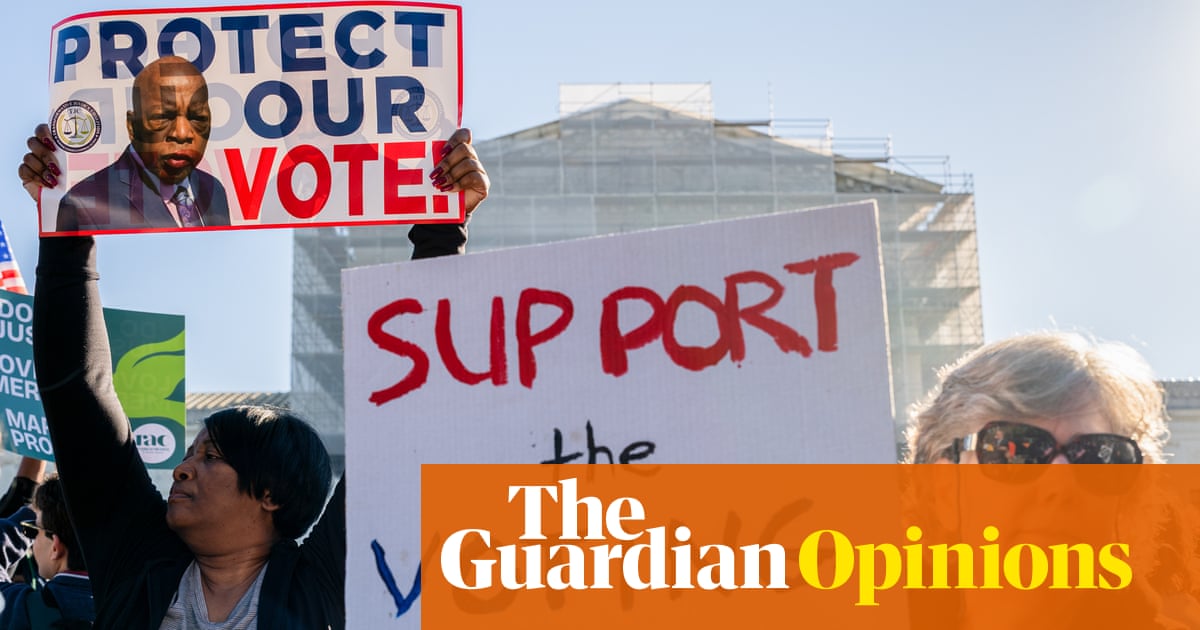
The U.S. Supreme Court ruled to limit the application of Section 2 of the Voting Rights Act, making it harder to challenge racially discriminatory voting maps based on impact alone. The 6-3 decision, authored by Justice Samuel Alito, requires proof of discriminatory intent and overturns prior standards for ensuring minority representation.
Cnn
Axios
The Guardian
The Bbc
reason.com
cnbc.com
+63
73 sources·Apr 29, 7:33 PM(5 days ago)·3m read
Supreme Court Rules in Louisiana v. Callais Voting Rights Caseyna.co.kr
Audio version
Tap play to generate a narrated version.

The U.S. Supreme Court ruled on April 30, 2026, in the case Louisiana v. Callais, striking down a congressional map in Louisiana that created a second majority-Black district. The majority opinion, written by Justice Samuel Alito, held that Section 2 of the Voting Rights Act, as interpreted by lower courts, had required states to engage in race-based redistricting that violated the Constitution's equal protection clause.

According to the opinion, "previous interpretations forced states to consider race in redistricting, which they deemed unconstitutional," emphasizing that the act should not mandate racial classifications absent proof of intentional discrimination.

The Voting Rights Act was enacted in 1965 to address racial barriers to voting. Section 2 prohibits practices that result in discrimination based on race, color, or membership in a language minority group. The court's 2013 decision in Shelby County v.

Holder invalidated Section 5's preclearance requirement for certain jurisdictions. In this ruling, the court addressed the 1982 amendments to Section 2, which allowed challenges based on discriminatory effects. The majority stated that such interpretations led to "race-based discrimination forbidden by the Constitution," and that maps drawn for partisan reasons could stand even if they had disparate racial impacts, provided no intent to discriminate was proven.

Demographic data from the U.S. Census Bureau shows the white population share decreased from about 85% in 1965 to 59% in recent years, with increases in multiracial, Latino, and Asian American populations, particularly in Southern states. The ruling applies nationwide but is expected to influence redistricting in states like Louisiana, Texas, Georgia, and Arizona, where population shifts have raised stakes for congressional representation.

Reactions to the decision varied. " NAACP President Derrick Johnson described it as "a devastating blow that enables politicians to rig the system," according to statements reported in multiple outlets.

" Justice Clarence Thomas, in a concurring opinion reported by Fox News, urged the court to "go further" in addressing racial gerrymandering.

Legal analysts noted potential effects on congressional seats. A New York Times analysis estimated the ruling could endanger about a dozen Democratic-leaning seats in the South. Fair Fight Action projected Republicans might gain up to 27 seats through redistricting ahead of 2026 and 2028 elections.

However, Forbes reported that prediction markets still favor Democrats retaining control of the House despite the decision. The ruling has prompted quick action in some states, with redistricting battles intensifying, as noted in The Washington Times.

No publicly released statements from the Louisiana state government on immediate map revisions were available as of April 30, 2026.

The decision shifts some oversight to state courts and potential congressional action, with ongoing cases in dozens of states, according to Just the News. Democrats in Congress vowed to fight back, as reported by CNBC, though specific legislative proposals were not detailed in available statements.

Key Facts

6-3 decision
narrowed Section 2 requiring proof of intent
Section 2
limits challenges to discriminatory maps
12 seats
Democratic-leaning districts endangered per analysis
59%
current white population share down from 85% in 1965
1-3 seats
potential shift in 2026 elections

Story Timeline

4 events
  1. Apr 30, 2026

    U.S. Supreme Court rules 6-3 in Louisiana v. Callais, narrowing Section 2 of the Voting Rights Act.

    2 sourcesAxios · The Guardian
  2. 2013

    Supreme Court strikes down Section 5 of the Voting Rights Act in Shelby County v. Holder.

    2 sourcesAxios · The Guardian
  3. 1982

    Congress reauthorizes the Voting Rights Act, allowing challenges based on discriminatory impact.

    1 sourceThe Guardian
  4. 1965

    Voting Rights Act is enacted to end racial barriers to voting.

    2 sourcesAxios · The Guardian

Potential Impact

  1. 01

    Black and Latino voters in the South will face diluted electoral power in choosing representatives.

  2. 02

    Republican-controlled states will redraw maps to eliminate some majority-minority districts before 2026 primaries.

  3. 03

    Democrats will lose up to a dozen seats in Southern states due to reduced minority representation.

  4. 04

    Republicans could gain as many as 27 congressional seats by the 2028 election cycle.

  5. 05

    Legal challenges to voting maps will increasingly occur in state courts rather than federal ones.

  6. 06

    Voting rights groups will push Congress for new federal protections to replace weakened Section 2.

Transparency Panel

Sources cross-referenced73
Framing risk40/100 (moderate)
Confidence score65%
Synthesized bySubstrate AI
Word count568 words
PublishedApr 29, 2026, 7:33 PM
Bias signals removed5 across 3 outlets
Signal Breakdown
Amplifying 2Loaded 1Editorializing 1Framing 1

Related Stories

Major Publishers and Author File Copyright Lawsuit Against Meta Over AI Training DataVariety
technology1 hr agoUpdated

Major Publishers and Author File Copyright Lawsuit Against Meta Over AI Training Data

Five major publishers and author Scott Turow filed a class-action lawsuit against Meta and CEO Mark Zuckerberg in Manhattan federal court, alleging illegal use of copyrighted books and articles to train the Llama AI model. The suit claims Zuckerberg personally authorized the infr…

fortune.com
Variety
The Washington Post
The Guardian
The Verge
+1
6 sources
Brockman Testifies on Heated 2017 Dispute with Musk Over OpenAI's For-Profit Shift in Federal Trialnaturalnews.com
ai1 hr agoUpdated

Brockman Testifies on Heated 2017 Dispute with Musk Over OpenAI's For-Profit Shift in Federal Trial

OpenAI President Greg Brockman detailed a heated 2017 confrontation with Elon Musk during testimony in the federal trial Musk v. Altman. He described Musk storming around a table and grabbing a painting after rejecting shared control proposals. The lawsuit seeks $150 billion in d…

The New York Times
Wired
New York Post
BBC News
Business Insider
+3
9 sources
Trump Administration Explores Government Review of AI Models Before Public ReleaseShealeah Craighead / Wikimedia (Public domain)
technology1 hr agoUpdated

Trump Administration Explores Government Review of AI Models Before Public Release

The Trump administration is discussing measures to vet advanced AI models for safety and security risks prior to their release, marking a potential shift from its previous hands-off stance on AI regulation. Officials are considering an executive order to establish a working group…

FO
The New York Times
Semafor
Politico
CBS News
+6
12 sources