Substrate
politics

Supreme Court to Review Trump Administration's Bid to End TPS for Haitians and Syrians

The U.S. Supreme Court is set to hear arguments on whether the Trump administration can terminate temporary protected status for over 350,000 Haitians and 6,000 Syrians. The case arises from lawsuits challenging the policy, with a district judge ruling in February 2026 that the decision was influenced in part by racial animus.
The Marshall Project
al-monitor.com
2 sources·Apr 25, 4:00 PM(10 days ago)·2m read
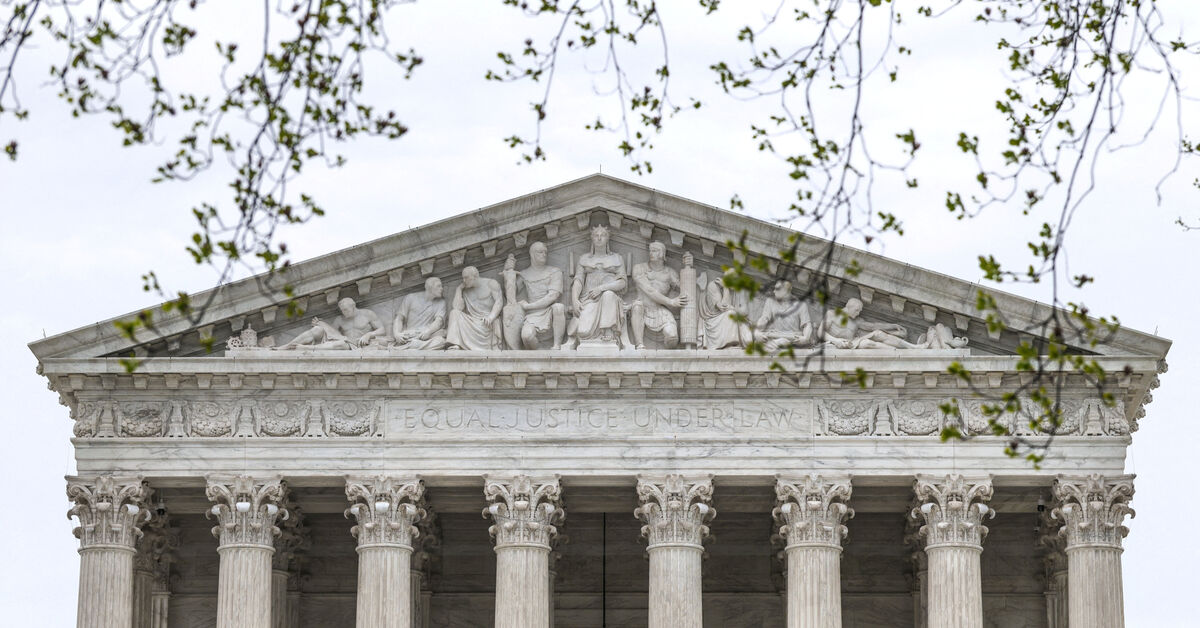
Supreme Court to Review Trump Administration's Bid to End TPS for Haitians and SyriansSubstrate placeholder — needs review · Wikimedia Commons (CC BY-SA 3.0)
Audio version
Tap play to generate a narrated version.
Developing·Limited corroboration so far. This page will refresh as more sources emerge.

The U.S. Supreme Court is scheduled to hear oral arguments on April 29, 2026, regarding the Trump administration's authority to end temporary protected status (TPS) for more than 350,000 Haitians and 6,000 Syrians. The case originates from lawsuits filed by Haitians and Syrians granted TPS, which allows legal stay in the U.S. until conditions in their home countries improve.

A February 2026 ruling by U.S. District Judge Ana C. Reyes upheld the protections for Haitians who arrived as early as 2010 following an earthquake in Haiti. Administration officials appealed the decision to the Supreme Court. Department of Homeland Security spokeswoman Tricia McLaughlin stated after the ruling that TPS was not intended as a de facto amnesty program and that prior administrations had used it that way for decades.

Context of Haitian Immigration TPS was established under a 1990 law during the administration of President George H.W. Bush, authorizing temporary stays for immigrants from countries facing unsafe conditions. Haitians received TPS in 2010, two decades after the program's inception. According to the Haitian Lawyers Association, which filed a brief supporting TPS holders, between 1972 and 1980, approximately 50,000 Haitians applied for asylum, but only 100 were approved.

In contrast, during the 1980 Mariel boatlift, about 125,000 Cubans arrived in the U.S., and the majority received asylum. The association noted that in the late 1960s under President Richard Nixon, many Haitian skilled workers obtained green cards. Migration increased during the rule of Francois Duvalier in the 1960s and 1970s.

In 1980, under President Jimmy Carter, the government implemented a program to detain and repatriate Haitians arriving by boat, which a federal judge struck down two years later. President Ronald Reagan signed a 1986 bill granting amnesty to immigrants arriving before 1982, but enforcement included intercepting Haitian boats at sea and detaining arrivals.

The Haitian Lawyers Association reported that in 1997, a bill providing legal residency to Nicaraguans was expanded to include Cubans but not Haitians, leading to a more restrictive separate measure for Haitians. Georges Fouron, a Haitian American author, stated that Haitians began migrating during the U.S. occupation of Haiti from 1915 to 1934.

Attorney Ruth Jean, involved in the Supreme Court brief, noted that perceptions of Haitians as not meriting favor have persisted.

The government argues that courts have overstepped by limiting presidential authority to end TPS, as granted by Congress. The program currently covers individuals from 17 countries, potentially affecting 1.4 million people if terminated. Oral arguments are expected to last more than an hour.

Key Facts

350,000 Haitians
affected by potential TPS termination
February 2026 ruling
by Judge Reyes cited racial animus
50,000 asylum applications
from Haitians 1972-1980, only 100 approved
125,000 Cubans
granted asylum in 1980 Mariel boatlift
1.4 million people
potentially impacted from 17 countries

Story Timeline

5 events
  1. February 2026

    U.S. District Judge Ana C. Reyes ruled that the Trump administration's decision to end TPS for Haitians was based in part on racial animus.

    1 sourceThe Marshall Project
  2. January 2025

    The Trump administration moved to end TPS for Haitians one month after President Trump took office.

    1 sourceThe Marshall Project
  3. 2024

    President Trump promised during his campaign to end protected status for Haitians.

    1 sourceThe Marshall Project
  4. 2010

    Haitians were granted TPS following a devastating earthquake in Haiti.

    1 sourceThe Marshall Project
  5. 1990

    The temporary protected status program was established under President George H.W. Bush.

    1 sourceThe Marshall Project

Potential Impact

  1. 01

    The Supreme Court's decision could lead to deportation proceedings for over 350,000 Haitians if TPS is ended.

  2. 02

    Termination of TPS might affect economic contributions from TPS holders in U.S. communities.

  3. 03

    A ruling upholding the administration could set precedent for ending TPS for other nationalities.

  4. 04

    The outcome may influence future immigration policies toward Haitian migrants.

  5. 05

    Communities like Springfield, Ohio, could see changes in local Haitian populations.

Transparency Panel

Sources cross-referenced2
Framing risk35/100 (low)
Confidence score70%
Synthesized bySubstrate AI
Word count429 words
PublishedApr 25, 2026, 4:00 PM
Bias signals removed3 across 2 outlets
Signal Breakdown
Loaded 2Framing 1

Related Stories

House Republicans Pass Immigration Enforcement Bill With East Wing Security FundingSemafor
politics1 hr agoFraming75High framing risk75/100Rewrite inherits heavy consensus framing that centers the $1B East Wing funding controversy over the immigration enforcement substance, using loaded distraction language and selective GOP quotes.Click to jump to full framing analysis

House Republicans Pass Immigration Enforcement Bill With East Wing Security Funding

Republicans introduced a party-line immigration enforcement bill on May 6, 2026, that allocates $1 billion for security upgrades at President Donald Trump’s East Wing project. The project has an estimated cost of $400 million and includes a ballroom that Trump has said would be f…

The New York Times
Semafor
Forbes
NPR
CBS News
5 sources
politics1 hr agoDeveloping

White House Shares Iran Sanctions Graphic from Foundation for Defense of Democracies as Trump Appoints Former FDD Official to Negotiations Team

The White House rapid response account posted a Foundation for Defense of Democracies graphic last week that incorrectly attributed accelerated Iranian uranium enrichment to sanctions relief under former President Joe Biden. Rep. Russell Fry described Iran as a "petulant child" t…

The Hill
Al Jazeera
2 sources
Spirit Airlines Ceases Operations After Filing for BankruptcyQuintin Soloviev / Wikimedia (CC BY 4.0)
politics1 hr agoFraming65Framing risk65/100Rewrite inherits consensus framing that blames Trump admin for failing to rescue Spirit while downplaying Spirit's chronic mismanagement and crediting Biden-era DOJ action as a neutral fact.Click to jump to full framing analysis

Spirit Airlines Ceases Operations After Filing for Bankruptcy

The budget carrier announced an immediate orderly wind-down on Saturday after negotiations for a $500 million rescue deal failed. Jet fuel costs had doubled since the US-Israel war in Iran began at the end of February, delivering a final blow to the airline as it emerged from its…

BBC News
The Free Press
NPR
Los Angeles Times
4 sources