Substrate
politics

Supreme Court Rules 6-3 in Louisiana v. Callais, Affirming Limits on Racial Gerrymandering Under Voting Rights Act

The U.S. Supreme Court issued a 6-3 ruling in Louisiana v. Callais, affirming that a map with a second majority-Black district violated the Constitution. The decision requires proof of intentional disadvantage for Voting Rights Act violations. Governors in Alabama and Tennessee called special sessions to address potential redistricting changes.
The Hill
The New York Times
The New Yorker
City Journal
Fox News
RealClearPolitics
+5
11 sources·Apr 30, 9:00 AM(2 days ago)·2m read
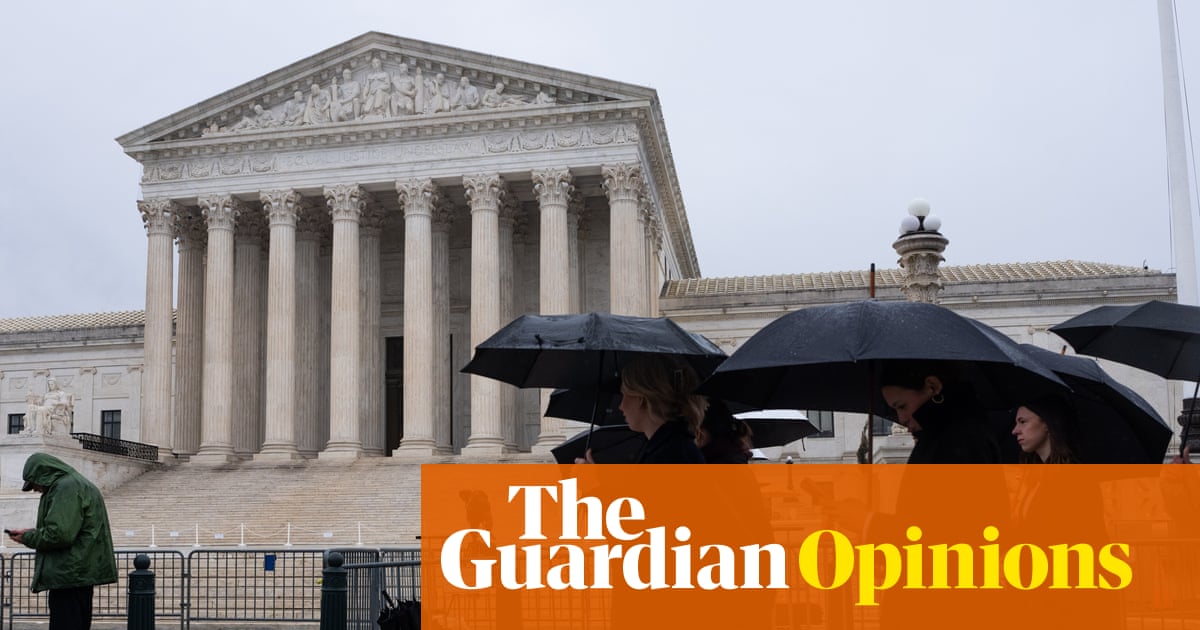
Supreme Court Rules 6-3 in Louisiana v. Callais, Affirming Limits on Racial Gerrymandering Under Voting Rights ActDietmar Rabich / Wikimedia (CC BY-SA 4.0)
Audio version
Tap play to generate a narrated version.

U.S. Supreme Court issued a 6-3 ruling on Wednesday in Louisiana v. Callais, affirming a federal district court decision that Louisiana's map with a second majority-Black district violated the Constitution.

Justice Samuel Alito wrote the majority opinion, holding that the Voting Rights Act requires proof that a racial group was intentionally disadvantaged to establish a violation. The ruling narrowed the interpretation of Section 2 of the act, focusing on discriminatory intent rather than effect.

Governors of Alabama and Tennessee called special sessions of state lawmakers on Friday in response to the Supreme Court decision.

These sessions mark initial steps toward potentially redrawing congressional maps following the court's narrowing of the Voting Rights Act. Multiple sources confirmed the actions as part of a broader scramble among states to adjust districts. In the case, a federal district court in 2022 found that Louisiana likely violated Section 2 of the Voting Rights Act by creating only one majority-Black electoral district in its map after the 2020 census.

Louisiana then created a second majority-Black district to comply with that finding. However, a three-judge federal district court later held that the new map with the second majority-Black district was a racial gerrymander violating the Fourteenth Amendment.

The Supreme Court affirmed that ruling, emphasizing that the Voting Rights Act, when properly interpreted, did not require the second district.

The decision drew on prior cases, including the court's 2019 ruling in Rucho v. Common Cause, which established that federal courts will not hear constitutional challenges to partisan gerrymandering. It also referenced the 2013 decision that eviscerated Section 5 of the Voting Rights Act.

Congress enacted the Voting Rights Act of 1965 to address racial discrimination in voting. It amended Section 2 of the act in 1982 to prohibit electoral rules resulting in denial or abridgement of voting rights on account of race, based on the totality of circumstances. The Supreme Court had interpreted Section 2 in 1980's Mobile v.
Bolden to require discriminatory purpose, prompting the congressional amendment. In 1986, the Supreme Court decided Thornburg v. Gingles, establishing preconditions for Section 2 claims related to vote dilution.

The court in 2021 required Section 2 plaintiffs to focus on discriminatory intent rather than effect in challenges to voting burdens. These precedents informed the Callais decision, which resolved tensions between avoiding Voting Rights Act violations and constitutional prohibitions on racial gerrymandering.

Shannon disagreed with former President Obama on the Supreme Court's racial redistricting ruling, saying race should not be a deciding factor in drawing districts. Shannon's statement highlighted differing views on the role of race in electoral mapping.

The ruling has prompted states like Alabama and Tennessee to convene lawmakers, potentially leading to revised maps without additional majority-minority districts.

Key Facts

Supreme Court Ruling
The Supreme Court issued a 6-3 decision in Louisiana v. Callais on Wednesday, affirming that Louisiana's map with a second majority-Black district was unconstit
Voting Rights Act Interpretation
The decision requires proof of intentional disadvantage for Voting Rights Act violations, narrowing Section 2 to focus on discriminatory intent.
State Responses
Governors of Alabama and Tennessee called special legislative sessions on Friday to potentially redraw congressional maps.
Historical Context
Congress amended Section 2 in 1982 following the 1980 Mobile v. Bolden decision; the court eviscerated Section 5 in 2013.
Stakeholder Reaction
T.W. Shannon disagreed with former President Obama, stating race should not decide district drawing.

Story Timeline

6 events
  1. 2026-05-03 (Friday)

    Governors of Alabama and Tennessee called special sessions of state lawmakers.

    1 sourceRealClearPolitics
  2. 2026-05-01 (Wednesday)

    The Supreme Court issued a 6-3 decision in Louisiana v. Callais, with Justice Samuel Alito writing the majority opinion.

    4 sourcesThe New Yorker · The Guardian · City Journal · The New York Times
  3. 2022

    A federal district court found that Louisiana likely violated Section 2 of the Voting Rights Act by creating only one majority-Black district after the 2020 census; Louisiana created a second district to comply.

    1 sourceThe New Yorker
  4. 2019

    The Supreme Court decided Rucho v. Common Cause.

    1 sourceThe New Yorker
  5. 1986

    The Supreme Court decided Thornburg v. Gingles.

    1 sourceCity Journal
  6. 1965

    Congress enacted the Voting Rights Act.

    1 sourceThe New Yorker

Potential Impact

  1. 01

    Cascade of legal challenges to current district maps across multiple states.

  2. 02

    Reduced electoral opportunities for racial minorities to elect preferred representatives.

  3. 03

    States may eliminate existing majority-minority districts through lawsuits or voluntary redrawing.

  4. 04

    Potential for more states to call special sessions for redistricting adjustments.

  5. 05

    Increased partisan gerrymandering as states justify maps on political rather than racial grounds.

Transparency Panel

Sources cross-referenced11
Framing risk25/100 (low)
Confidence score83%
Synthesized bySubstrate AI
Word count450 words
PublishedApr 30, 2026, 9:00 AM
Bias signals removed3 across 3 outlets
Signal Breakdown
Loaded 3

Related Stories

North Korea Updates Constitution, Omits Korean Unification References Amid International Trade FairUser:Langley16 / Wikimedia (CC BY-SA 4.0)
politics1 hr ago

North Korea Updates Constitution, Omits Korean Unification References Amid International Trade Fair

North Korea has revised its constitution to eliminate references to unification with South Korea. The country also opened the Pyongyang Spring International Trade Fair on Monday, showcasing domestic products like the Jindallae smartphone. More than 290 enterprises from several na…

Reuters
South China Morning Post
Japan Times
3 sources
U.S. Pauses One-Day Ship Guidance in Strait of Hormuz as Iran Talks Advancechannelnewsasia.com
politics5 hrs agoDeveloping

U.S. Pauses One-Day Ship Guidance in Strait of Hormuz as Iran Talks Advance

President Trump announced a pause in the one-day-old effort to guide ships out of the Strait of Hormuz, citing progress toward an agreement with Iran. Secretary of State Marco Rubio declared the war with Iran concluded after a month-old cease-fire. The U.S. blockade remains in pl…

The New York Times
National Review
2 sources
Trump Signs Memorandum to Revive Presidential Physical Fitness Award at White House EventOffice of White House Press Secretary / Wikimedia (Public domain)
politics3 hrs agoDeveloping

Trump Signs Memorandum to Revive Presidential Physical Fitness Award at White House Event

President Donald Trump signed a memorandum on May 5, 2026, restoring the Presidential Physical Fitness Award and reintroducing a competitive fitness test in U.S. schools. The event featured student athletes on the White House South Lawn, where Trump demonstrated his signature dan…

Fox News
ABC News
2 sources