Substrate
politics

Supreme Court Rules Against Racial Gerrymandering in Redistricting Case

The U.S. Supreme Court issued a 6-3 ruling declaring unconstitutional the use of race-based considerations in Louisiana's congressional maps under Section 2 of the Voting Rights Act. The decision follows other recent court rejections of Democratic efforts to redraw maps in Virginia and Wisconsin.
The Federalist
National Review
2 sources·Apr 30, 11:58 AM(5 days ago)·3m read
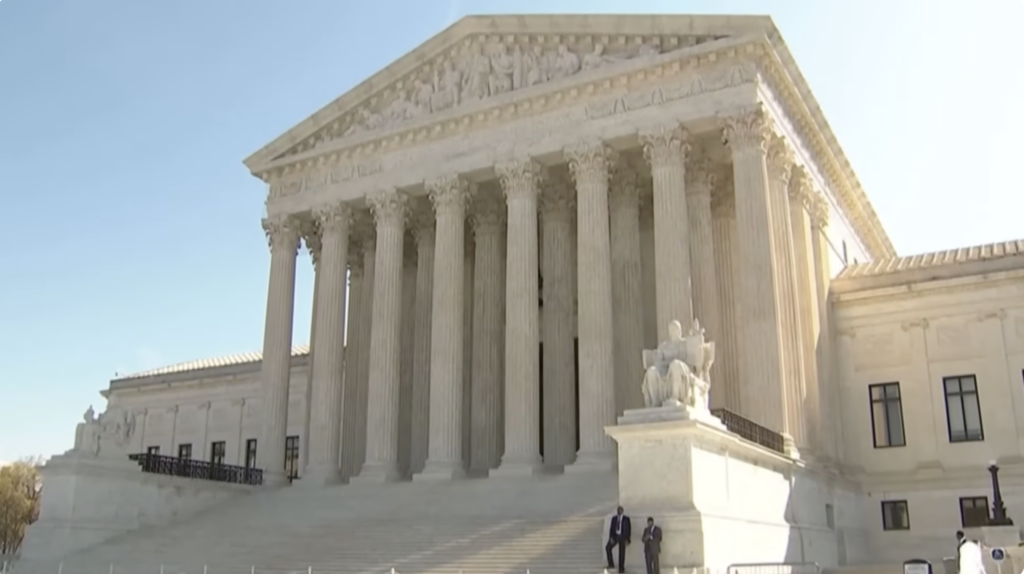
Supreme Court Rules Against Racial Gerrymandering in Redistricting CaseDietmar Rabich / Wikimedia (CC BY-SA 4.0)
Audio version
Tap play to generate a narrated version.
Developing·Limited corroboration so far. This page will refresh as more sources emerge.

The U.S. Supreme Court ruled 6-3 on Wednesday that Louisiana's creation of a second majority-Black congressional district constituted an unconstitutional racial gerrymander. The majority opinion, written by Justice Samuel Alito, stated that compliance with Section 2 of the Voting Rights Act does not justify race-based redistricting.

The court affirmed a lower court's finding that the map violated the Constitution by engaging in race-based discrimination. This ruling came after a lower court determined Louisiana's lack of two majority-Black districts likely violated the Voting Rights Act.

The state redrew its maps to include the additional district, but the Supreme Court rejected this approach. The opinion emphasized that the Constitution rarely permits racial discrimination and that such actions trigger strict scrutiny.

Tuesday, a three-judge panel in Wisconsin dismissed a lawsuit seeking to redraw congressional maps to favor Democrats. The panel rejected arguments that the existing maps, drawn by a commission, were uncompetitive. Attorneys for the defense noted that no prior cases supported claims of anti-competitive gerrymandering, and uncompetitive districts exist in various areas, including urban centers.

Also on Tuesday, the Virginia Supreme Court denied a motion by the state's attorney general to appeal a circuit court ruling. The lower court had declared unconstitutional a recent referendum that approved changes to the state's constitution, aiming to remove map-drawing authority from an independent commission.

Voters had narrowly passed the ballot question, which sought to enable redistricting that could give Democrats a 10-1 advantage in congressional seats. On Monday, the Virginia Supreme Court heard arguments on Democrats' proposed congressional maps, with justices posing skeptical questions about the redistricting plan.

Election law expert Hans von Spakovsky described the week as positive for the rule of law. He compared the backlash to the ruling to reactions following the 2013 Shelby County v. Holder decision, noting that predicted widespread discrimination did not occur.

It’s been a good week for the rule of law.

Hans von Spakovsky, April 29, 2026 (The Federalist)

NAACP President Derrick Johnson called the Supreme Court decision a devastating blow to the Voting Rights Act, accusing it of allowing politicians to silence communities. Former President Barack Obama stated that the ruling guts a key pillar of the Act and dilutes minority voting power under the guise of partisanship.

Today’s Supreme Court decision effectively guts a key pillar of the Voting Rights Act, freeing state legislatures to gerrymander legislative districts to systematically dilute and weaken the voting power of racial minorities – so long as they do it under the guise of…

Barack Obama, April 29, 2026 (The Federalist)

The White House welcomed the decision as a victory for American voters, emphasizing that skin color should not determine congressional districts. The ruling drew on the 15th Amendment and the 2013 Shelby County decision, noting significant changes in voter turnout and minority representation since the Voting Rights Act's passage in 1965.

The Supreme Court opinion criticized over 30 years of assuming Voting Rights Act compliance as a compelling interest for race-based districting. It argued that the Act prohibits discrimination but cannot justify it in redistricting. In Virginia, the rejected referendum aimed to temporarily remove a 2020 constitutional amendment establishing an independent redistricting commission.

Democrats sought to redraw maps for midterm gains. In Wisconsin, the dismissed lawsuit targeted maps from a commission appointed by the governor. Plaintiffs argued for more competitive districts, but the court found the claims unsupported by precedent.

Luke Berg, deputy counsel for the Wisconsin Institute for Law & Liberty, described the lawsuit's argument as novel and without national examples. The decisions highlight ongoing debates over redistricting, with states facing challenges to maps perceived as favoring one party.

Key Facts

6-3 ruling
Supreme Court rejected race-based redistricting in Louisiana
Section 2
Voting Rights Act cannot justify racial gerrymandering
Two rejections
Wisconsin courts dismissed Democratic map challenges
Referendum struck down
Virginia court ruled against constitutional change for redistricting

Story Timeline

4 events
  1. Apr 29, 2026

    U.S. Supreme Court ruled 6-3 against racial gerrymandering in Louisiana v. Callais.

    1 sourceThe Federalist
  2. Apr 28, 2026

    Virginia Supreme Court denied attorney general's motion to appeal ruling on unconstitutional referendum.

    1 sourceThe Federalist
  3. Apr 28, 2026

    Three-judge panel dismissed lawsuit to redraw Wisconsin congressional maps.

    1 sourceThe Federalist
  4. Apr 27, 2026

    Virginia Supreme Court heard arguments on Democrats' proposed congressional maps.

    1 sourceThe Federalist

Potential Impact

  1. 01

    States must redraw maps without racial considerations, affecting upcoming elections.

  2. 02

    Increased scrutiny on Voting Rights Act interpretations in future cases.

  3. 03

    Democrats may lose potential gains in Virginia's congressional delegation.

  4. 04

    Potential for more lawsuits challenging existing district maps nationwide.

  5. 05

    Wisconsin Supreme Court could review dismissed map lawsuit.

Transparency Panel

Sources cross-referenced2
Framing risk40/100 (moderate)
Confidence score63%
Synthesized bySubstrate AI
Word count618 words
PublishedApr 30, 2026, 11:58 AM
Bias signals removed5 across 3 outlets
Signal Breakdown
Loaded 3Amplifying 1Editorializing 1

Related Stories

North Korea Updates Constitution, Omits Korean Unification References Amid International Trade FairUser:Langley16 / Wikimedia (CC BY-SA 4.0)
politics1 hr ago

North Korea Updates Constitution, Omits Korean Unification References Amid International Trade Fair

North Korea has revised its constitution to eliminate references to unification with South Korea. The country also opened the Pyongyang Spring International Trade Fair on Monday, showcasing domestic products like the Jindallae smartphone. More than 290 enterprises from several na…

Reuters
South China Morning Post
Japan Times
3 sources
U.S. Pauses One-Day Ship Guidance in Strait of Hormuz as Iran Talks Advancechannelnewsasia.com
politics5 hrs agoDeveloping

U.S. Pauses One-Day Ship Guidance in Strait of Hormuz as Iran Talks Advance

President Trump announced a pause in the one-day-old effort to guide ships out of the Strait of Hormuz, citing progress toward an agreement with Iran. Secretary of State Marco Rubio declared the war with Iran concluded after a month-old cease-fire. The U.S. blockade remains in pl…

The New York Times
National Review
2 sources
Trump Signs Memorandum to Revive Presidential Physical Fitness Award at White House EventOffice of White House Press Secretary / Wikimedia (Public domain)
politics3 hrs agoDeveloping

Trump Signs Memorandum to Revive Presidential Physical Fitness Award at White House Event

President Donald Trump signed a memorandum on May 5, 2026, restoring the Presidential Physical Fitness Award and reintroducing a competitive fitness test in U.S. schools. The event featured student athletes on the White House South Lawn, where Trump demonstrated his signature dan…

Fox News
ABC News
2 sources