Taylor Swift Files Trademarks for Voice and Image to Protect Against AI Misuse
Taylor Swift's company submitted three trademark applications to the U.S. Patent and Trademark Office on April 24, 2026, covering her voice and a stage image. The move aims to safeguard against artificial intelligence deepfakes, following similar actions by actor Matthew McConaughey. Intellectual property experts view it as a response to growing AI threats to celebrities' likenesses.
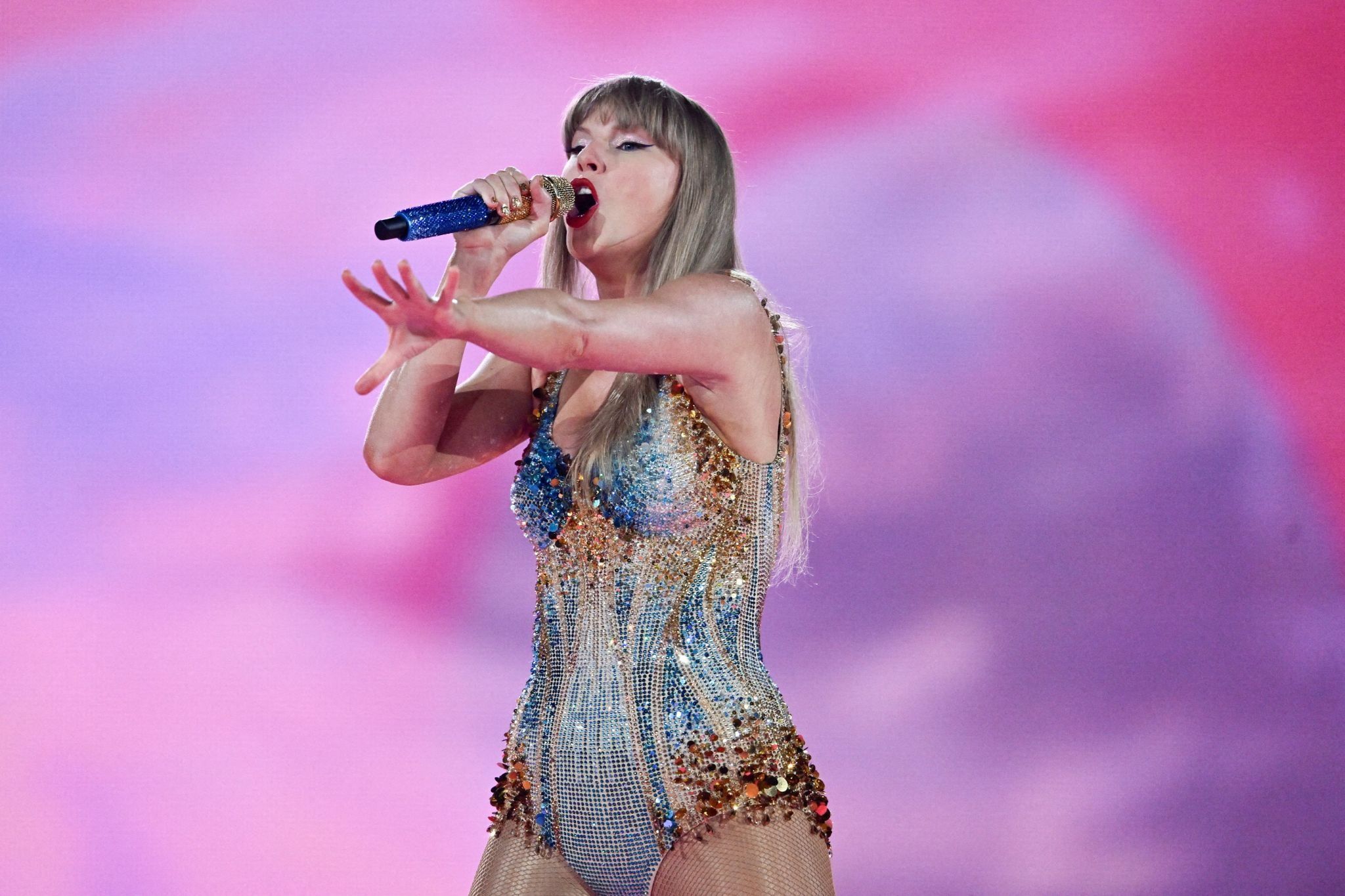
SemaforU.S. Patent and Trademark Office on April 24, 2026. The third is a visual trademark described as a photograph of Swift holding a pink guitar with a black strap, wearing a multicolored iridescent bodysuit with silver boots, standing on a pink stage in front of a multicolored microphone with purple lights in the background.
Post by @CBSNews on X
The applications have been approved for publication and await assignment to an examining attorney. The second states, 'Hey, it’s Taylor. The image depicts Swift onstage in a sequined outfit holding a pink guitar.
Intellectual property attorney Josh Gerben noticed the filings and shared them in a blog post on April 27, 2026. Gerben stated that the trademarks are specifically designed to protect Swift from threats posed by artificial intelligence. 'Now anyone can spin up a version of an artist's voice, have it say anything, attach it to anything, and distribute it at scale,' Gerben wrote in the post.
Gerben told CBS News that he believes celebrities could require such protections as AI tools make it easy to generate audio, visual, and video content known as deepfakes. Gerben called Swift a leader in the intellectual property space and said he expects other public figures to take similar steps.
He added that Swift is seeing a trend where AI is being used to create images, audio, and deepfakes of things that are really not pleasant.
Gerben wrote that while existing Right of Publicity laws offer some protection against unauthorized use of a famous individual’s likeness, trademark filings can provide an additional layer of protection. He noted that registering a celebrity’s spoken voice is a new use of trademark registration that has not been tested in courts.
Gerben also stated that historically singers relied on copyright law to protect their recorded music, but AI technologies now allow users to generate entirely new content that mimics an artist’s voice without copying an existing recording.
Swift appeared in a fake endorsement of President Donald Trump during his 2024 campaign, which he reposted and shared as genuine. The Associated Press reached out to a representative for Swift and Rebecca Liebowitz, partner at law firm Venable listed as the attorney on the filings. Requests for comment were not immediately returned.
A spokesperson for Swift did not immediately respond to a request for comment on April 27, 2026. S.
McConaughey made a deal with voice-cloning company ElevenLabs in 2025 that allows its artificial intelligence technology to replicate his voice. Bette Midler successfully sued Ford for using a soundalike singer in a commercial.
Key Facts
Story Timeline
5 events- 2026-04-27
Intellectual property attorney Josh Gerben shared the trademark filings in a blog post.
4 sourcesfortune.com · New York Post · @CBSNews · Semafor - 2026-04-24
TAS Rights Management filed three trademark applications with the U.S. Patent and Trademark Office.
5 sourcesThe Guardian · fortune.com · @CBSNews · Semafor - 2026-01
Attorneys for Matthew McConaughey secured eight trademarks, including his catchphrase.
4 sourcesfortune.com · @CBSNews · Semafor · New York Post - 2025
Matthew McConaughey made a deal with ElevenLabs to replicate his voice using AI.
1 sourcefortune.com - 2024
Swift appeared in a fake AI endorsement of President Trump during his campaign.
1 sourcefortune.com
Potential Impact
- 01
Other celebrities may file similar trademarks following Swift's example.
- 02
Potential legal challenges to AI-generated content mimicking celebrities.
- 03
Increased scrutiny on AI platforms to prevent unauthorized likeness use.
- 04
Possible court tests of voice trademarks against AI technologies.
Transparency Panel
Related Stories
valuewalk.comEEOC Sues New York Times Alleging Racial and Sex Discrimination in Editor Promotion
The U.S. Equal Employment Opportunity Commission filed a lawsuit against The New York Times, alleging it discriminated against a white male editor by promoting a less-experienced multiracial woman. The case, filed in Manhattan federal court, seeks policy changes and damages. The…
koreatimes.co.krMiddle East War Blocks Strait of Hormuz, Driving European Jet Fuel Prices from $831 to $1,838 per Tonne
The ongoing conflict in the Middle East has driven jet fuel prices to more than double in recent weeks, leading to widespread flight cancellations and higher ticket costs. Airlines across Europe and North America have reduced schedules, while governments prepare measures to mitig…
jns.orgGap Co-Founder Doris Fisher Dies at 94 Surrounded by Family
Doris Fisher, who co-founded The Gap Inc. in 1969 with her husband Don, died on May 2, 2026, at age 94. She served as the company's merchandiser for nearly four decades and helped build it into a global brand generating over $15 billion in annual sales. Fisher is survived by thre…