Texas Supreme Court Rejects Bid to Remove Democratic Lawmakers Over Quorum Break
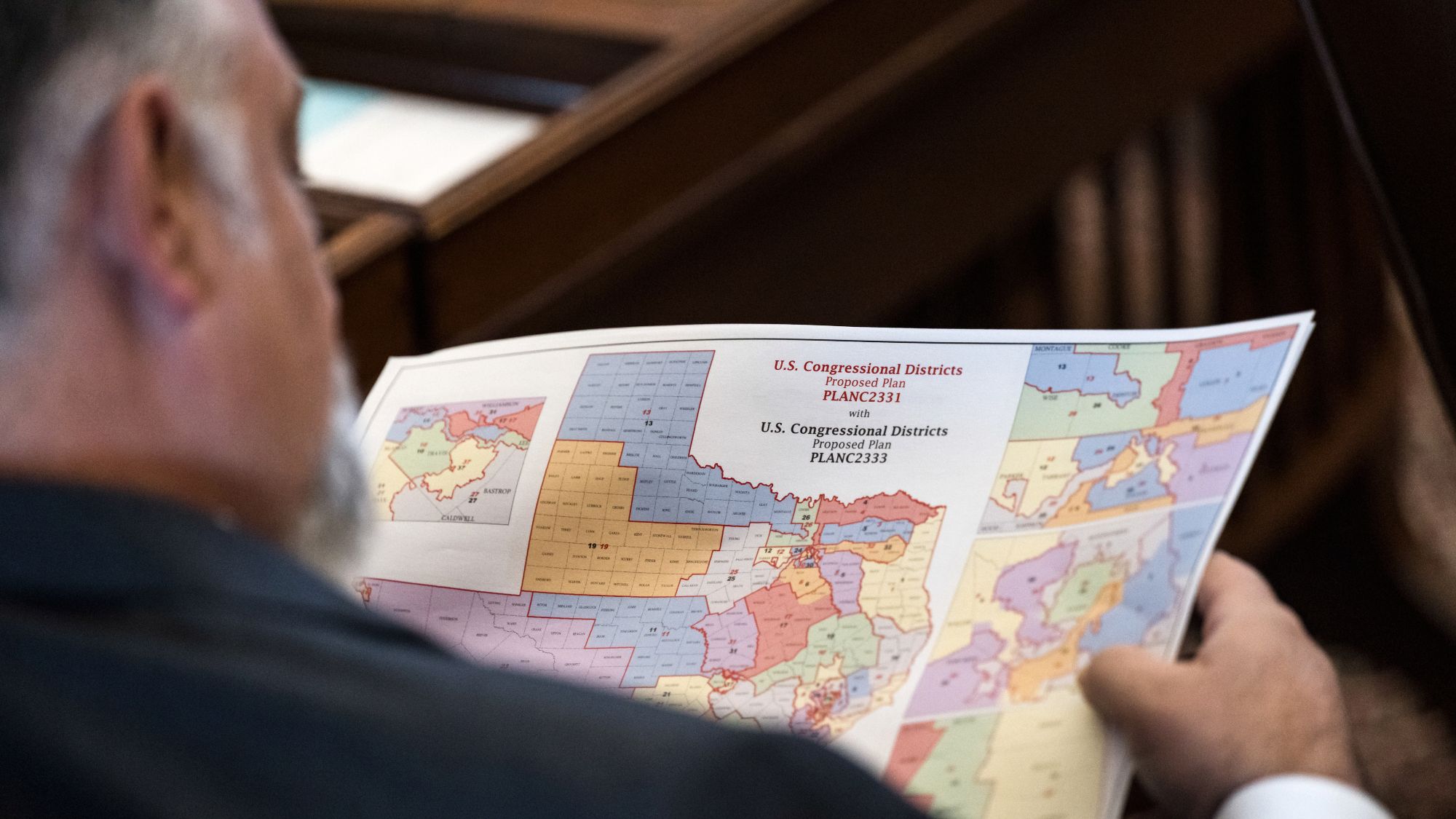
The Texas Supreme Court on Friday declined to declare that more than 50 Democratic state lawmakers had vacated their offices by leaving the state in 2025 to delay a vote on new congressional maps. The all-Republican court ruled that the Legislature had resolved the matter through its own measures including fines. The lawmakers returned after two weeks and the maps were later passed into law.
theweek.comAUSTIN, Texas — The Texas Supreme Court on Friday refused to declare that Democratic lawmakers who briefly left the state in 2025 to block a vote on new congressional maps had vacated their offices. The all-Republican court rejected arguments from the governor that more than 50 Democrats who traveled to New York, Illinois and Massachusetts had abandoned their positions.
State Republicans had sought their arrest and threatened fines to compel their return to the Capitol during a special session. The governor had filed a lawsuit directly with the state's highest civil court arguing that the leader of the House Democratic caucus and others had effectively abandoned their offices.
In its opinion, the court noted that the Republican-majority Legislature had addressed the absence through measures such as fines against the missing lawmakers. The lawmakers returned on their own within two weeks, restoring the quorum without judicial intervention.
"In the end, a quorum was restored in two weeks’ time, without judicial intervention, by the interplay of political and practical forces," the opinion stated. " The opinion added that if the issue arises again and the Legislature cannot compel lawmakers to return, the court may consider whether judicial intervention is appropriate.
The leader of the House Democratic caucus argued in legal briefs that their return demonstrated they had never intended to abandon their offices and that the quorum break was understood to be temporary. The walkout occurred during a special legislative session called to address redistricting.

The state constitution requires at least 100 of the 150 House members to be present to conduct business. The absence prevented action on the maps and other issues.
The 2025 Democratic walkout was the third since 2003. In that earlier case, lawmakers left the state to stop a vote on a redistricting bill. They used the same tactic again in 2021 over an elections bill. In both prior instances the lawmakers eventually returned and the Republican majority in the Legislature passed the measures into law.
In 2021 the court ruled that the Texas Constitution permits quorum breaks but also allows for consequences to compel members to return. The 2025 events drew national attention as the president urged Texas and other Republican-controlled states to redraw congressional districts ahead of the 2026 midterm elections.
Similar redistricting efforts occurred in several states.
Key Facts
Story Timeline
3 events- 2025
More than 50 Democratic lawmakers left Texas to break quorum on redistricting maps.
1 source@AP - 2025
Lawmakers returned after two weeks and the maps were passed into law.
1 source@AP - Friday
Texas Supreme Court rejected governor's request to remove the Democratic lawmakers.
1 source@AP
Potential Impact
- 01
New congressional maps approved in 2025 will be used for the 2026 midterm elections.
- 02
The decision reinforces that courts defer to the legislative branch on quorum disputes.
- 03
The ruling limits options for punishing future quorum breaks by state lawmakers.
- 04
Fines imposed by the Legislature remain available to compel attendance.
Transparency Panel
Related Stories
straitstimes.comJournalists in Gaza to Receive 2026 Golden Pen of Freedom Award
Three international news agencies will accept the award on behalf of their local staff still reporting from the territory. The World Association of News Publishers cited the journalists' continued coverage under extreme conditions.
upi.comSupreme Court Revives Havana Docks Lawsuit Over Confiscated Cuban Property
The U.S. Supreme Court sent a Helms-Burton Act case back to lower courts for further argument. The suit seeks damages from cruise lines that used docks seized by Cuba in 1959.
France 24Pakistan Population Growth Outpaces Infrastructure as Male Contraception Stays Taboo
Pakistan's population exceeds 258 million and could reach 300 million by 2030. Contraception remains largely taboo in a society shaped by traditional values. The country continues to lag behind neighbors India and Bangladesh in key social sectors.