Trump Administration Cancels Missile Deployment in Germany and Announces Partial Troop Withdrawal
The Trump administration has moved to withdraw thousands of U.S. troops from Germany and shelved a plan to deploy Tomahawk and SM-6 missiles there. German Defense Minister Boris Pistorius stated this creates a capability gap that Berlin must address. Officials outlined efforts to modernize missiles and develop European alternatives.
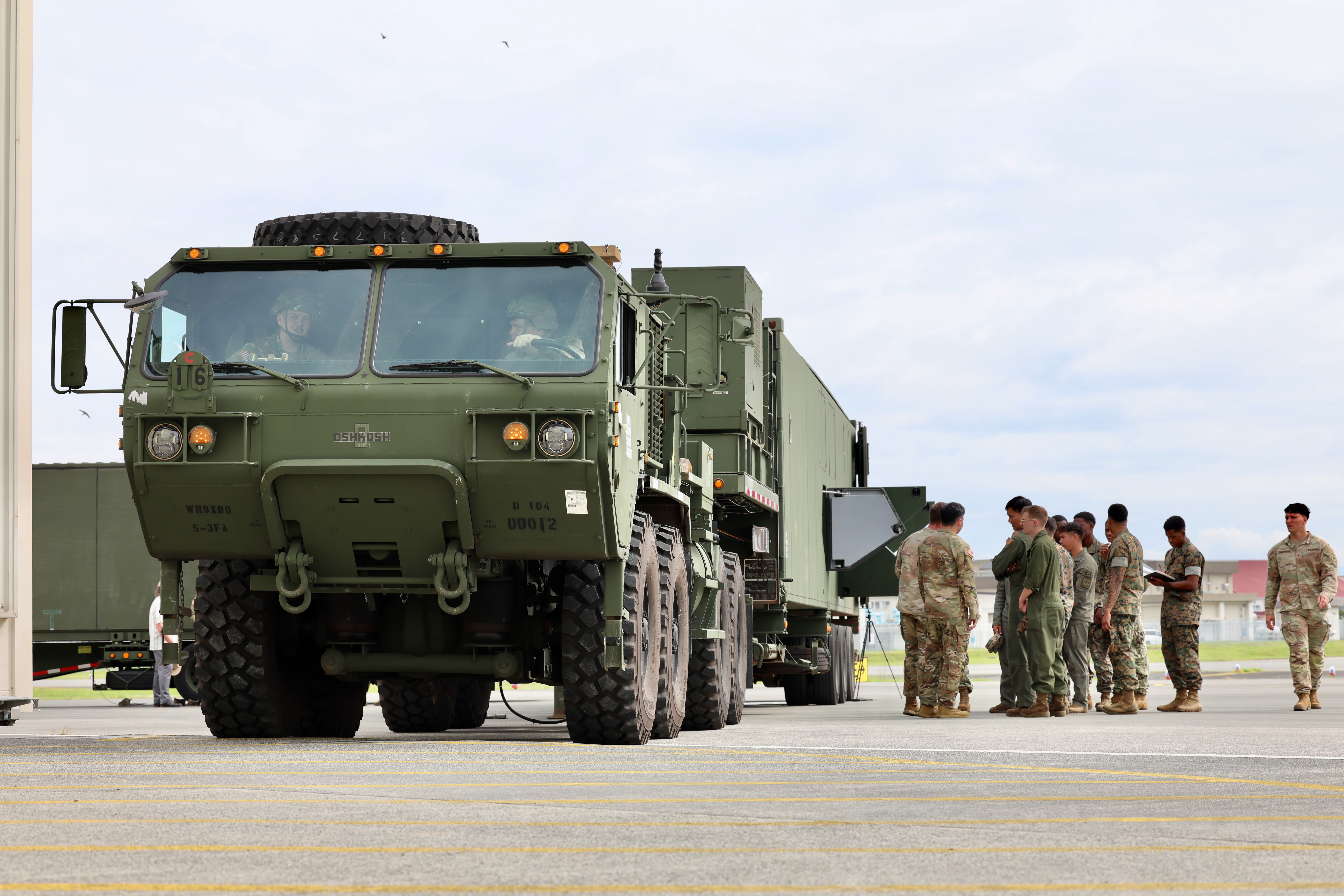
Defense NewsU.S. troops from German soil and effectively shelved a Biden-era plan to temporarily deploy Tomahawk cruise missiles and SM-6 missiles in Germany, Defense News reported. Defense Minister Boris Pistorius, speaking on Monday in Munster, Germany, after a major Bundeswehr combined-arms exercise, said the reported decision meant Germany would be left with a capability gap.
U.S. and German leaders. “That this may now not happen in the way we had assumed tears this capability gap open again.
” The Biden administration announced in July 2024 that it would temporarily station a Multi-Domain Task Force in Germany equipped with the Typhon ground-launched system, which can fire Tomahawk cruise missiles and SM-6 interceptors. S. troops from Germany, with President Donald Trump suggesting the actual figure could be higher.
German Defense Minister Boris Pistorius sat on a GTK Boxer vehicle during a demonstration of capabilities by the German army on May 4, 2026, near Munster, Germany. At the government’s regular press conference on Monday in Berlin, Defense Ministry state secretary Kornelius Müller laid out Berlin’s three-pronged response to fielding a long-range missile capability.
The first thrust of Berlin’s response involves modernizing existing Taurus cruise missile stocks and accelerating development of the Taurus Neo successor.
The Taurus Neo successor program was approved by the Bundestag’s budget committee in late 2025. S. Defense Secretary Pete Hegseth last July.
Müller declined to say whether Washington had responded to the Letter of Request. The third pillar is the European Long-Range Strike Approach, or ELSA, a joint program with the United Kingdom under which Berlin and London are co-developing strike capabilities beyond 2,000 kilometers range. France recently signaled its intention to join ELSA.
Müller declined to commit to any date when pressed on whether ELSA-derived capabilities would be ready before 2030. “I cannot say anything about a timeline,” Müller said, citing dependence on industrial availability and technology development. In Munster, Pistorius pointed to the ongoing European effort.
“We began in 2023, together with the British, and now the French want to join, to develop the precision-strike systems ourselves as Europeans − as fast as possible,” he said. S. help or via other paths − to close the capability gap in that bridging period as quickly as possible,” Pistorius added.
U.S. footprint on the continent as Washington pivots toward the Indo-Pacific.
Key Facts
Story Timeline
6 events- 2026-05-04
German Defense Minister Boris Pistorius sat on a GTK Boxer vehicle during a demonstration of capabilities by the German army near Munster, Germany.
1 sourceDefense News - 2026-05-03 (Monday, inferred as recent)
Defense Minister Boris Pistorius spoke in Munster, Germany, after a major Bundeswehr combined-arms exercise, and Defense Ministry state secretary Kornelius Müller laid out Berlin’s response at a press conference in Berlin.
1 sourceDefense News - 2025 (late)
The Taurus Neo successor program was approved by the Bundestag’s budget committee.
1 sourceDefense News - 2024-07
The Biden administration announced it would temporarily station a Multi-Domain Task Force in Germany equipped with the Typhon system.
1 sourceDefense News - 2023
Germany began developing precision-strike systems with the British under ELSA, and Pistorius warned about adapting to a reduced U.S. footprint.
1 sourceDefense News - Recent (post-2025 inauguration)
Trump administration moved to withdraw troops and shelved missile deployment plan.
1 sourceDefense News
Potential Impact
- 01
Germany faces reopened capability gap in long-range strike, prompting accelerated European development efforts.
- 02
No immediate alliance-level gap, as NATO plans distribute capabilities across members.
- 03
Potential strain on U.S.-Germany defense cooperation amid troop withdrawal.
- 04
Uncertainty in Typhon purchase process may delay Germany's bridging measures.
- 05
Advancement of ELSA could enhance European NATO deterrence independent of U.S. systems.
Transparency Panel
Related Stories
Explosion at China Fireworks Factory Kills 26 and Injures 61 in Hunan Province
An explosion at the Huasheng Fireworks Manufacturing and Display Company in Liuyang, Hunan province, killed at least 26 people and injured 61 on Monday afternoon. Rescue operations concluded with evacuations and production halts at local fireworks manufacturers. President Xi Jinp…
indiatoday.intoday.inTrump Pauses Project Freedom in Strait of Hormuz Amid Progress on Iran Agreement
President Trump announced a temporary pause to Project Freedom, the U.S. effort to escort ships through the Strait of Hormuz, citing mutual agreement with Iran to facilitate finalizing a deal while the blockade remains in place. The decision follows requests from Pakistan and oth…
Australian Government Introduces Levy on Tech Platforms to Support Local News Publishers
Australia's government introduced the News Bargaining Incentive to shield publishers from big tech's use of news content. President Trump imposed a 100% tariff on imported pharmaceuticals, but Australia stated it would not raise drug prices. On International Day of the Midwife, g…